What anatomical proportion in Xiaotingia hinted at musculature necessary for flapping locomotion?
Answer
A femur that was longer than its humerus
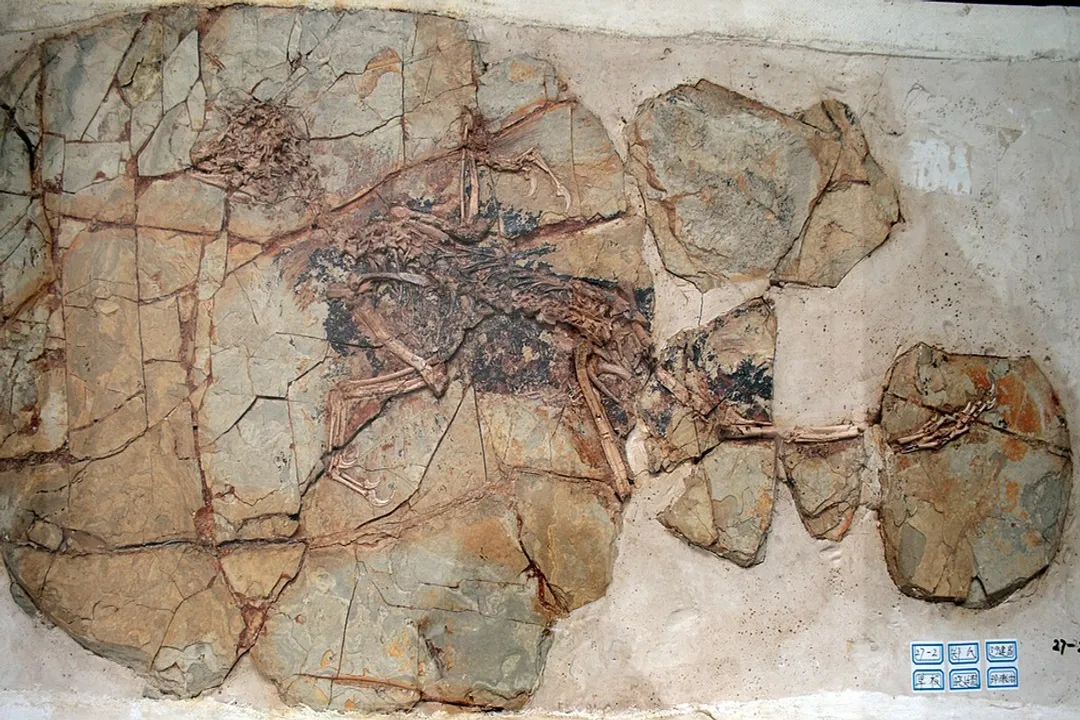
The morphology of the limb bones in Xiaotingia zhengi presented characteristics suggestive of avian capabilities. Specifically, the creature possessed a femur that was longer than its humerus. In the context of evolutionary anatomy related to flight, this bone proportion is often interpreted as providing the necessary leverage and anchoring points for the powerful musculature required to execute flapping locomotion, similar to what is observed in primitive birds. This feature conflicted with some purely predatory dinosaurian models, adding weight to the view that Xiaotingia was exploring flight-related capabilities.
Related Questions
What specific Deinonychosaur characteristic did Xiaotingia zhengi retain?From which specific geological formation was the fossil Xiaotingia zhengi unearthed?What comparison was made between the size of Xiaotingia zhengi and Archaeopteryx?What anatomical proportion in Xiaotingia hinted at musculature necessary for flapping locomotion?What radical suggestion did the initial phylogenetic analysis imply regarding the diet of primitive birds?Which shared skeletal feature supported the initial grouping of Archaeopteryx with Deinonychosaurs?Which scientist voiced reservations, suggesting the conclusions about Archaeopteryx demotion were over-hyped?What characteristic of Xiaotingia zhengi's feathers was noted on its femur and suggested possible hindlimb wing use?What inherent risk in evolutionary study does relying too heavily on Archaeopteryx demonstrate?What core difficulty in classification does the contrasting anatomy of Xiaotingia force researchers to confront?