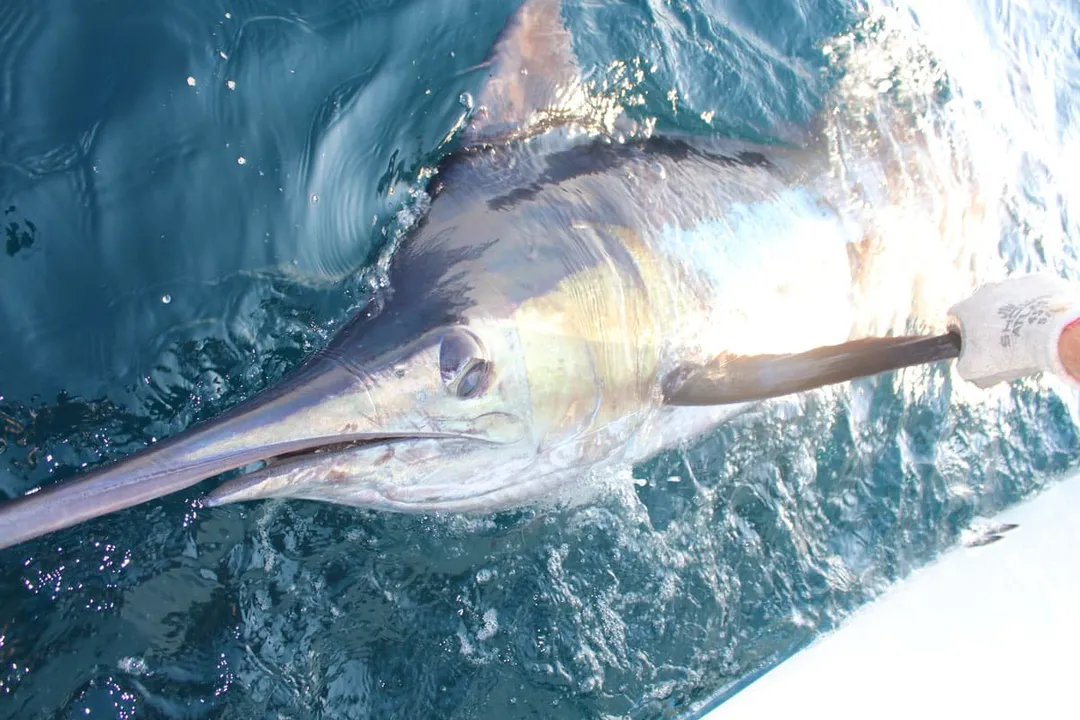
What anatomical feature explains why small crustaceans are usually only accidentally consumed by white marlin?
They lack gill rakers for filtering small suspended matter
The dietary intake of white marlin is heavily skewed toward larger, actively swimming prey like cephalopods and bony fishes, which they capture through active pursuit. The ingestion of minute prey, such as small crustaceans floating in the water column, is generally not a deliberate feeding strategy. The key physiological reason for this lack of preference or capability stems from their specialized anatomy. Specifically, white marlin do not possess the necessary gill rakers—the specialized filtering structures located in the branchial arches—that many other fish use to efficiently strain small, suspended food particles from the water as they swim. Consequently, while a crustacean might inadvertently be consumed during a lunge for a larger target, actively filtering or consuming tiny suspended matter is anatomically unsuited to their feeding mechanism.