To which geological period do the sediments containing *Xiongguanlong* date?
Answer
The Aptian to Albian stages of the Early Cretaceous period, approximately 125 and 99 million years ago.
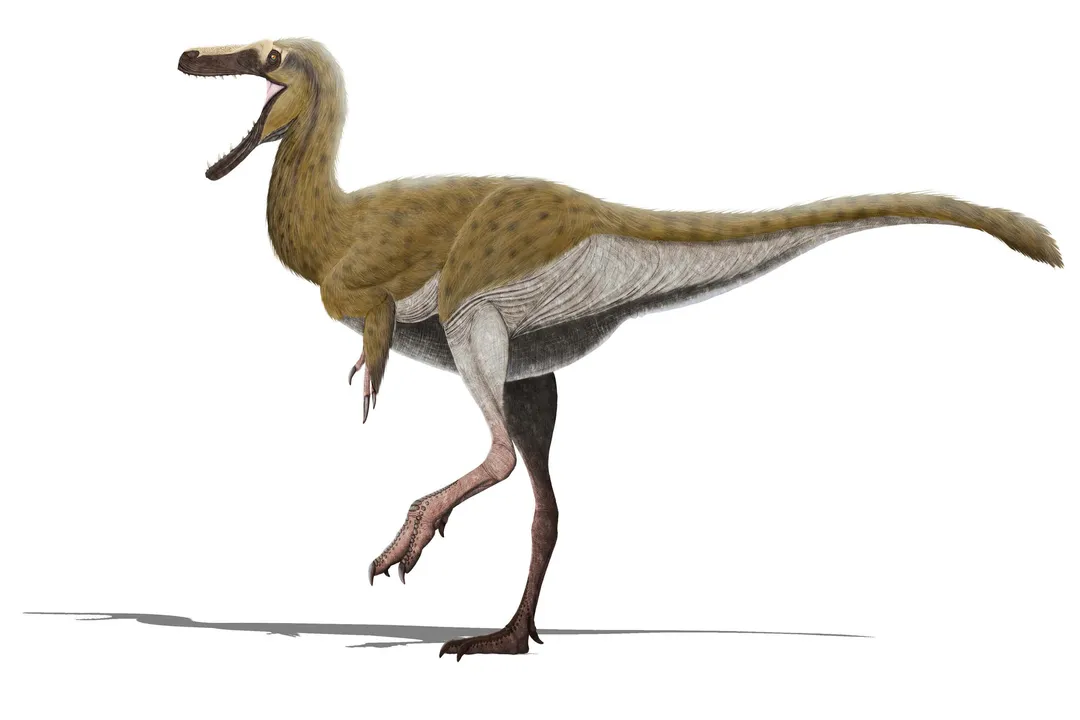
The geological context of *Xiongguanlong baimoensis* places it firmly within the Early Cretaceous. Specifically, the sediments of the Xinminpu Group within the Yujingzi Basin where the holotype was found date to the Aptian to Albian stages. This temporal assignment is crucial because it establishes the species as existing between roughly 125 and 99 million years ago, positioning it significantly earlier than the massive, well-known apex predators of the Late Cretaceous, such as *Tyrannosaurus rex*.
Related Questions
What geographical feature inspired the specific epithet *baimoensis* of *Xiongguanlong*?To which geological period do the sediments containing *Xiongguanlong* date?How does the skull morphology of *Xiongguanlong* contrast with derived Late Cretaceous tyrannosaurids?What unusual characteristic is noted regarding the premaxillary teeth of *Xiongguanlong*?In terms of evolutionary placement, what is *Xiongguanlong* recognized as within Tyrannosauroidea?What specific major jaw component was notably lacking from the holotype specimen of *Xiongguanlong*?Where does the estimated size of *Xiongguanlong* (170 to 300 kg) place it evolutionarily?What feature was noted about the vertebrae of *Xiongguanlong* compared to other basal tyrannosauroids?What does the geological setting of *Xiongguanlong* in Early Cretaceous Gansu suggest about tyrannosauroid evolution?Which contemporary genus shares a muzzle morphology reminiscent of *Xiongguanlong*'s long skull?