Xiongguanlong Scientific Classification
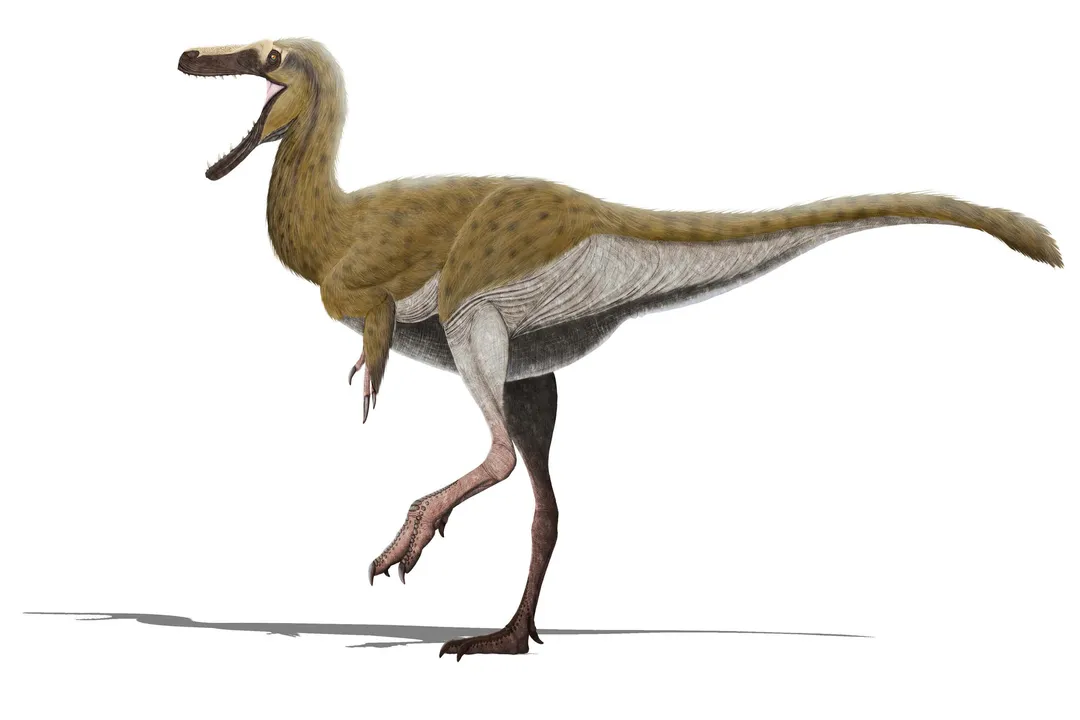
The designation Xiongguanlong baimoensis immediately signals a fascinating window into Early Cretaceous dinosaur evolution, anchoring a key piece of the tyrannosauroid story right in the heart of ancient China. This extinct, mid-sized carnivore represents a crucial step in the long lineage that eventually produced giants like Tyrannosaurus rex, showcasing a blend of primitive and advanced features that paleontologists carefully dissect to map out family relationships. The nearly complete skeleton recovered provides an unusually rich dataset for a dinosaur from this specific time slice, allowing for detailed study of its classification and anatomy.
# Naming Origin
The name itself tells a story of geography and local lore. Xiongguanlong translates roughly from Mandarin to mean "dragon from Xiong Guan" or "Grand Pass dragon", referencing the nearby city of Jiayuguan in northwestern China. The specific epithet, baimoensis, points directly to the discovery location, derived from bai mo, meaning "white ghost," named for the distinctive "White Ghost Castle" rock formation near where the fossils were unearthed. Interestingly, one account links the genus name to the Xiongguan Formation itself, suggesting a slightly different, though thematically similar, interpretation of "Xiagou Dragon". Regardless of the slight variation in translation emphasis, the name firmly roots this animal in the ancient landscapes of Gansu Province.
# Discovery Context
The formal description of Xiongguanlong baimoensis occurred in 2009, published by a research team involving paleontologists from both China and the United States, with the formal publication following shortly thereafter in January 2009. The material upon which this genus is founded is the holotype specimen, cataloged as FRDC-GS JB16-2-1. This remarkably preserved fossil assemblage, recovered from the Xinminpu Group within the Yujingzi Basin in western China, includes a complete skull—though notably lacking the lower jaws—the entire series of neck and back vertebrae, and parts of the right hip and upper leg bone (femur). Geologically, these sediments date to the Aptian to Albian stages of the Early Cretaceous period, placing Xiongguanlong between approximately 125 and 99 million years ago. This temporal assignment is vital, as it positions the animal well before the well-known Late Cretaceous apex predators.
# Hierarchical Placement
Scientific classification places Xiongguanlong precisely within the evolutionary tree of meat-eaters. At the broadest levels, it belongs to the Kingdom Animalia and the Phylum Chordata, possessing a backbone characteristic of the Subphylum Vertebrata. As a reptile, it falls into the Class Reptilia, and within that group, the Order Saurischia—the "lizard-hipped" dinosaurs.
The journey deepens into the Suborder Theropoda, the group comprising bipedal, mostly carnivorous dinosaurs. More specifically, Xiongguanlong is nested within the Infraorder Coelurosauria. The critical grouping for understanding its significance is the Superfamily Tyrannosauroidea. This superfamily contains all the tyrannosaurs, from the earliest basal forms to the massive Late Cretaceous species. Xiongguanlong is recognized as an advanced basal tyrannosauroid, meaning it sits outside the core Tyrannosauridae family but is very closely related to it, often serving as the sister taxon to the clade containing Appalachiosaurus and the Tyrannosauridae itself. The specific name X. baimoensis is the type species for the genus.
The complete taxonomic string, reflecting the scientific consensus from various databases, looks something like this:
| Rank | Taxon |
|---|---|
| Kingdom | Animalia |
| Phylum | Chordata |
| Class | Reptilia |
| Order | Saurischia |
| Suborder | Theropoda |
| Infraorder | Coelurosauria |
| Superfamily | Tyrannosauroidea |
| Genus | Xiongguanlong |
| Species | X. baimoensis |
Sources provide slight variations in the immediate preceding ranks, such as including Dinosauria as a Superorder and some sources place it as an intermediate between earlier tyrannosauroids and the later tyrannosaurids without assigning a formal family rank yet.
# Skeletal Anatomy
The physical characteristics recovered from the holotype provide the evidence supporting its placement as an evolutionary intermediary. Xiongguanlong was a mid-sized predator, estimated to have reached lengths of about 4 to 5 meters and weighed in the range of 170 to 300 kilograms. This scale places it comfortably between the smaller, Barremian-era tyrannosauroids and the imposing Late Cretaceous forms like Tyrannosaurus.
The most striking feature involves the skull. Xiongguanlong possesses a distinctive long and narrow skull, specifically an elongate preorbital region that accounts for more than two-thirds of the skull's length, giving it a muzzle reminiscent of the contemporary genus Alioramus. This morphology contrasts sharply with the deeper, boxier skulls characteristic of later, more derived tyrannosaurids built for immense biting force. Other unique skull traits include unornamented nasals and a sharp parietal sagittal crest at the back of the skull.
A key point for understanding its feeding style lies in the teeth. Unlike early tyrannosaurs such as Dilong or later ones like Gorgosaurus and Tyrannosaurus, Xiongguanlong appears to lack serrations along the carinae (the ridges) of its premaxillary teeth. This lack of specialized serrations suggests a different biomechanical approach to processing meat compared to its later, more heavily-built relatives. Furthermore, while its arm length was reduced compared to earlier tyrannosauroids, the reduction was not as extreme as seen in the giant tyrannosaurids. Finally, the vertebrae of Xiongguanlong were noted as being more robust than those in other basal tyrannosauroids, a feature hypothesized to be necessary for adequately supporting that long, albeit slender, skull.
An interesting detail emerges when comparing this morphology with later adaptations. While the long snout suggests early development toward a more specialized grab-and-slice predator, the robust vertebrae hint at a need to manage considerable stress, perhaps from wrestling prey larger than lizards or small mammals. The structure strongly implies that the evolutionary pathway toward the hypercarnivorous, bone-crushing T. rex involved a two-pronged development: one branch (seen in Xiongguanlong) emphasizing a long rostrum, and another branch prioritizing sheer jaw strength and skull depth.
# Evolutionary Bridge
Xiongguanlong is fundamentally important because it fills a morphological gap between two major stages of tyrannosauroid evolution. It showcases features that suggest the early stages of the lineage that would eventually dominate the end of the Cretaceous period were diversifying across Asia much earlier than perhaps previously assumed. Its position as an advanced basal member, splitting off right before the branch leading to Appalachiosaurus and the core Tyrannosauridae, positions it as an excellent specimen for studying the acquisition of later tyrannosaur traits.
Its geological setting in western China provides significant geographic context. Considering that many later, massive tyrannosaurs are well-known from North America and Mongolia, Xiongguanlong from the Early Cretaceous of Gansu offers evidence that the defining characteristics of the group—including skull elongation and arm reduction—were evolving within Asian faunas before the appearance of the most famous Late Cretaceous specialists. This suggests that the pressures shaping early tyrannosauroids were actively driving morphological change in East Asia during the Aptian-Albian, rather than simply inheriting a finalized blueprint from earlier ancestors. This specific evolutionary trajectory, marked by features like the long muzzle paired with teeth lacking full serrations, acts as a critical data point when constructing the timeline of tyrannosaur diversification across the globe. It’s not simply a "little T. rex"; it’s a creature adapted to its own specific niche in a warm, humid Early Cretaceous ecosystem, hunting prey suited to its medium size and unique dental weaponry.
Related Questions
#Citations
Dinosaur - Xiongguanlong baimoensis - The Australian Museum
Xiongguanlong | Dinopedia | Fandom
Xiongguanlong baimoensis - A-Z Animals
Xiongguanlong - Grokipedia
Xiongguanlong - Mindat
PBDB Taxon - Xiongguanlong - The Paleobiology Database
Xiongguanlong - Fossil Wiki - Fandom
Xiongguanlong - Prehistoric Wildlife