The folklore regarding the Woolly Bear's banding pattern is actually linked to what factor, rather than future weather?
Answer
Development stage and temperature exposure
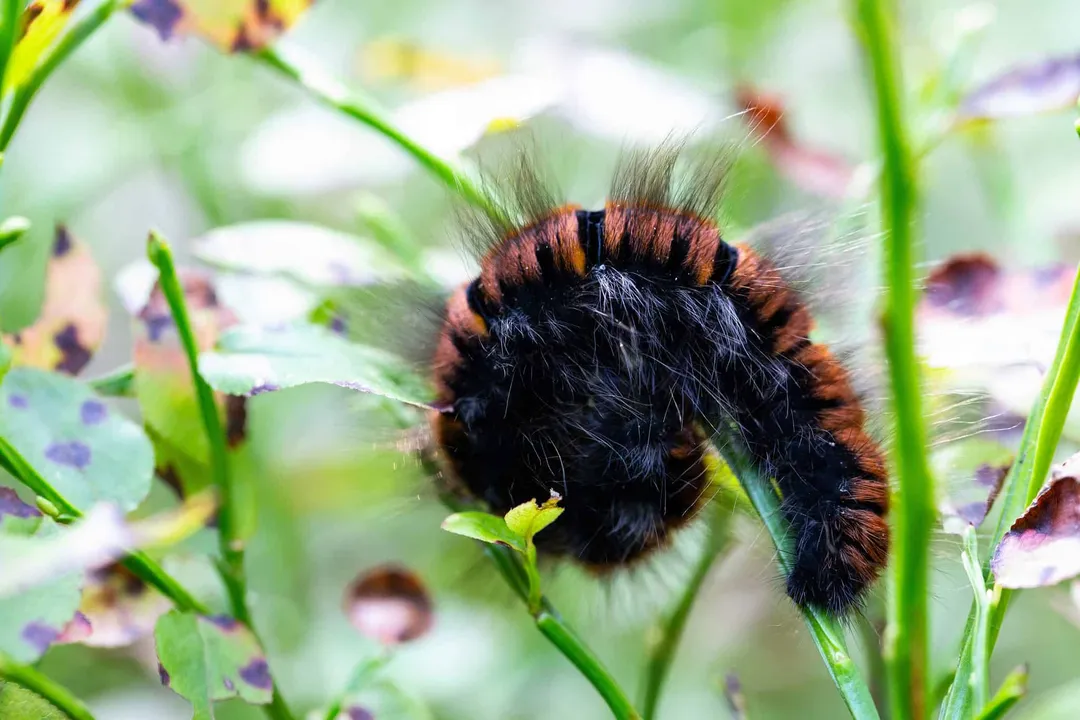
The popular folklore suggesting that the amount of black banding on the *P. isabella* caterpillar predicts the severity of the coming winter is scientifically inaccurate. The variation in the width of the black versus reddish-brown bands is actually correlated with the caterpillar's development stage and its cumulative exposure to ambient temperature throughout its growth period. Colder temperatures during development tend to result in larvae possessing more black bristle bands, particularly at the ends, which does not serve as a meteorological forecast.
Related Questions
What is the scientific designation for the Woolly Bear recognized across North America?Which Phylum groups the Woolly Bear based on its exoskeleton and jointed appendages?The Order Lepidoptera connects the Woolly Bear caterpillar to which general group of insects?Into which Family has modern taxonomy largely shifted species like *P. isabella* from older Arctiidae groupings?What is the common name for the adult form emerging after the pupation of *P. isabella*?What antifreeze substance does the Woolly Bear Caterpillar produce to survive freezing temperatures?What term describes the state of suspended animation the Woolly Bear enters during winter using antifreeze?Which fuzzy caterpillar, also in Erebidae, is distinguished from *P. isabella* by its often uniform coloration?Confirmation that the Woolly Bear is a true insect is established by its placement in which Linnaean Class?The folklore regarding the Woolly Bear's banding pattern is actually linked to what factor, rather than future weather?