In some zorses, where might zebra striping be localized instead of covering the entire body?
Answer
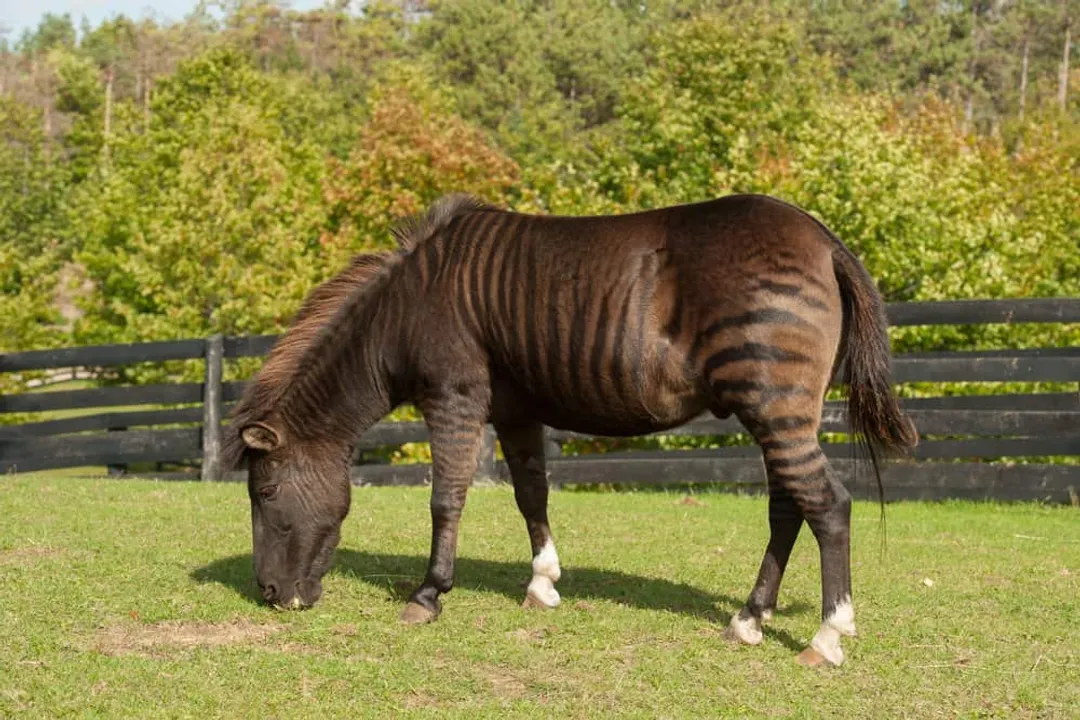
Confined primarily to the legs ("zebra stockings")
The distribution of the zebra striping on a zorse exhibits significant variability due to genetic inheritance. While some specimens display extensive striping over their entire body, others show much more localized patterns. One common form of localized striping involves the markings being confined almost entirely to the legs, a pattern frequently described using the term "zebra stockings." Striping can also concentrate on the hindquarters or the lower portion of the body. In less obvious cases, striping might be faint and only visible around the eyes or on the neck, meaning a lack of full-body coverage does not disqualify the animal from being a zorse.
Related Questions
What two species, Equus caballus and Equus zebra, are crossbred to create the zorse?Which parent species predominantly dictates the foundational body shape, overall size, and musculature of a zorse?What is the umbrella term for any animal resulting from a zebra cross, including the zorse?In some zorses, where might zebra striping be localized instead of covering the entire body?What characteristic regarding posture does the zorse mane frequently adopt from its zebra ancestry?If a zorse's base coat is chestnut or palomino, how do the resulting zebra stripes typically manifest?How does the reproductive potential of a zorse differ from that of a mule?Which structural feature helps distinguish a zorse from a zonkey?How do the stripes generally appear on a young zorse compared to an adult?What aspect of the zebra parent's pattern influences the markings on a zorse?