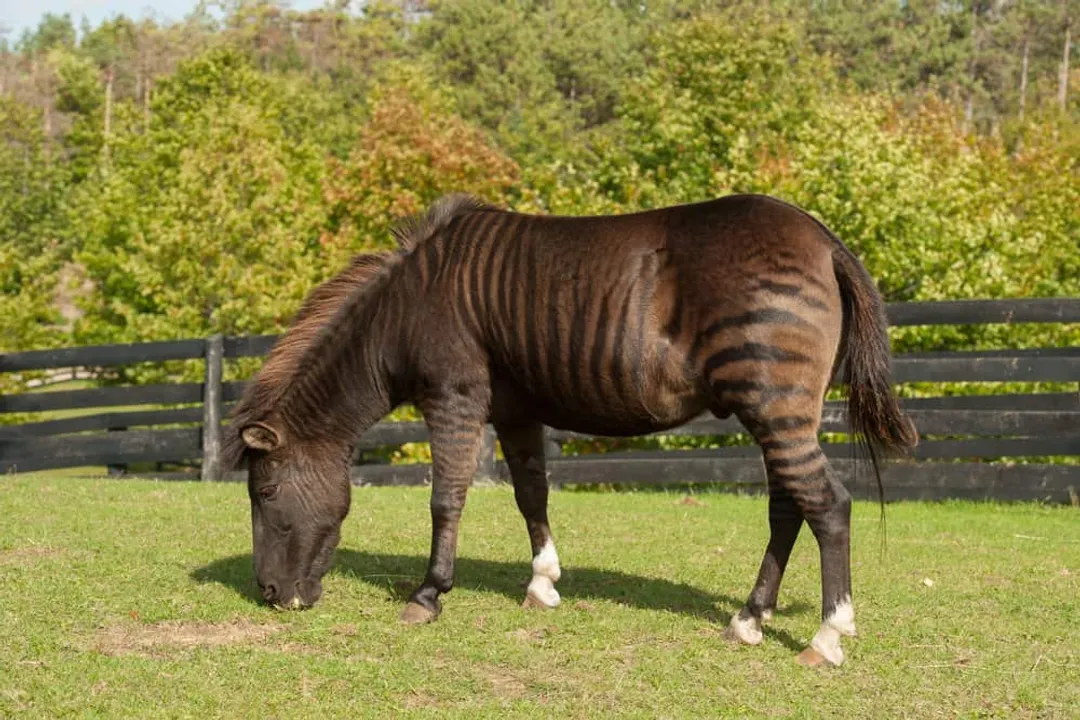
If a zorse's base coat is chestnut or palomino, how do the resulting zebra stripes typically manifest?
Answer
As dark mahogany or reddish-brown bands
The final visual appearance of the stripes is highly dependent on the background color, or base coat, inherited from the horse parent. Horses carry various pigments, leading to base coats like bay, black, or chestnut. When the base coat is red-pigmented, such as chestnut or palomino (which involve pheomelanin), the zebra stripes do not appear as the typical stark black and white. Instead, the stripes manifest as darker bands, often described as dark mahogany or reddish-brown hues overlaid upon the lighter base color, creating a striking contrast that is significantly different from the monochromatic appearance seen on a black-based coat.
Related Questions
What two species, Equus caballus and Equus zebra, are crossbred to create the zorse?Which parent species predominantly dictates the foundational body shape, overall size, and musculature of a zorse?What is the umbrella term for any animal resulting from a zebra cross, including the zorse?In some zorses, where might zebra striping be localized instead of covering the entire body?What characteristic regarding posture does the zorse mane frequently adopt from its zebra ancestry?If a zorse's base coat is chestnut or palomino, how do the resulting zebra stripes typically manifest?How does the reproductive potential of a zorse differ from that of a mule?Which structural feature helps distinguish a zorse from a zonkey?How do the stripes generally appear on a young zorse compared to an adult?What aspect of the zebra parent's pattern influences the markings on a zorse?