What class is the Mexican redknee tarantula a member of?
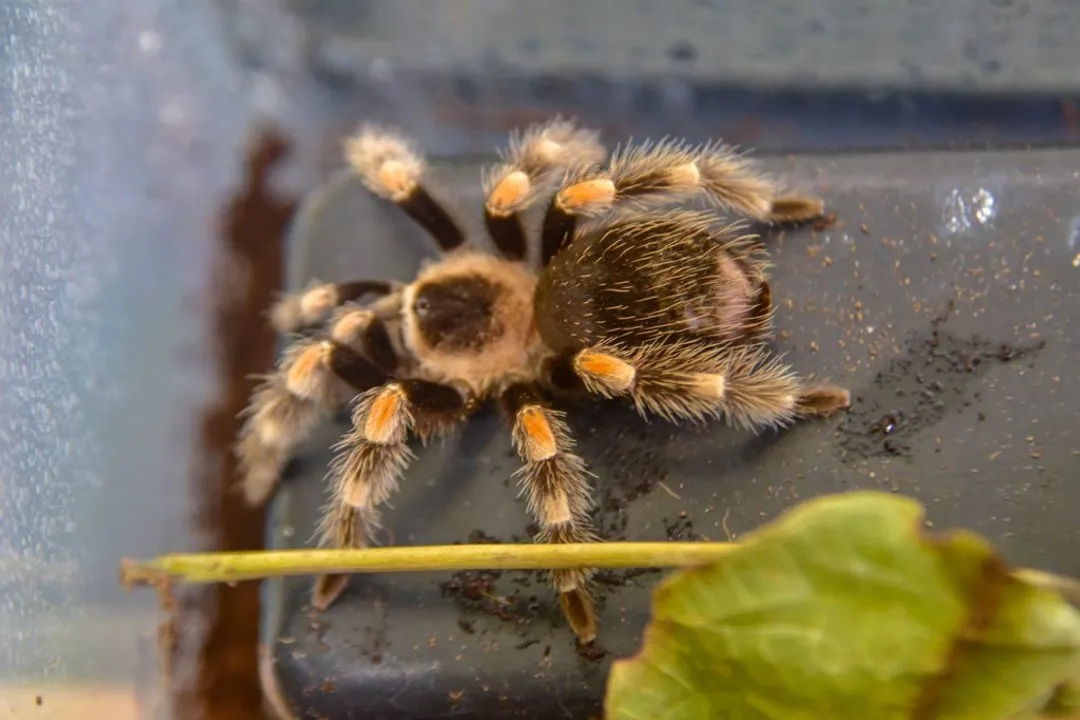
The creature known commonly as the Mexican Redknee Tarantula commands attention not only for its striking appearance—the vivid orange or red leg joints contrasting with its dark body—but also for its specific place within the grand scheme of life on Earth. When tracing its lineage through the biological classification system, one finds that this popular invertebrate belongs to the Class Arachnida. [8] This designation immediately separates it from insects, fish, birds, and mammals, placing it firmly among creatures that share specific, ancient anatomical blueprints.
# Animal Kingdom Rank
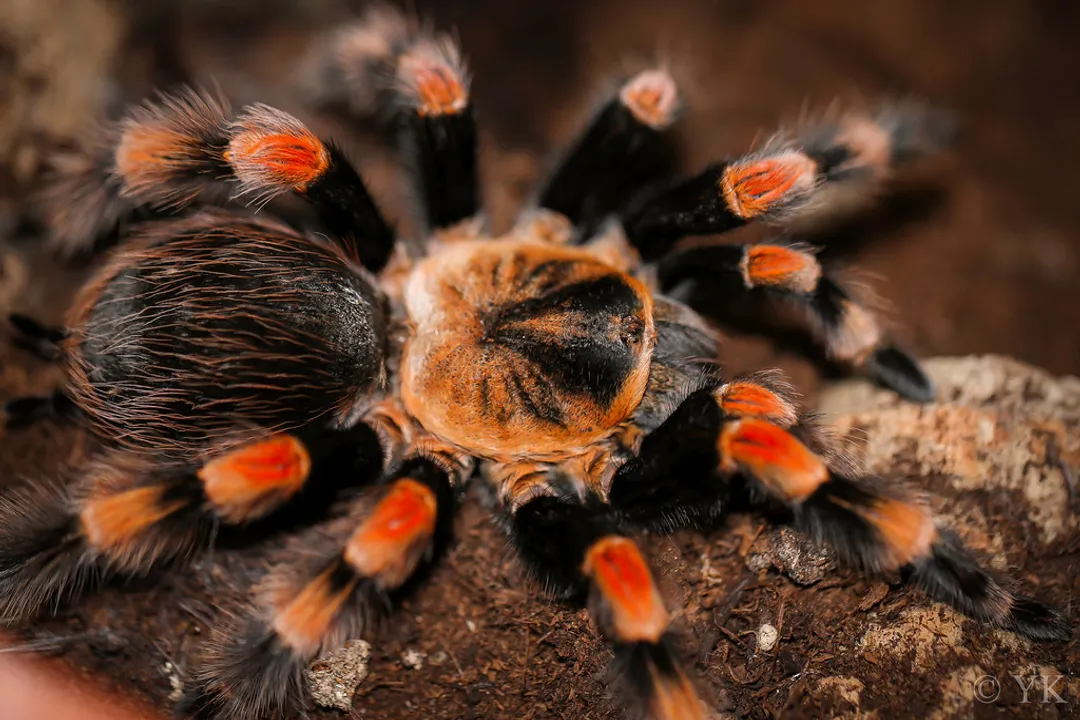
To fully appreciate what the Class Arachnida signifies, it helps to zoom out and examine the entire taxonomic road map leading to the Mexican Redknee Tarantula. This spider is a multicellular organism placed within the Kingdom Animalia, meaning it is heterotrophic and mobile. [8] Moving down the hierarchy, it belongs to the Phylum Arthropoda, a massive group characterized by exoskeletons, segmented bodies, and jointed appendages. [8] This places it alongside insects, crustaceans, and millipedes.
The next major step down is the Class, which is Arachnida. [8] Following this class, the Mexican Redknee Tarantula falls into the Order Araneae, which is the scientific grouping exclusively for spiders. [6] The specific species name has seen some recent clarification; while often historically associated with Brachypelma smithi, the commonly kept and often wild-collected individual fitting the exact description is now frequently identified as Brachypelma hamorii. [4][6] Regardless of the precise species, the placement within Arachnida remains constant.
To visualize this placement, consider a simplified breakdown of its major taxonomic steps:
| Taxonomic Rank | Group Name | Key Feature Implied |
|---|---|---|
| Kingdom | Animalia | Living, motile organism [8] |
| Phylum | Arthropoda | Exoskeleton, jointed legs [8] |
| Class | Arachnida | Eight legs, two body segments [8] |
| Order | Araneae | True spiders |
| Genus | Brachypelma | Terrestrial, New World tarantulas |
This consistent ranking highlights that whether one is observing a large Brachypelma or a tiny predatory mite, the fundamental body plan dictated by the Class Arachnida is shared. [8]
# Arachnid Distinctions
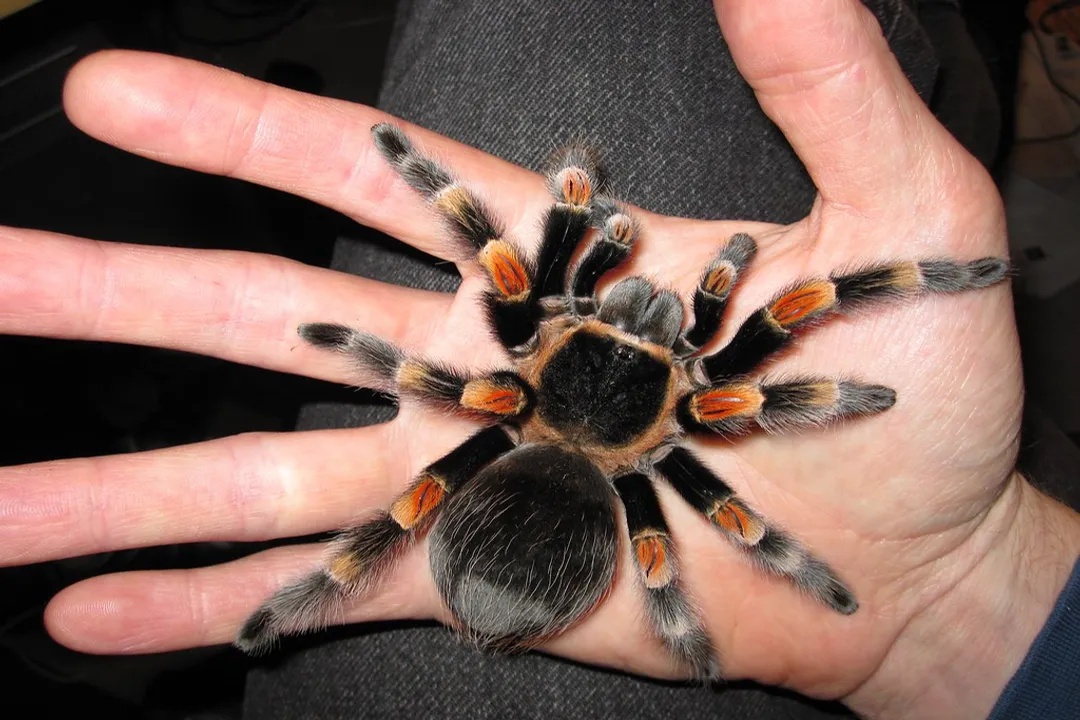
The Class Arachnida is defined by several key morphological traits that distinguish its members from other arthropods, particularly insects. The most obvious difference, and one that any prospective keeper quickly learns, is the eight-legged count. [8] Insects have six legs; arachnids have four pairs. Furthermore, arachnids possess a body divided into only two main parts: the cephalothorax (a fused head and thorax) and the abdomen. [8] Insects, by contrast, have three distinct sections: head, thorax, and abdomen.
The presence of specialized mouthparts also sets them apart. Arachnids typically possess chelicerae, often modified into fangs for injecting venom, as tarantulas use to subdue prey. [6] This contrasts with the mandibles and various other mouthpart configurations found in most insects. Additionally, arachnids possess pedipalps, which look like a small, fifth pair of legs near the mouth, used for sensing, manipulating food, and in males, for reproduction. [6]
For the enthusiast learning about captive care, understanding the Class classification is more than just academic; it informs husbandry. Creatures in the Class Arachnida, especially terrestrial tarantulas like the Redknee, have different respiratory needs than insects. They breathe using book lungs, specialized internal structures that require a humid, but not overly wet, environment to function optimally. [1][9] The substrate depth and enclosure ventilation requirements are tailored to the needs of an organism that breathes through these structures, rather than the spiracles common to insects.
# Species Naming History
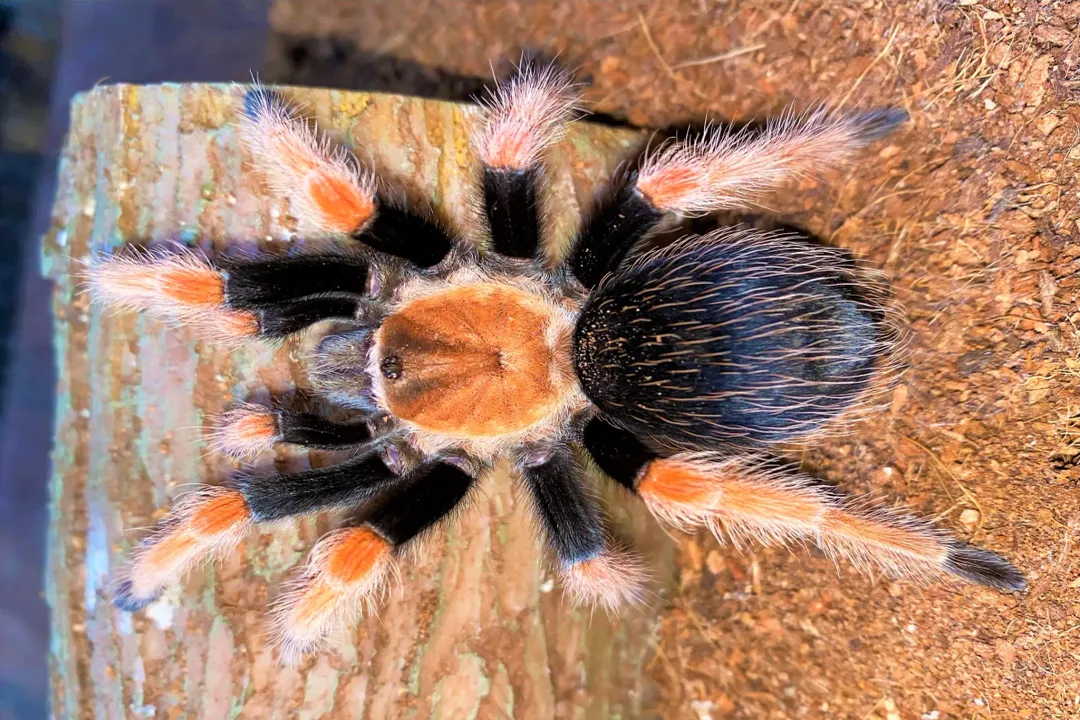
While the Class is stable, the species level for the Mexican Redknee Tarantula has been a point of mild confusion and scientific reclassification, offering a fascinating case study in taxonomy. For a long time, the iconic spider was referred to as Brachypelma smithi. [4] However, research and comparison between geographically separated populations led to a split. [4]
The current consensus places the widely recognized spider with the distinct red/orange knees as Brachypelma hamorii. [4][6] The original B. smithi designation now generally refers to a closely related, but visually distinct, Mexican endemic population. [4] This subtle difference emphasizes why precise scientific nomenclature matters, even for an animal whose common name is so well-established. Although zoo exhibits and older literature may still use the smithi name, reputable keepers and suppliers now correctly identify the sought-after Redknee as B. hamorii. [4][9] This distinction is less about the Class Arachnida and more about the specific genus Brachypelma, but it shows the continuous process of scientific authority defining the animal under discussion. [6]
# Keeper Considerations
Considering the Redknee's classification within the terrestrial New World tarantulas of the Brachypelma genus, keepers need to focus on environmental stability, a requirement often more critical for slow-metabolizing arachnids than for many common insect pets. While insects might tolerate wider temperature swings, the moderate, semi-arid conditions these tarantulas evolved in within their native habitat demand consistency. [1][9]
One insightful observation for long-term keeping relates directly to their longevity, a trait often associated with slow development typical of many arachnids. Females of this species can live for several decades. [1] This longevity means that the initial enclosure setup, which reflects their Class and Order characteristics—focusing on appropriate humidity management for book lungs and sturdy, low-height housing to prevent fatal falls—must be maintained for years, potentially spanning the keeper's own life stages. It’s a commitment that contrasts sharply with shorter-lived arthropods.
Another important management point derived from their Arachnida characteristics involves defense mechanisms. Unlike Old World tarantulas, Brachypelma species are New World tarantulas, and their primary defense, beyond fleeing, is the kicking of urticating hairs from their abdomen. [1] These microscopic, barbed bristles are an evolutionary adaptation specific to many members of the New World spider clades within the Class Arachnida. Recognizing this defense mechanism is crucial; it means keepers must prioritize handling minimization, as the hairs can cause severe irritation to skin and mucous membranes, a risk that a keeper unfamiliar with arachnid-specific defenses might underestimate. [1]
# Habitat Niche
These spiders spend most of their time on the ground in their native scrub and dry forest environments in Mexico. [1][5] They are known for burrowing, which speaks to their reliance on ground moisture regulation, a key feature for an arachnid whose respiratory system depends on internal humidity levels rather than direct atmospheric moisture intake like some amphibians or insects. [5]
Their common name might suggest a preference for high humidity, but their classification within the dry, terrestrial environment of the Brachypelma genus means the humidity should be kept moderate, perhaps around 60-70%, with dry substrate over most of the enclosure, allowing the spider to retreat to a moist corner if necessary. [9] This balance is a direct translation of their natural environment as a terrestrial arachnid, where stagnant, high humidity can lead to mold or respiratory issues, despite their need for moisture. [1] The Redknee's specific niche is not simply "spider," but "ground-dwelling burrowing arachnid," which demands specific substrate depths and enclosure setups that allow them to express this innate behavior safely. [5]
The final classification places the Mexican Redknee Tarantula securely within the eight-legged, two-bodied realm of the Arachnida, a class that has been thriving on Earth for hundreds of millions of years, showcasing remarkable biological success through specialized adaptations like book lungs and venom delivery systems. [8]
Related Questions
#Citations
Mexican Redknee Tarantula - The Maryland Zoo in Baltimore
Mexican Red-knee Tarantula - Saginaw Children's Zoo
Mexican Red-kneed Tarantula | Saint Louis Zoo
Brachypelma hamorii (formerly B. smithi) Common Name: Mexican ...
Mexican Redknee Tarantula (Brachypelma smithi) - Alfred Kucera
TARANTULA GENUS SPOTLIGHT: Brachypelma | - Dave the Bug Guy
Mexican Redknee Tarantula: 12 Fascinating Facts - Wildlife Nomads
MEXICAN RED-KNEE TARANTULA - KYIVZOO
Brachypelma hamorii - The Tarantula Collective