How do walruses efficiently extract the soft tissues from buried prey like clams?
Answer
By pressing their mouth against the prey and using powerful suction
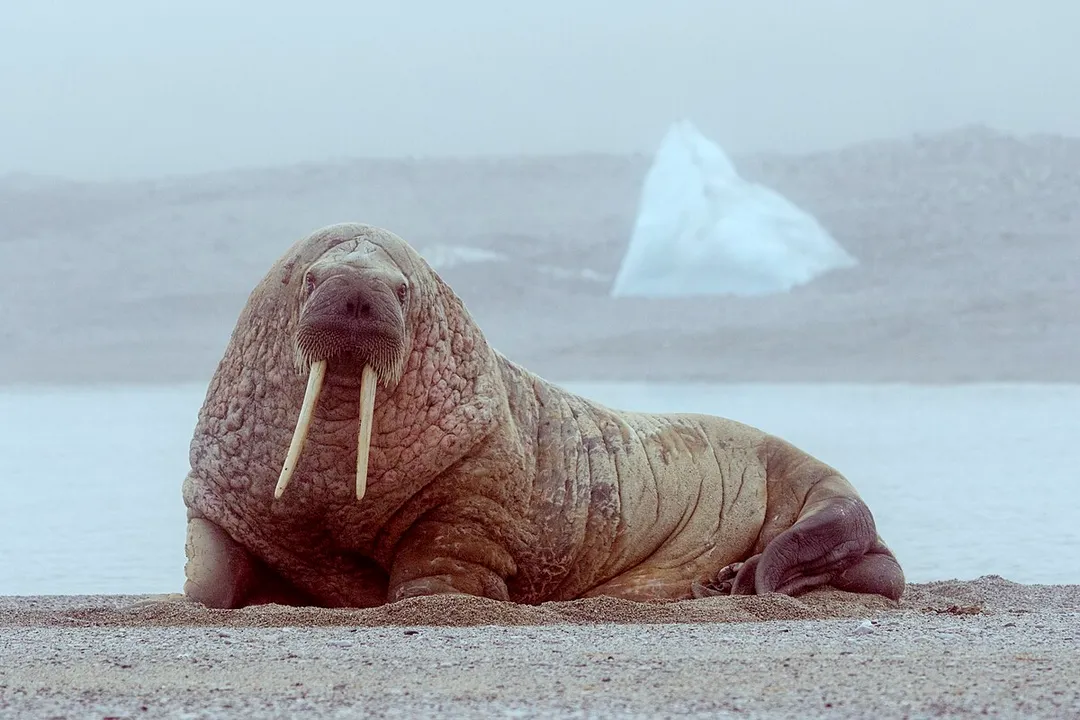
Walruses employ a highly specialized feeding technique for consuming their preferred diet of benthic invertebrates, particularly bivalves like clams. Once the prey is located using their sensitive vibrissae, the walrus does not chew the food conventionally. Instead, it firmly presses its mouth structure against the buried organism and utilizes powerful suction to draw out the soft internal tissues. This mechanism is remarkably forceful; observational studies in laboratory environments have demonstrated the ability of a walrus to create a vacuum sufficient to entirely evacuate small bivalve shells, which are subsequently expelled empty.
#Videos
Walrus | Amazing Animals - YouTube
Related Questions
What function is incorrectly assumed to be the primary use for walrus tusks?What specific structures are covered densely around the walrus's muzzle for sensing?What physiological process causes the walrus skin to take on a noticeable reddish-pink hue?What is the specific term for the large, tightly packed resting groups of walruses?How do walruses efficiently extract the soft tissues from buried prey like clams?What is the typical gestation period length for a female walrus carrying a single calf?Which two seas are the primary habitat regions for the largest Pacific walrus population?What are the specific sounds walruses produce when communicating underwater?What feature do walrus calves possess at birth, despite their small size?What is the primary contemporary conservation threat linked to walrus reliance on sea ice?What is the major dietary composition of the walrus, despite their opportunistic feeding habits?