How do the activity levels of captive wallabies often differ from their wild counterparts?
Answer
Captive animals have more predictable daily routines dictated by feeding schedules
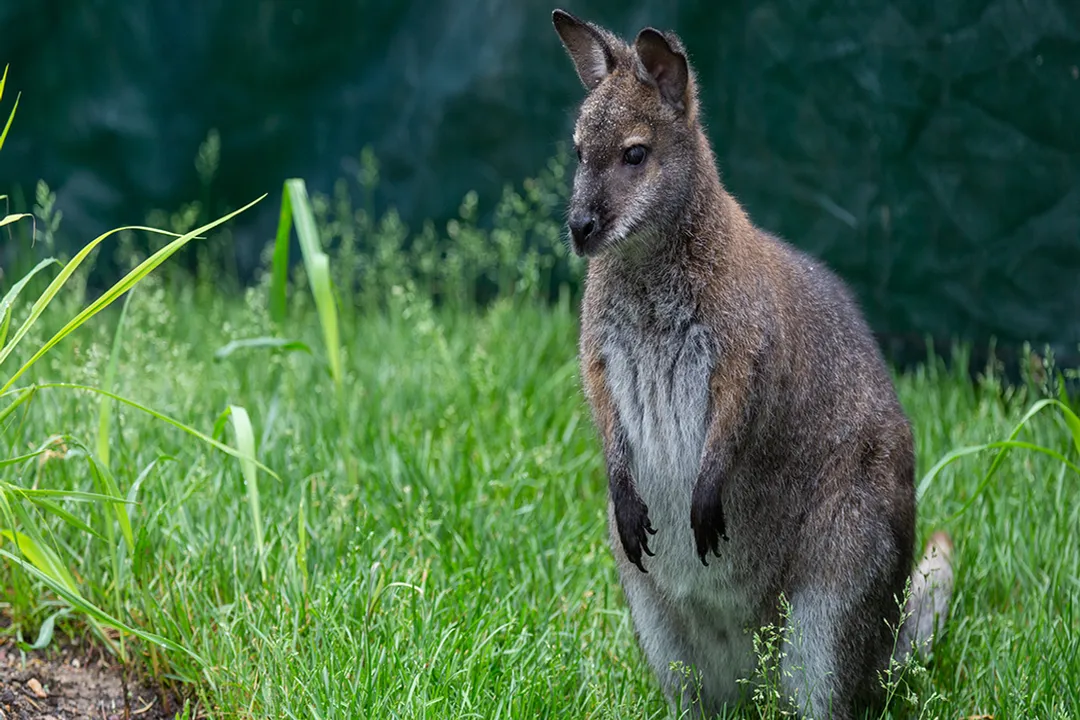
A key difference between wallabies in controlled environments, such as those found at the Smithsonian's National Zoo, and those living in the wild relates to their activity patterns. Wild wallabies often adhere to crepuscular or nocturnal habits, being most active around dawn or dusk and resting during the day's heat. In contrast, captive wallabies typically exhibit more predictable daily schedules, which are often governed and structured around the set times when keepers provide their food rations, thus making their activity patterns easier for visitors to observe.
Related Questions
To which zoological family do Wallabies belong alongside kangaroos?Which region implements significant government intervention managed by MPI to control wallabies?Which wallaby type is featured at the Turtleback Zoo?Besides New Zealand, where have feral wallaby populations established themselves in the United Kingdom?What organization actively protects native wallaby species and their environments in Australia?When are wallabies most likely to be sighted grazing near water sources in the wild?Although generally smaller, which genus do wallabies share with kangaroos?If a wallaby species favors rocky terrain, where would it likely not be observed grazing?Why does the Ministry for Primary Industries (MPI) manage wallaby eradication programs in New Zealand?How do the activity levels of captive wallabies often differ from their wild counterparts?