At what age do white-tailed deer fawns typically lose their white spots?
Answer
Around three to five months of age
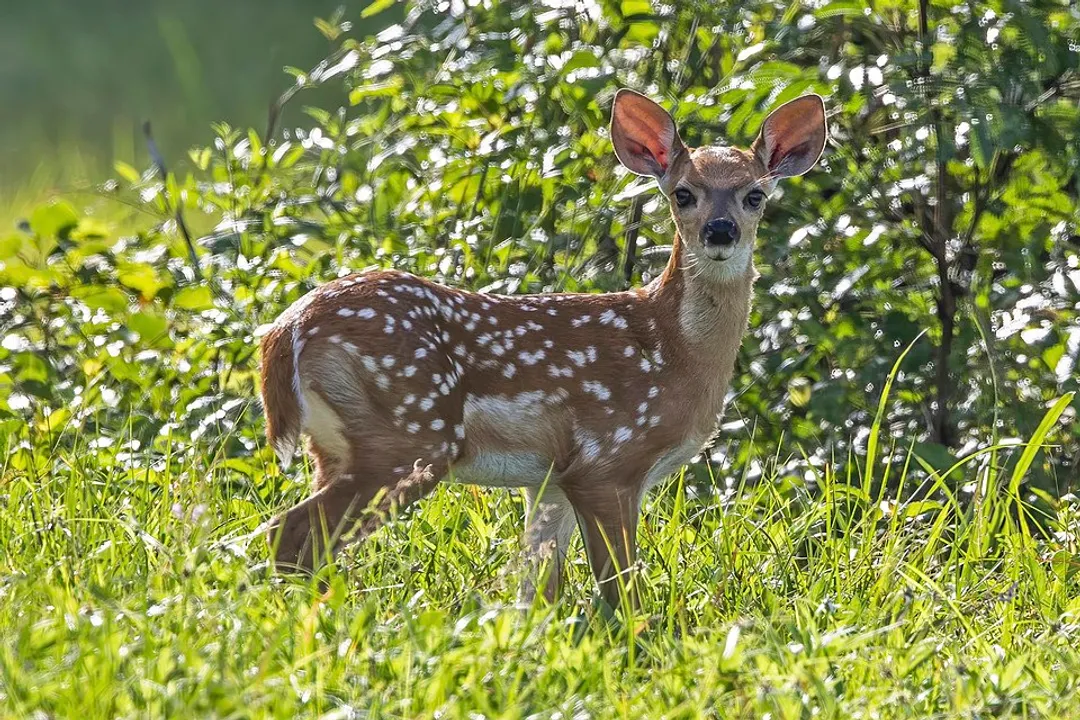
Newborn white-tailed deer fawns are covered in a distinctive pattern of bright white spots over a reddish-brown base coat. This dappled pattern is vital for survival, mimicking filtered sunlight on the forest floor to hide the vulnerable young from predators. This highly effective camouflage is temporary; the fawn gradually sheds these spots as it matures. The transition to the characteristic solid adult coat usually occurs when the fawn is approximately three to five months old, signaling the successful navigation of its most vulnerable developmental stage.
Related Questions
What is the scientific name for the white-tailed deer?What is the typical mature weight range for an adult doe?What color is the white-tailed deer's summer coat?How are the hairs of the winter pelage adapted for thermoregulation?At what age do white-tailed deer fawns typically lose their white spots?What is the term for the deer raising its tail erect to reveal the white underside?What is the name for the soft, blood-vessel-rich skin covering growing antlers?What internal feature allows the white-tailed deer, a ruminant, to break down tough plant matter?Which dental feature is characteristic of white-tailed deer, like other true deer?How high can a white-tailed deer commonly leap over obstacles?