Are water voles known for hoarding large stockpiles of fresh summer vegetation?
Answer
No, they rely instead on consistent access to living material until winter conditions dictate a change
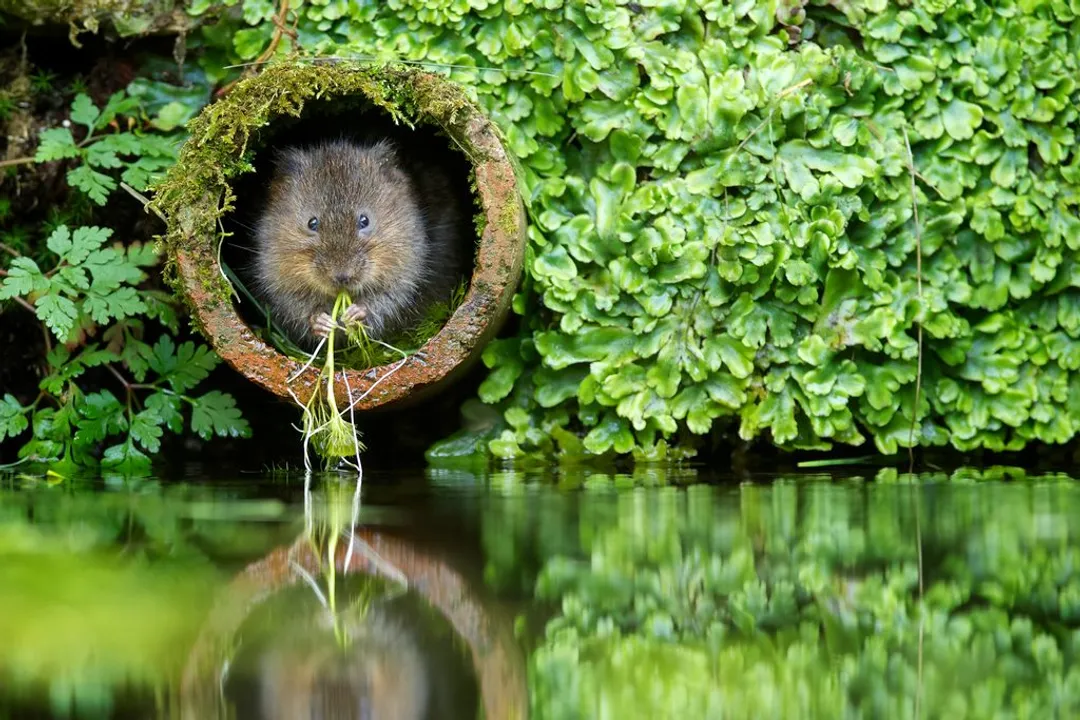
Unlike some other rodent species that build up substantial stores of food in preparation for scarcity, the water vole's typical behavior does not include hoarding large caches of fresh summer food underground. Their strategy during the summer is based on consistent, high-volume consumption of currently available green growth. When the environment shifts in winter, forcing them to adopt a diet of roots and bark, their survival hinges on accessing these more durable, hidden food sources rather than relying on supplies they prepared months earlier.
Related Questions
What plant families constitute the bulk of the water vole's summer menu?What is the estimated daily consumption quantity required by a water vole?What durable food sources replace fresh growth in the water vole's winter diet?Which location preference guides the water vole's summer feeding strategy?How do water voles typically prepare food before ingesting it?What ecological factor related to bark consumption suggests it is a survival measure?What does the need for constant foraging imply about the nutrition of grasses and reeds?What resource do roots provide that makes them a vital component of the winter diet?Are water voles known for hoarding large stockpiles of fresh summer vegetation?What breaks down the tough cellulose found in the water vole's staple summer diet?