Why does the scaly-foot gastropod exhibit a slow growth rate?
Answer
Limited energy availability from chemosynthesis
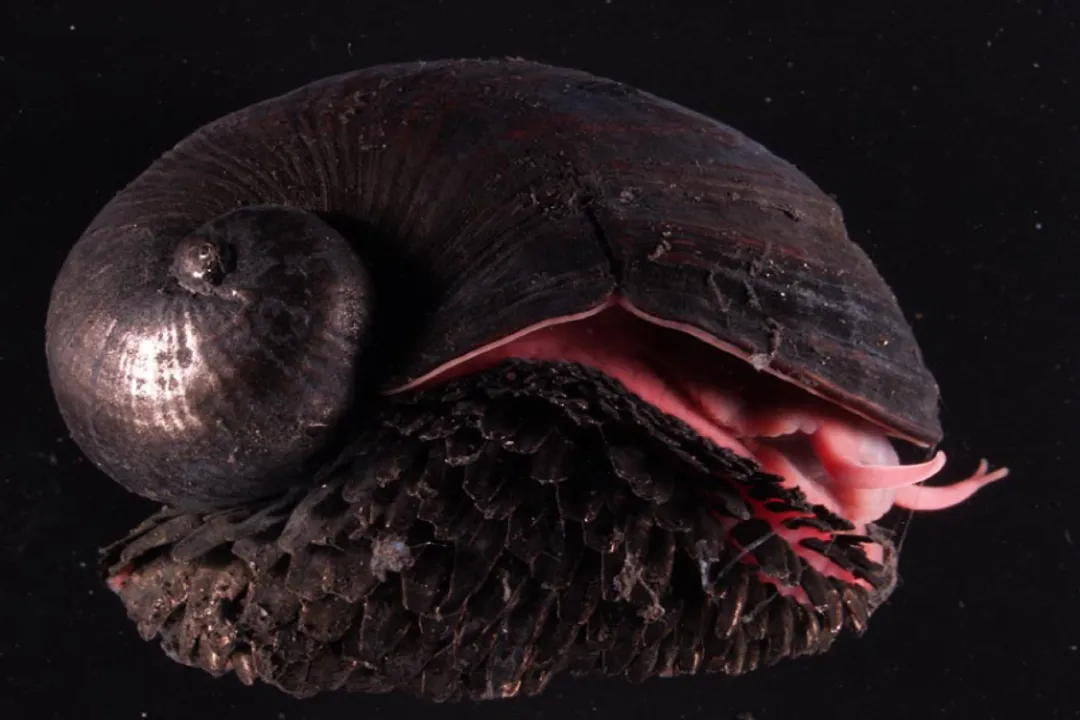
The scaly-foot gastropod has a relatively slow growth rate, a trait common to many organisms in stable, energy-limited habitats. Because the primary production in this environment relies on chemosynthesis, the total energy available to the food web is lower compared to photosynthetic ecosystems. This limited energy supply dictates a slower metabolic rate for the snail. Furthermore, in such stable deep-sea environments, there is less evolutionary pressure to grow rapidly, allowing the snail to develop over a protracted period, supported by the consistent, albeit limited, energy source provided by the vent bacteria.
#Videos
The Insane Biology Of The Volcano Snail - YouTube
Related Questions
What defines the unique shell composition of the scaly-foot gastropod?Which specific minerals form the outer armor of Chrysomallon squamiferum?At what depth is the scaly-foot gastropod typically found?What energy source fuels the ecosystem around hydrothermal vents?What specific biological process is used to build the metal shell?How hot can hydrothermal vent fluids reach in the snail's habitat?What genomic feature aids the scaly-foot gastropod in detoxification?Why does the scaly-foot gastropod exhibit a slow growth rate?What does the scaly-foot gastropod primarily eat?What potential application exists for studying the scaly-foot gastropod?Which mineral, with the formula Fe3S4, is incorporated into the shell?