Why does the concept of an individual male lifespan become almost irrelevant for deep-sea anglerfish like ceratioids?
Answer
Because the male fuses with the female, becoming a parasitic appendage sustained by her bloodstream
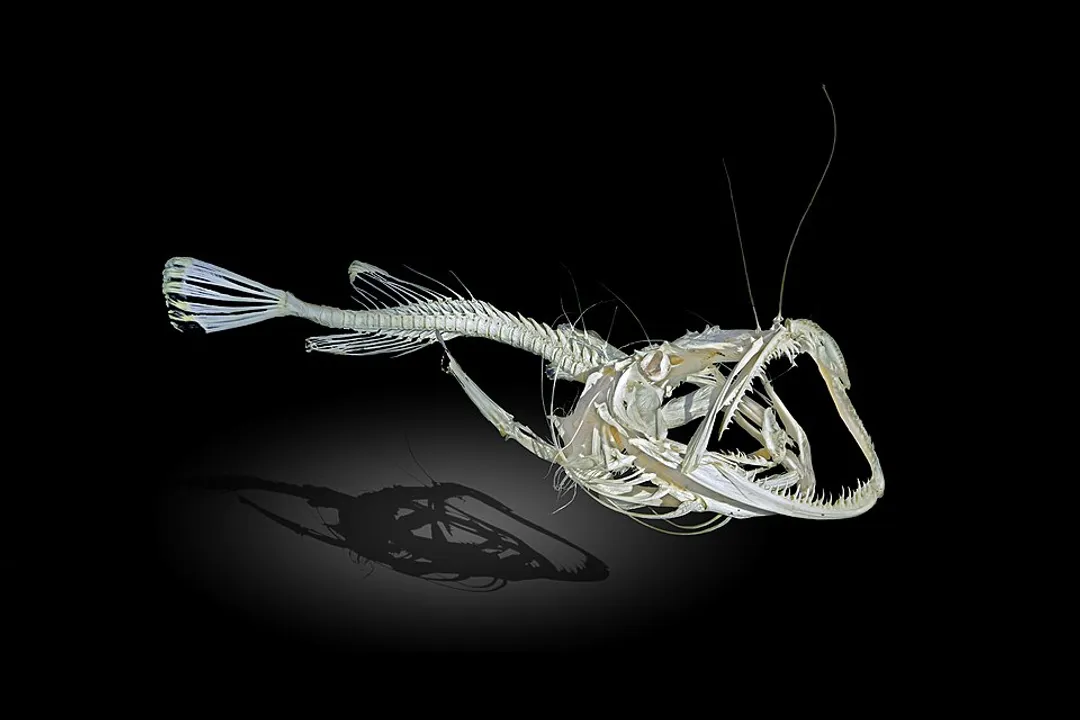
For deep-sea ceratioid males, the pursuit of independent existence ends when they achieve reproductive pairing. Once the tiny male locates and bites onto the female, initiating the fusion of tissues, his independent existence ceases. He becomes physically and physiologically integrated into the female, deriving all necessary sustenance from her bloodstream. In this parasitic state, his survival is entirely linked to the female's ability to survive and forage; thus, the limiting factor for the reproductive unit's longevity is the female's lifespan, rendering any calculation of a separate male lifespan meaningless.
Related Questions
What is the maximum lifespan projection established for female Lophius piscatorius in the wild?At what approximate age does the male Lophius piscatorius typically reach sexual maturity?What is the general maximum lifespan estimate sometimes cited for the dominant female deep-sea ceratioids?What biological event initiates the transformation of the deep-sea male anglerfish into a permanent appendage?What environmental pressures significantly reduce the potential lifespan of Lophius piscatorius in shallower waters?What specific physiological adaptation do deep-sea anglerfish possess to cope with food scarcity?Why does the concept of an individual male lifespan become almost irrelevant for deep-sea anglerfish like ceratioids?How long does the female Lophius piscatorius generally take to reach sexual maturity?What primary advantage does the parasitic attachment strategy offer the deep-sea male anglerfish?What fundamental difference characterizes the reproductive investment strategy of the shallow-water female versus the deep-sea male anglerfish?