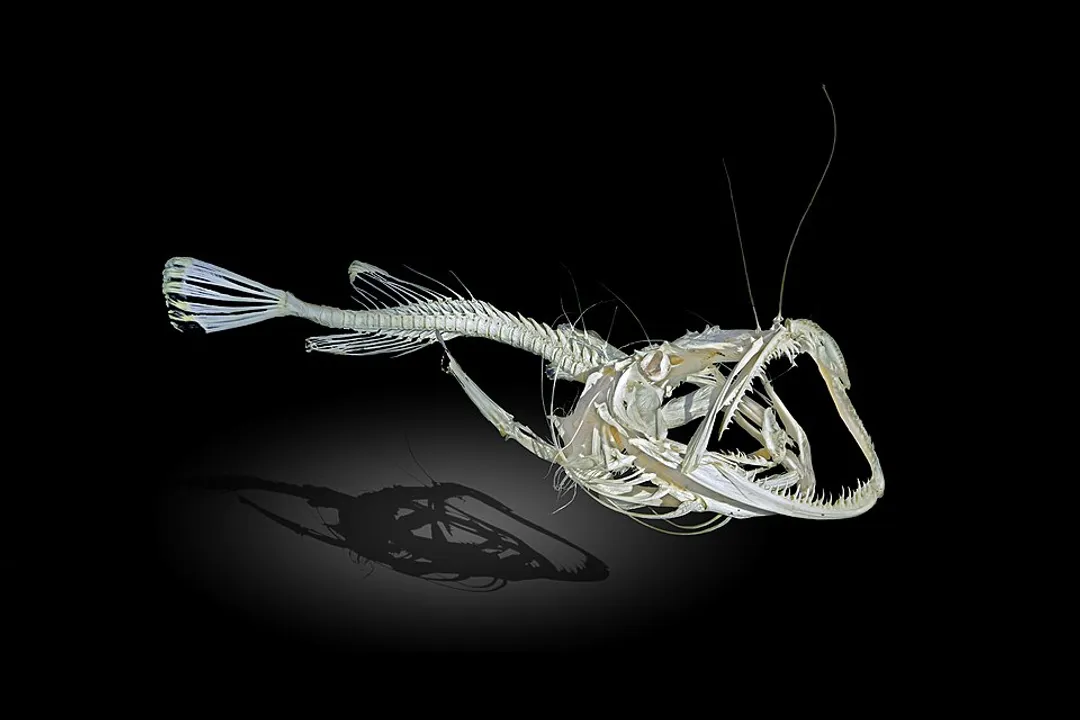
What fundamental difference characterizes the reproductive investment strategy of the shallow-water female versus the deep-sea male anglerfish?
Long, independent maturation for the shallow-water female versus immediate, permanent dependence for the deep-sea male
The crucial difference between the two reproductive models lies in the timing and nature of investment. The shallow-water female, exemplified by *L. piscatorius*, undergoes a long, independent maturation process, taking 14 years to reach full reproductive capacity, necessitating significant energy expenditure toward growth and eventual egg production. Conversely, the deep-sea male forgoes this independent growth phase; upon locating a female, he immediately commits to permanent dependence by fusing his body, thus skipping the energy drain and risks inherent in courtship. This contrast highlights a fundamental evolutionary divergence: one strategy prioritizes prolonged independent development, while the other prioritizes immediate, guaranteed reproductive linkage.