How long can larder beetles live without food?

The sheer resilience of pests like the larder beetle often leads homeowners to ask about their capacity to endure deprivation. When one finds these dark, banded beetles in an area that seems utterly devoid of anything edible, the immediate query becomes: just how long can Dermestes lardarius survive when the pantry is empty? The reality is less about indefinite survival and more about the insect's profound ability to locate hidden, high-protein sustenance and its capacity to enter states of reduced activity when resources vanish.
# Pest Diet
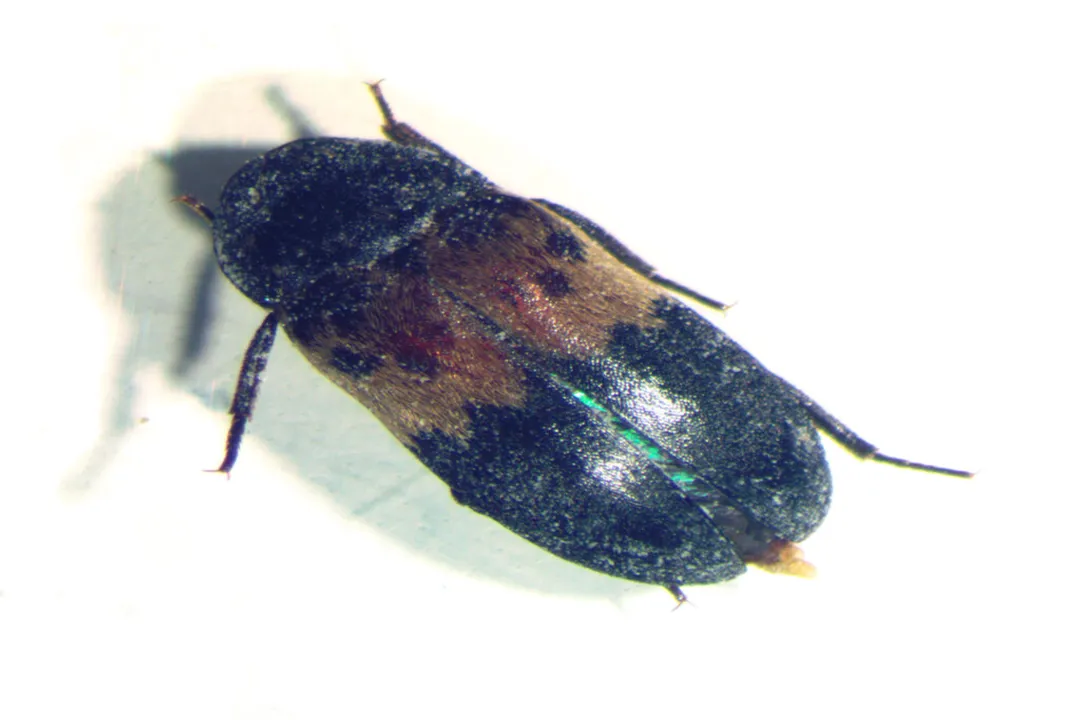
The name itself gives a significant clue to their primary historical interest: the larder, where cured meats were stored. [6] These beetles are categorized as stored product pests, thriving on materials derived from animals. [10] Both the adult beetles and, more importantly, the destructive larvae seek out high-protein items. [5][9]
What constitutes a suitable meal for a larder beetle larva? The list covers many organic materials that might go unnoticed: dried meats, bacon, ham, cheese, and dried fish. [3][7][10] In modern settings, this often translates to dry pet food, which is a frequent source of household infestations. [1][4][5] Beyond pantry items, their diet includes animal hides, furs, and feathers. [4][10]
What many people overlook is that larder beetles are also nature's scavengers, filling a critical ecological niche outdoors that often brings them into conflict with structures indoors. [10] They feed readily on dead insects, such as cluster flies or boxelder bugs that accumulate in wall voids, attics, or inside light fixtures during overwintering periods. [1][3][4][5] If a rodent or bird succumbs within a wall cavity or chimney, this becomes a substantial, if gruesome, food source that can sustain a significant population of beetles until the carcass is consumed. [3][4][10]
# Life Cycle Pace

Understanding how quickly they can complete their development cycle when food is available helps frame their overall hardiness. When environmental conditions are ideal—generally warm, around with plenty of nourishment—the entire generation can be completed relatively quickly. [3][4]
The process begins with the female laying over 100 eggs directly on or near the food source. [1][6][7] These eggs typically hatch within about two weeks, sometimes less. [3][6][10] The larval stage is where the majority of the feeding and damage occurs. [2] Larvae will feed voraciously for approximately 40 to 50 days, growing larger through multiple molts before they are ready to transition. [1][4] Once fully grown, they leave the food source to find a sheltered spot to pupate. [3][4] This inactive, pupal stage is brief, usually lasting between three and seven days, depending on temperature and moisture levels. [1][3][10] Following pupation, the adult emerges, ready to mate and restart the cycle. [6] In the most favorable scenarios, this entire progression from egg to adult can take as little as 40 to 50 days, though often only one generation per year is completed in many regions unless indoor conditions remain consistently warm. [3][4][10] Adult beetles themselves may live for about three months following emergence. [9]

# Starvation Limits

When directly posed with the question of survival without sustenance, the consensus among pest management resources is quite clear: without a food source, larder beetles will not survive. [1] If the insect population continues to be found, it reliably indicates that a suitable, often renewable, food source persists somewhere nearby. [1][5]
However, the anecdotal reports of these insects seeming to thrive for "years" in seemingly barren locations point to a critical nuance in entomological survival, particularly for the adult stage. [8] When resources are scarce or conditions are unfavorable (like during a cold winter), adult insects commonly enter a state of dormancy known as diapause. This physiological slowdown drastically reduces their metabolic rate, allowing them to persist for long periods—potentially many months—by burning minimal stored energy reserves while waiting for spring or the return of accessible food. This state of near-stasis is likely what allows observers to see adults popping up suddenly after long periods of apparent inactivity, leading to the impression that they survived without eating for an extended duration. [8] The larvae, which require constant feeding to grow and molt, are far less tolerant of prolonged starvation than the adults poised for overwintering. [3]
# Hidden Sustenance
The perception that these pests can live without food often stems from an inability to locate their actual diet. It is worth considering that the seemingly inert objects they inhabit might not be entirely devoid of nutritional value. For instance, larvae bore into materials like wood or foam insulation to pupate, not to feed. [3][4][10] This boring behavior into structures, books, or insulation is for shelter, yet the materials themselves can sometimes offer a starting point. While materials like plastic boning might not be eaten, the dust and detritus that accumulate on and around them—skin flakes, shed hair, trace oils from handling, or microscopic fungal spores growing on settled organic matter—can provide the bare minimum nutrition required for a larva to survive long enough to discover a primary protein source, such as a dead fly trapped in a wall cavity. [8] If you find larvae in a location like a laundry closet, they may not be eating the machine itself, but rather the concentrated buildup of human skin scales, lint, and hair fibers lodged in cracks or beneath appliances. [9][5]
The ability of the beetle to successfully navigate from an inaccessible source, like a dead mouse behind drywall, to a visible location is a function of its biology. When the food source is depleted or the larvae reach maturity, they instinctively migrate away, often boring into nearby wood or structure components to pupate, or simply moving out of the immediate area. [3][4] If the food source—say, a colony of dead overwintering insects—is deep inside a wall void, the beetles will utilize it until it is gone, and only then will the visible activity in the living space cease. [1][4]
# Control Implications
This reliance on finding and exploiting concentrated animal protein means that the most effective long-term strategy for managing larder beetles is not focused on killing the few adults you see, but on eliminating every potential food source. [1][4] If you spot an infestation, a thorough search for dry pet food, cured meats, or other susceptible items is paramount. [7] For areas where the source is unseen, such as within wall voids where insects or rodents may have died, the suggested professional approach is often to wait for the beetles to exhaust that existing fuel supply; once the protein is gone, the local population will disappear. [1][4]
For personal items like infested woolens or pet food, physical remediation is highly effective. Heating items to for a few hours or freezing them at for 24 hours will kill both adults and larvae. [4][10] Furthermore, keeping all dry, high-protein goods in tightly sealed plastic or metal containers prevents reinfestation and localizes any existing problem to that single container, making disposal simple. [6][10] Paying attention to the accumulation of dead insects in light fixtures or under baseboards acts as preventative maintenance, removing the "renewal" factor that keeps an otherwise dormant population active year after year. [5]
Related Questions
#Citations
Larder Beetles - Wisconsin Horticulture
Larder beetles | UMN Extension
[PDF] Larder Beetle Dermestes lardarius L. - Maine.gov
How do these things survive YEARS with no food or water?! - Reddit
Larder Beetles Control & Treatment | Pest Library - Orkin Canada
Larder Beetle Prevention and Control - Plunkett's Pest Control
How Long Does It Take to Get Rid of Larder Beetles?
Larder Beetle - Penn State Extension
Larder Beetle Identification in Wisconsin - Batzner Pest Control
[PDF] Larder beetle fact sheet - Waltham Forest