Why are the fangs of the Chauliodus genus considered non-retractable?
Answer
They are too long to fit inside the mouth and must curve backward
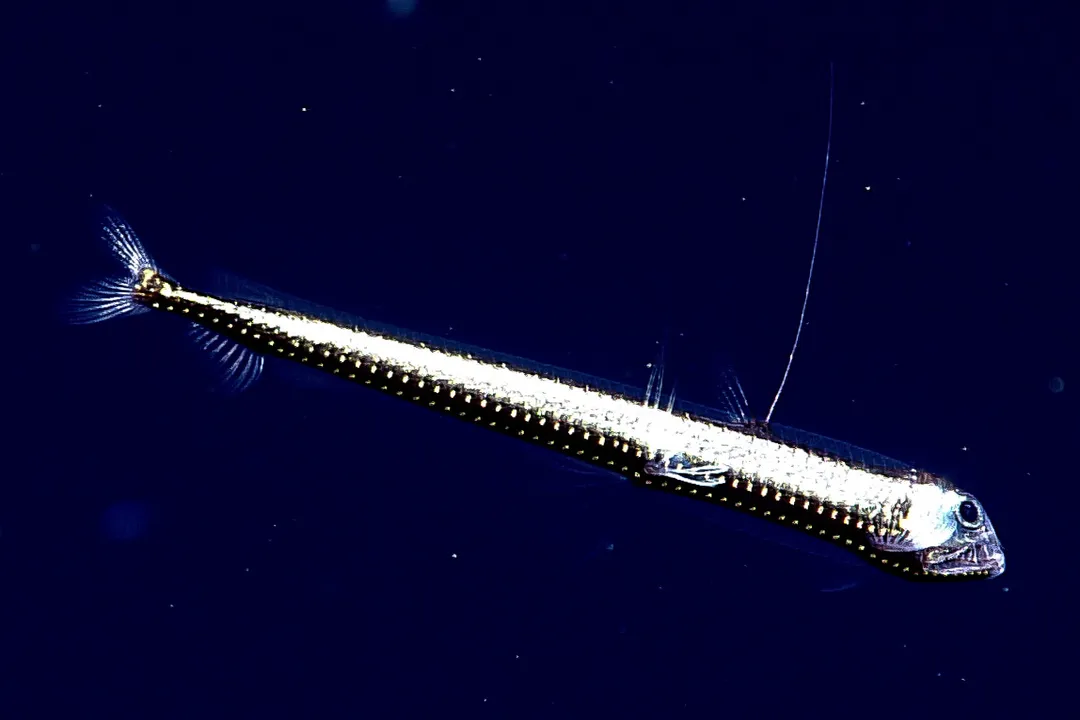
The genus Chauliodus is characterized by disproportionately long, needle-sharp fangs that are anatomically incapable of fitting entirely inside the mouth. Because of their significant length, these teeth must curve backward along the sides of the head. This specific dental arrangement is an evolutionary adaptation for impaling soft-bodied prey during quick strikes in low-light conditions, rather than for the typical biting or chewing functions seen in other predatory fish.
Related Questions
To which biological kingdom does the Viperfish belong?What defines the Class Actinopterygii to which the Viperfish belongs?Why are the fangs of the Chauliodus genus considered non-retractable?What function do photophores serve for fish within the Order Stomiiformes?Which anatomical feature in the Phylum Chordata is replaced by a vertebral column?Who is honored by the specific epithet sloani in the name Chauliodus sloani?What primary hunting strategy does the Viperfish utilize given its specialized morphology?In which oceanic zones is the Viperfish typically found?Within the Order Stomiiformes, to which family is the Viperfish assigned?Why might evolution have selected against complex eyes in some Stomiiformes?