Viperfish Scientific Classification
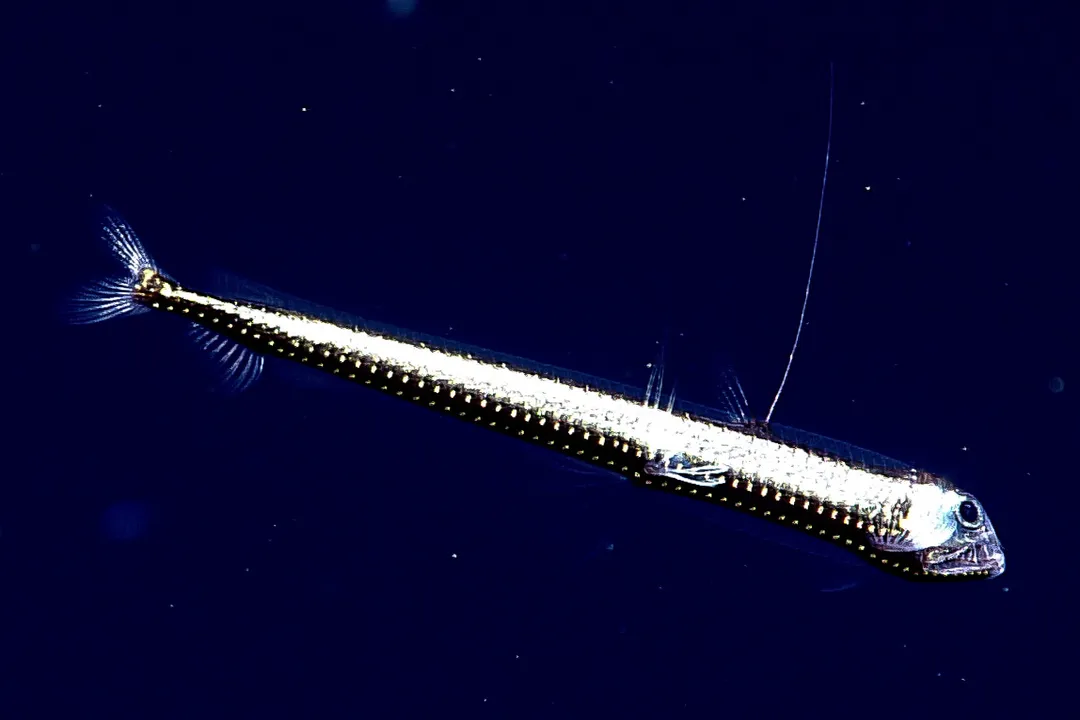
The mysterious nature of the deep ocean often obscures the precise identity of its inhabitants, but understanding the scientific classification of creatures like the Viperfish reveals their true place in the tree of life. This fish, often recognized by its fearsome, oversized teeth, is more than just a toothy predator; it is a highly specialized member of several major biological groupings. The common name, Viperfish, is frequently applied to several species, but in formal settings, scientists often refer specifically to Chauliodus sloani, or Sloane's Viperfish.
# Kingdom Rank
At the broadest level, the Viperfish belongs to the Kingdom Animalia. This classification immediately tells us that it is a multicellular, eukaryotic organism that obtains its energy by consuming other organisms, placing it far removed from plants or fungi. Within Animalia, it joins the vast majority of familiar organisms, sharing a common ancestry with everything from insects to whales. Its position here confirms its heterotrophic nature and complex cellular structure, fundamental characteristics for any animal living in the often-barren depths of the aphotic zone.
# Phylum Position
Moving deeper into the hierarchy, the Viperfish resides within the Phylum Chordata. This phylum is characterized by the presence of a notochord at some stage of development, a hollow dorsal nerve cord, pharyngeal slits, and a post-anal tail. For the Viperfish, Chauliodus sloani, this means that in its embryonic stages, it possessed the basic structural blueprint shared by all vertebrates. As a bony fish, the notochord has been replaced by a segmented vertebral column, providing the structural support necessary for its marine existence. This places it firmly among the higher forms of aquatic life, far removed from invertebrates that dominate other marine phyla.
# Class Definition
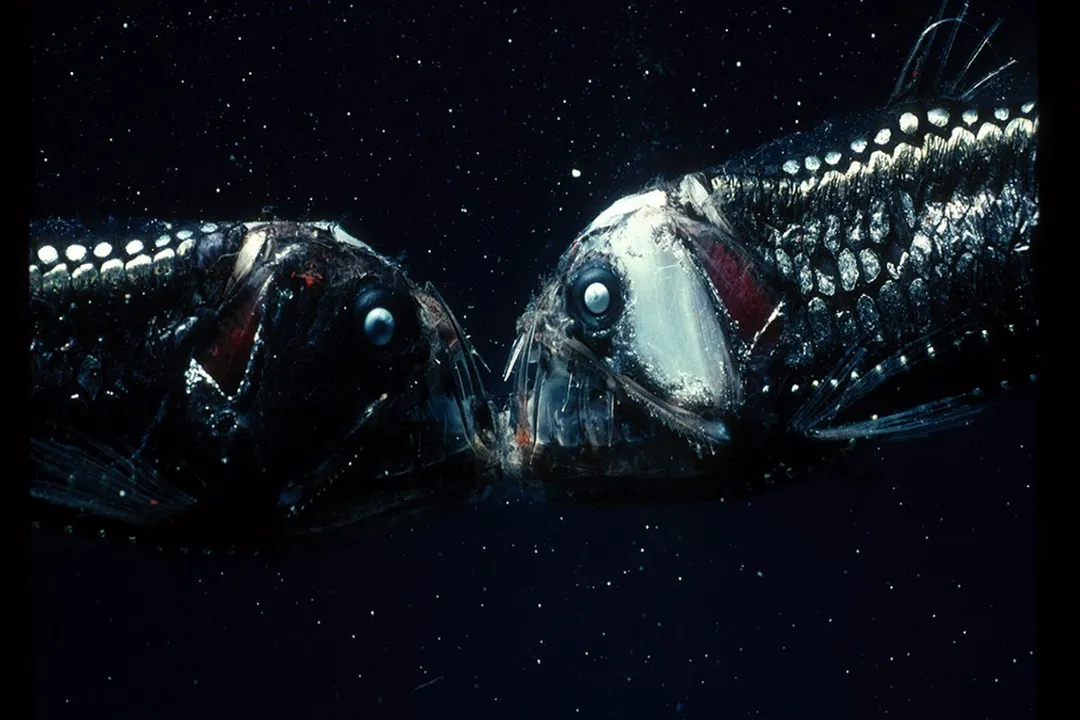
The next significant grouping is the Class Actinopterygii, which encompasses the ray-finned fishes. This class represents the largest group of vertebrates, defined by the structure of their fins, which are supported by numerous, flexible bony spines or rays rather than fleshy lobes. This skeletal difference is a key evolutionary split from lobe-finned fishes (like coelacanths or tetrapods). Being an Actinopterygian means the Viperfish possesses the characteristic swim bladder, though its function is modified in the high-pressure, stable environment of the mesopelagic zone where it spends much of its life.
# Order Placement
The order Stomiiformes groups the Viperfish with the loose, dark-hued inhabitants of the deep sea, often referred to broadly as the dragonfishes and their allies. Fish in this order are typically slender, possessing photophores—light-producing organs—which are essential for communication, camouflage (counterillumination), or luring prey in the permanent darkness below the surface waters. While the sources confirm its placement here, it is useful to note that this order is ecologically distinct; members generally do not rely on sunlight but rather on chemical signaling and bioluminescence for survival strategies.
# Family Structure
Within Stomiiformes, the Viperfish is assigned to the Family Stomiidae. This family is commonly known as the dragonfishes, though this term can sometimes be used loosely for the entire order. Members of Stomiidae are generally characterized by their elongate bodies, large heads, and often formidable dentition. The sheer variation in morphology within the Stomiidae highlights the diverse evolutionary pressures in the deep ocean, yet Chauliodus shares the predatory adaptations seen across the family. If we were to map out the known diversity of deep-sea fish genera, the Stomiidae often serve as a comparative baseline for extreme predatory adaptations in the mid-water column.
# Genus Grouping
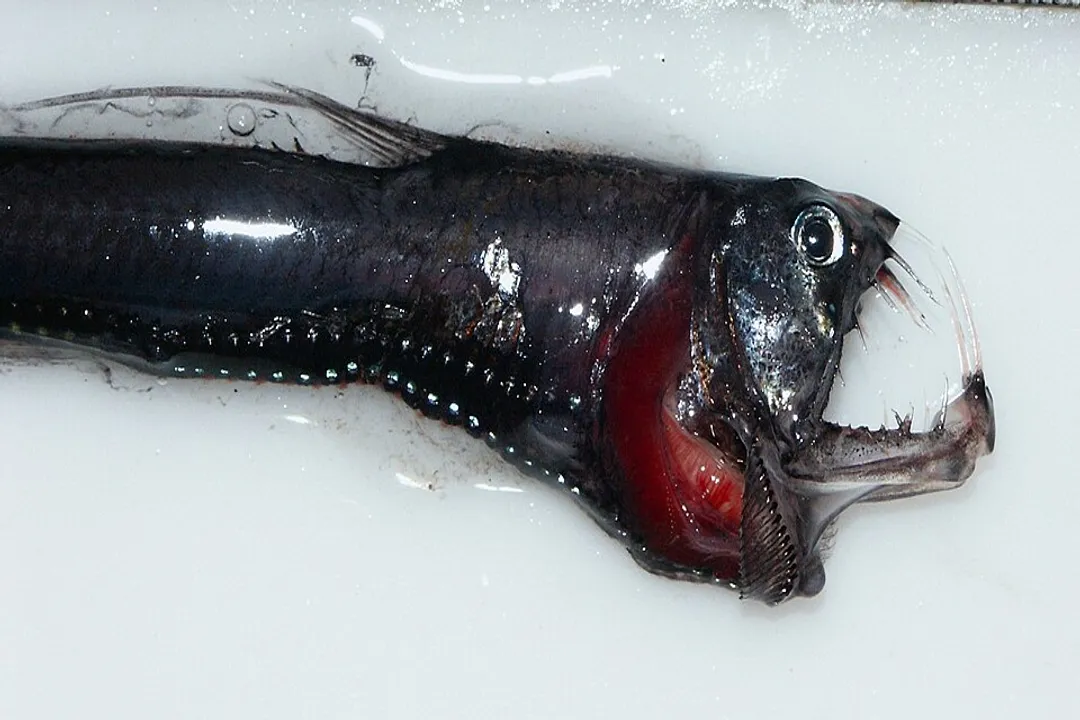
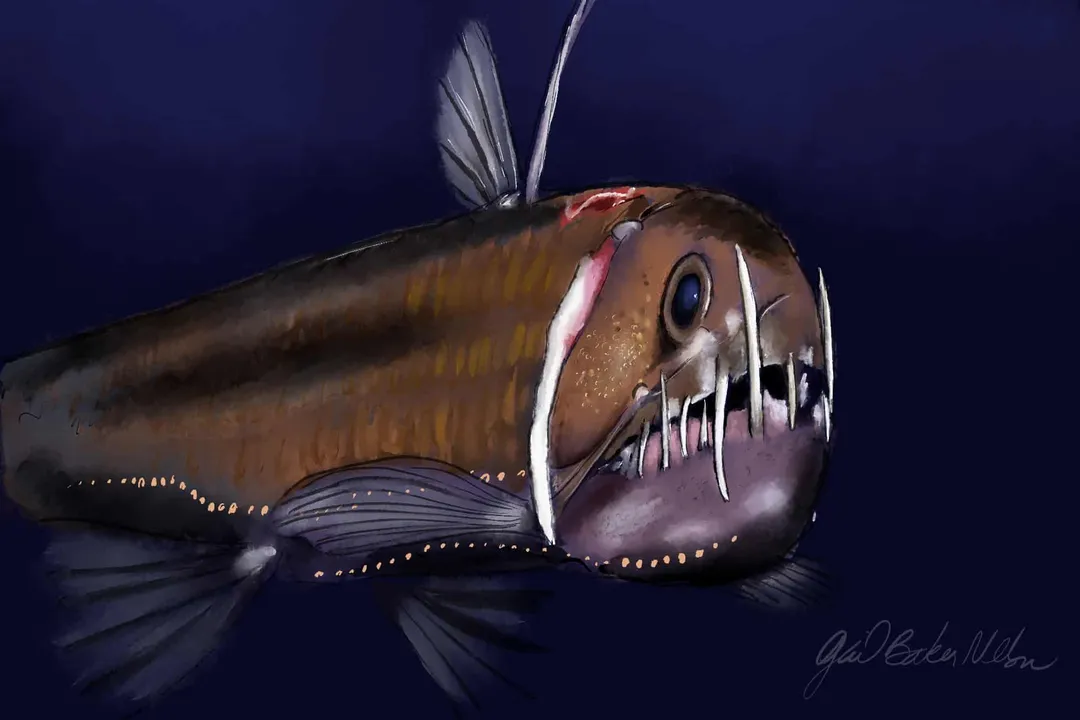
The genus Chauliodus is where the distinct physical traits of the Viperfish become cemented in the scientific record. The name itself hints at the characteristic appearance, linking it to the "snake-tooth" or viper-like structure. Fishes in this genus are immediately recognizable by their disproportionately long, needle-sharp fangs, which are so long they often cannot fit inside the mouth and must curve backward along the sides of the head. It is this specific arrangement of dentition, coupled with the presence and placement of photophores along the body, that separates members of Chauliodus from other stomiids.
# Species Designation
The most commonly referenced and scientifically cataloged member is Chauliodus sloani, or Sloane's Viperfish. The specific epithet sloani honors Sir Hans Sloane. This species represents a specific set of morphological measurements and genetic markers that distinguish it from other, perhaps less-studied, congeners like Chauliodus danae. For instance, while the distribution of C. sloani is wide, spanning the Atlantic, Pacific, and Indian Oceans, its specific depth preferences and nuances in bioluminescent patterning help confirm its species status over close relatives. The designation of a binomial name like Chauliodus sloani provides a universal, unambiguous identifier, something a common name like "Viperfish" cannot guarantee across all languages and contexts.
# Taxonomic Hierarchy Summary
To appreciate the context of Sloane's Viperfish, presenting the hierarchy in a clear structure is beneficial. The consistency across taxonomic databases, such as those maintained by governmental and scientific repositories, reinforces the authority of this placement.
| Rank | Classification | Key Implication |
|---|---|---|
| Kingdom | Animalia | Multicellular, heterotrophic organism |
| Phylum | Chordata | Possesses a notochord/vertebral column |
| Class | Actinopterygii | Ray-finned fish |
| Order | Stomiiformes | Deep-sea dragonfish relatives, bioluminescent |
| Family | Stomiidae | Dragonfish family, large mouth, dark coloration |
| Genus | Chauliodus | Characterized by massive, non-retractable fangs |
| Species | C. sloani | Sloane's Viperfish, specific morphological traits |
One observation that arises from comparing the deeper classifications—Stomiiformes and Stomiidae—with the fish’s known ecology is the heavy reliance on non-visual predation cues. Despite being classified within the Phylum Chordata, which includes highly visual vertebrates, the Viperfish's environment necessitates that its primary hunting success relies on sensing pressure changes or detecting the faint light signatures of prey, suggesting that evolution within the Order Stomiiformes has actively selected against the development of complex eyes, favoring other sensory apparatuses, even while retaining the basic vertebrate body plan.
# Depth Classification Context
While not strictly part of the formal Linnaean hierarchy used for genetic relatedness, the ecological classification of the Viperfish is inseparable from its taxonomy, as evolutionary pressures shape these ranks. Chauliodus sloani is frequently cited as a creature of the twilight or midnight zones, inhabiting depths that can range from shallow mesopelagic regions down to over 2,800 meters. Specimens have been recorded at various depths, with some collections indicating residence between about 10 to 2,800 meters, depending on location and life stage. The fact that this classification appears across so many oceanic zones—from epipelagic down into the bathypelagic—suggests a high degree of adaptability or diel vertical migration, which is itself a key factor influencing how researchers classify and study its behavior relative to its physical structure.
# Naming Consistency
The reliance on scientific nomenclature is evident when observing how different scientific entities treat this animal. The Global Biodiversity Information Facility (GBIF) records specimen data referencing the genus Chauliodus, confirming the accepted scientific framework for cataloging physical collections. Similarly, specialized ichthyology databases confirm the species status and details for C. sloani. This consistency across disparate data collection points—museum specimens, field surveys, and database entries—underscores the stability and utility of the scientific classification system when dealing with poorly understood, remote fauna. When a researcher in Australia studies a specimen found off the coast, their findings regarding C. sloani can be directly compared to a study conducted by a laboratory examining a fish from the North Atlantic, precisely because of this shared taxonomic anchor.
In considering the classification, an interesting point arises concerning the apparent anatomical contradiction inherent in the Chauliodus genus. The massive fangs, a key defining trait at the genus level, are almost useless for typical biting and chewing actions against a hard surface due to their structure and size. This morphology strongly suggests an evolutionary trade-off: the teeth are designed not for seizing struggling prey in a sustained fight, but rather for impaling softer-bodied, often vertically migrating, prey on a swift upward strike in low light conditions. The classification groups it with Stomiidae, which possess varied predatory tools, but Chauliodus's specialization appears to be an extreme adaptation for ambush predation in a volume of water where targets are sparse and must be secured instantly.
# Data Sources and Authority
The inclusion of this fish within established taxonomic trees, such as those maintained by governmental science bodies, lends significant weight to its placement. These systems cross-reference morphological data with genetic markers to ensure that the classification remains current and accurate, a necessary effort given the ongoing discovery of new deep-sea species. For instance, while C. sloani is the standard, the broader group represented by the family Stomiidae is huge, and researchers continually refine the relationships within that family based on finer-scale analysis. Having multiple, independent data streams—from museum holdings to fisheries science—confirming the higher ranks (Class, Order, Family) allows confidence in the specialized genus and species assignments.
The sheer number of distinct classifications associated with Viperfish, from the general entry in the U.S. Fish and Wildlife Service taxonomic tree to the detailed species summary on FishBase, confirms its status as a well-recognized, albeit deep-dwelling, member of global marine ichthyofauna. The scientific naming convention, therefore, functions as the essential key, unlocking centuries of accumulated biological knowledge despite the physical remoteness of the organism itself.
Related Questions
#Citations
Viperfish - Wikipedia
Chauliodus sloani (Manylight viperfish) - Animal Diversity Web
Chauliodus - Explore the Taxonomic Tree | FWS.gov
Viperfish Fish Facts - Chauliodus sp. - A-Z Animals
Hokkaido University, Laboratory of Marine Zoology - GRSciColl - GBIF
Sloane's Viperfish, Chauliodus sloani Bloch & Schneider 1801
Creature Feature: Sloane's Viperfish
Chauliodus sloani, Sloane's viperfish : fisheries - FishBase
Viperfish - Jurassic Park Wiki - Fandom
Viperfish - A to Z of Oz Marine Life