Where do rhino beetles live in the US?
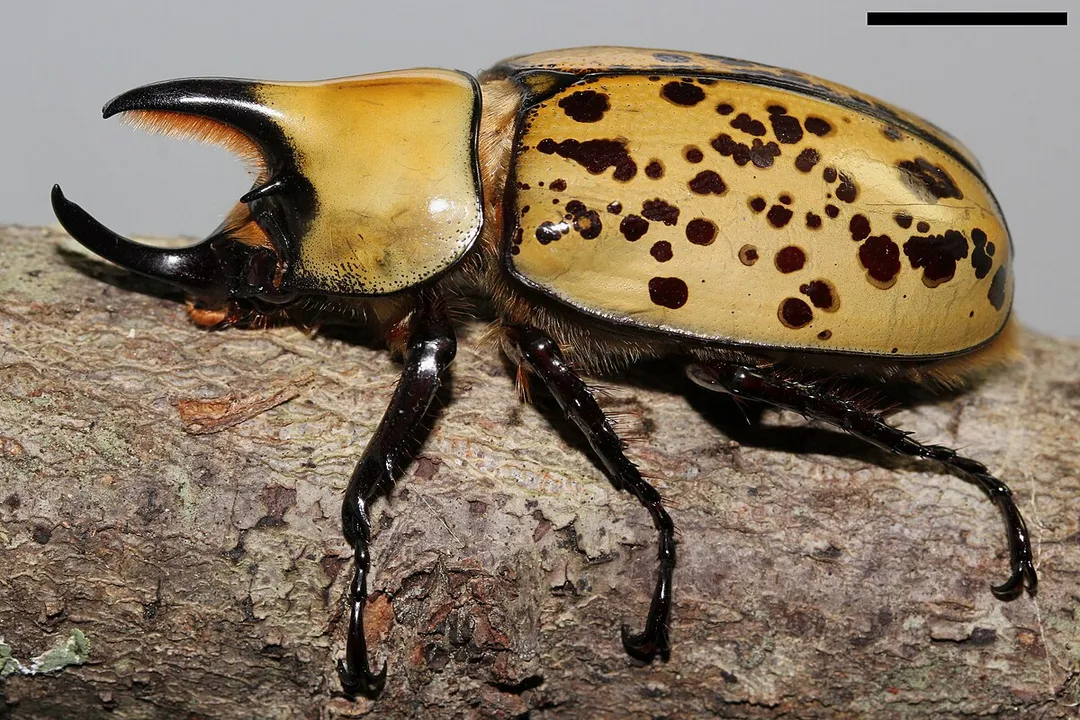
The appearance of a rhinoceros beetle, with its imposing horns and stout body, often sparks immediate curiosity about its origins and whereabouts in the United States. While rhinoceros beetles, part of the Scarabaeidae family, boast a global presence, found on every continent except Antarctica, their established native populations within the US are concentrated primarily in the eastern half of the country. [6] Understanding where these magnificent insects reside requires separating the native residents from the monitored, introduced species.
# Hercules Range
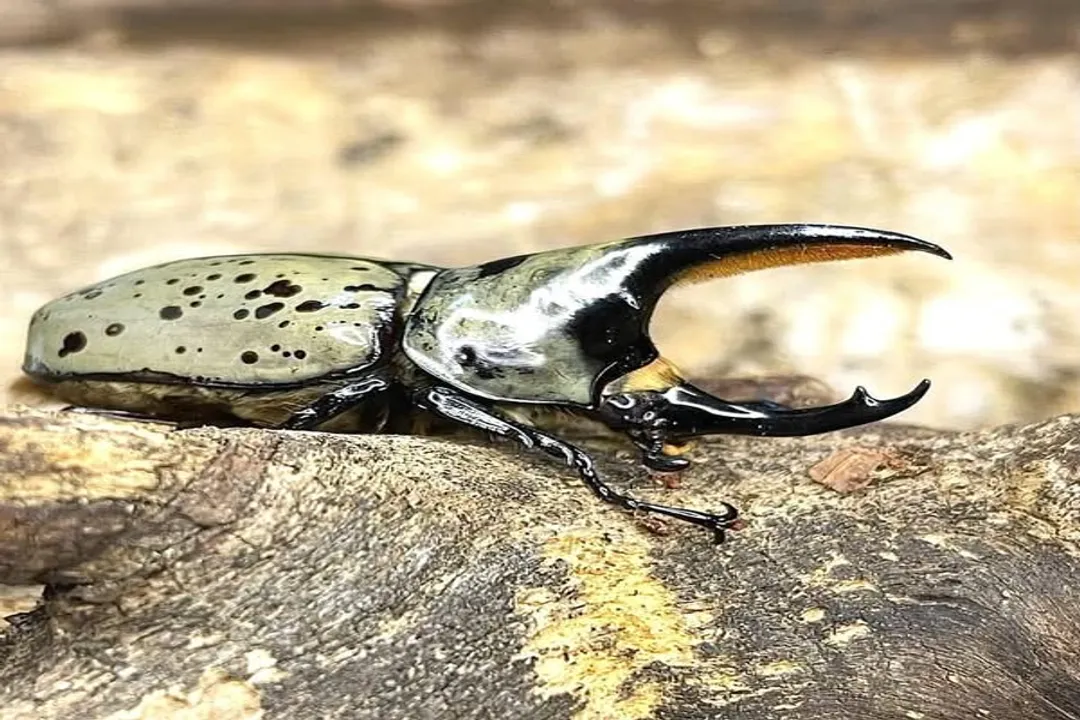
One of the most recognizable native rhinoceros beetles in North America is Dynastes tityus, commonly known as the Eastern Hercules beetle. [2] This species has an impressive range spanning much of the eastern US. You can expect to find populations extending from the Atlantic coastal areas westward toward Texas. [2] Traveling north, their territory reaches up into states like New York and even as far as Michigan. [2] The presence of this large beetle is well documented throughout the Southeast, where conditions are often favorable for their development, with sightings frequently reported in areas like San Marcos, Texas. [5] The males of this species are especially noteworthy for their impressive horns, which can reach considerable lengths relative to their body size. [2]
# American Beetle Range
Alongside the Eastern Hercules beetle, the American rhinoceros beetle, Xyloryctes jamaicensis, is another established native found within US borders. [1] This species tends to occupy a slightly more confined, though still broad, area within the eastern US. Reports indicate that X. jamaicensis is common throughout the Southeast and extends into the Mid-Atlantic region. [1] Unlike the extensive northern reach of D. tityus, X. jamaicensis appears to favor the warmer, more humid zones of the eastern United States. [1] While both species share the eastern US as a home base, their exact distribution boundaries overlap considerably, making field identification crucial for enthusiasts. [1][2]
When analyzing the distribution data for these two primary native species, a clear pattern emerges. D. tityus clearly exhibits a broader latitudinal spread, successfully colonizing areas further north and slightly further west (into the plains states like Texas) compared to X. jamaicensis, whose core seems rooted more firmly in the deep South and Mid-Atlantic corridor. [1][2] For anyone looking for a native rhino beetle in, say, Ohio or Pennsylvania, D. tityus is the more likely candidate than X. jamaicensis, reflecting a subtle but important ecological partitioning within the eastern fauna.
# Western Sightings
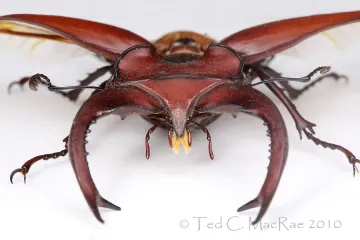
The question of rhino beetles living in the western US, such as in the Mountain West, is often met with less definitive confirmation of established native populations compared to the East. For instance, inquiries made by residents in St. George, Utah, regarding beetles matching the rhino beetle description suggest that while they might be seen, these sightings could represent migratory individuals, misidentifications, or perhaps isolated, undocumented pockets of establishment. [3] In many cases, a large black beetle encountered in the arid West may turn out to be a different, though still fascinating, scarab beetle species entirely, or potentially an escaped captive specimen, although solid evidence for widespread, self-sustaining native populations in the far West is generally lacking in major entomological surveys focusing on this group. [3]
# Invasive Concern
It is important to distinguish the native US rhinoceros beetles from dangerous invasive species that are actively monitored. The Coconut Rhinoceros Beetle, Oryctes rhinoceros, is a significant pest of palms and other monocots globally, but it is not considered established across the continental US. [8] While this species is found in US territories, such as Hawaii, its presence on the mainland remains a high-priority concern for agricultural and quarantine agencies. [8] This distinction matters greatly; finding O. rhinoceros on the mainland would signal an immediate biosecurity event, whereas finding D. tityus or X. jamaicensis is simply a sign of a healthy native ecosystem functioning as it should. [1][8]
# Finding Larvae
For those interested in observing the life cycle firsthand, the location of the adult beetles often correlates with the availability of their larval food source. Rhinoceros beetle larvae, or grubs, primarily develop in decaying organic matter. [1] If you are searching for where these beetles live throughout their entire life cycle, look toward areas rich in dead, decaying wood or large piles of decomposing leaves and compost. [1] Specifically for Xyloryctes jamaicensis, researchers have noted their larvae developing within decaying logs, particularly those of oak or pine. [1] Knowing this habitat preference allows an enthusiast in the right geographic area to potentially locate the next generation before they emerge as adults. Think of the decaying wood in a mature eastern forest; that is prime real estate for a developing rhino beetle grub.
The adult beetles, particularly the males known for their horns, are often attracted to lights at night during their mating season, which provides one of the easiest opportunities for observation. [2] Knowing the general timing—often mid-summer into early fall—can significantly improve the chances of a successful sighting in the confirmed eastern distribution zones.
#Videos
Rhinoceros beetle: North America's native Rhino! Everything you ...
Related Questions
#Citations
American rhinoceros beetles, <i>Xyloryctes jamaicensis<i>
Dynastes tityus - Wikipedia
Have you seen rhinoceros beetles in Southern Utah this year?
Rhinoceros beetle: North America's native Rhino! Everything you ...
Hercules Beetle (Dynastes tityus) or Rhinoceros Beetle | Edible San ...
North American Rhinoceros/Stag Beetles - Reddit
Coconut Rhinoceros Beetle - Texas Invasive Species Institute