Which material commonly attracts rove beetles due to their scavenging instinct?
Answer
Carrion
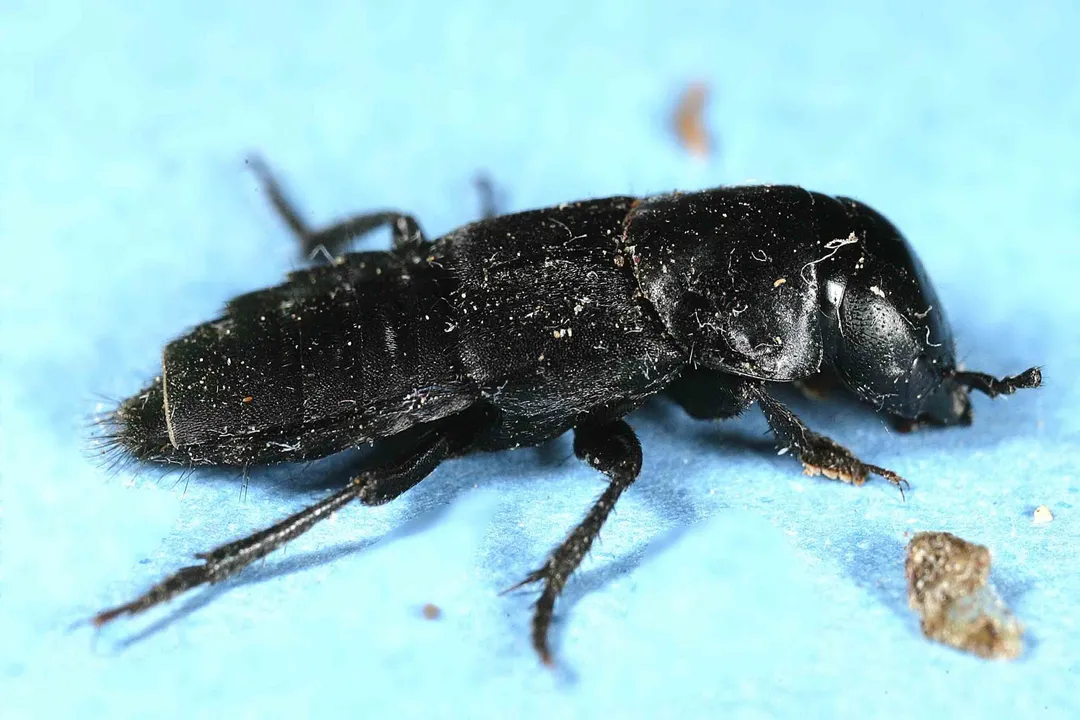
Rove beetles are noted for being remarkably versatile eaters, acting both as generalist predators and scavengers. Their scavenging behavior draws them toward decaying organic matter. Carrion, which refers to decaying animal matter, is specifically mentioned as a substance that attracts them in large numbers, making them one of the most numerous colonizers of decomposing material. This attraction to decay is often dual-purpose: it provides direct food sources (like rotting animal matter or dead insects) and simultaneously serves as a thriving habitat teeming with the smaller, softer-bodied invertebrates that form the bulk of their predatory diet.
Related Questions
How do rove beetles often hold their abdomen when disturbed?Why are rove beetles strongly associated with moist habitats?What is the recorded daily consumption capacity of two adult Aleochara bilineata beetles regarding root maggot eggs?Which material commonly attracts rove beetles due to their scavenging instinct?What specific behavior causes adult rove beetles to accumulate around artificial light sources at night?What common management oversight occurs when controlling rove beetles by only eliminating moisture?What toxic secretion from Paederus species causes painful rashes upon skin contact?What specific target does the larva of Aleochara bilineata utilize for overwintering?Besides general damp areas, where do rove beetles commonly nest within residential structures?What strategy is cited as more effective than purchasing beetles to encourage local, beneficial Staphylinidae populations in yards?