What specific target does the larva of Aleochara bilineata utilize for overwintering?
Answer
Parasitizing maggot puparia
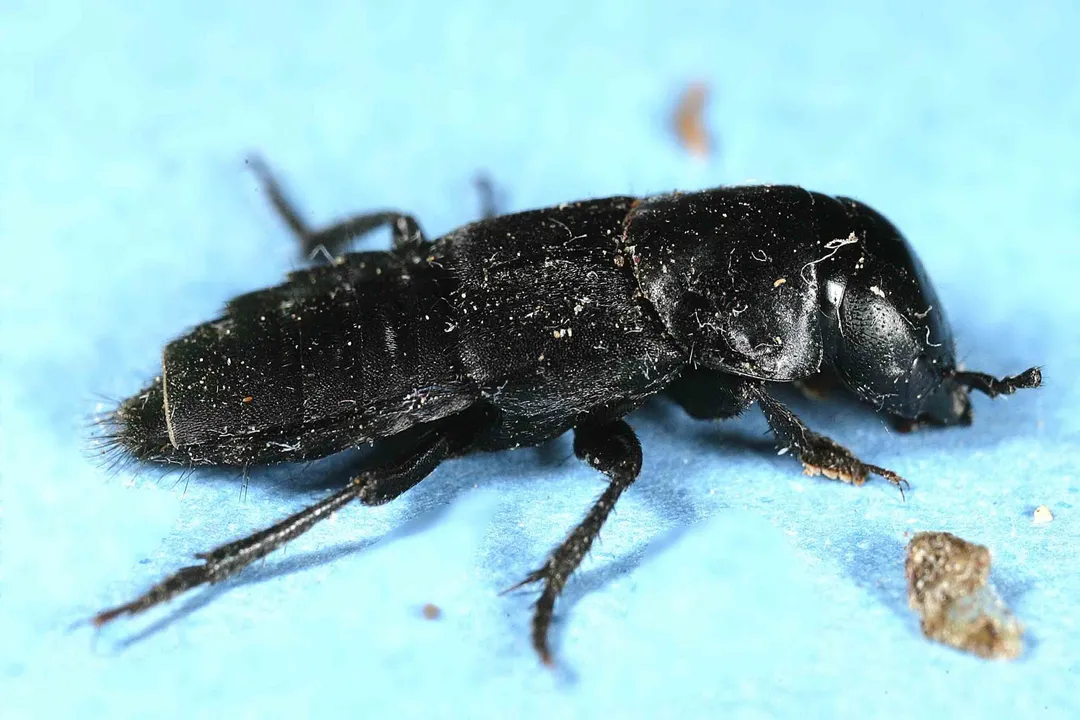
The life cycle complexity within the Staphylinidae family dictates different survival strategies based on the species. For Aleochara bilineata, the successful continuation of the lineage is highly dependent on a specific host relationship during the overwintering phase. Unlike the adults, whose diet may be broad (eating aphids or mites), the larvae specifically develop by parasitizing maggot puparia. This specialized requirement means that even if the adult beetles are present feeding on general garden pests, the reproductive success of this particular species hinges on the availability of its dedicated host pest in the soil for larval development and overwintering.
Related Questions
How do rove beetles often hold their abdomen when disturbed?Why are rove beetles strongly associated with moist habitats?What is the recorded daily consumption capacity of two adult Aleochara bilineata beetles regarding root maggot eggs?Which material commonly attracts rove beetles due to their scavenging instinct?What specific behavior causes adult rove beetles to accumulate around artificial light sources at night?What common management oversight occurs when controlling rove beetles by only eliminating moisture?What toxic secretion from Paederus species causes painful rashes upon skin contact?What specific target does the larva of Aleochara bilineata utilize for overwintering?Besides general damp areas, where do rove beetles commonly nest within residential structures?What strategy is cited as more effective than purchasing beetles to encourage local, beneficial Staphylinidae populations in yards?