Which Superorder placement indicates *Operophtera brumata* undergoes complete metamorphosis?
Answer
Holometabola
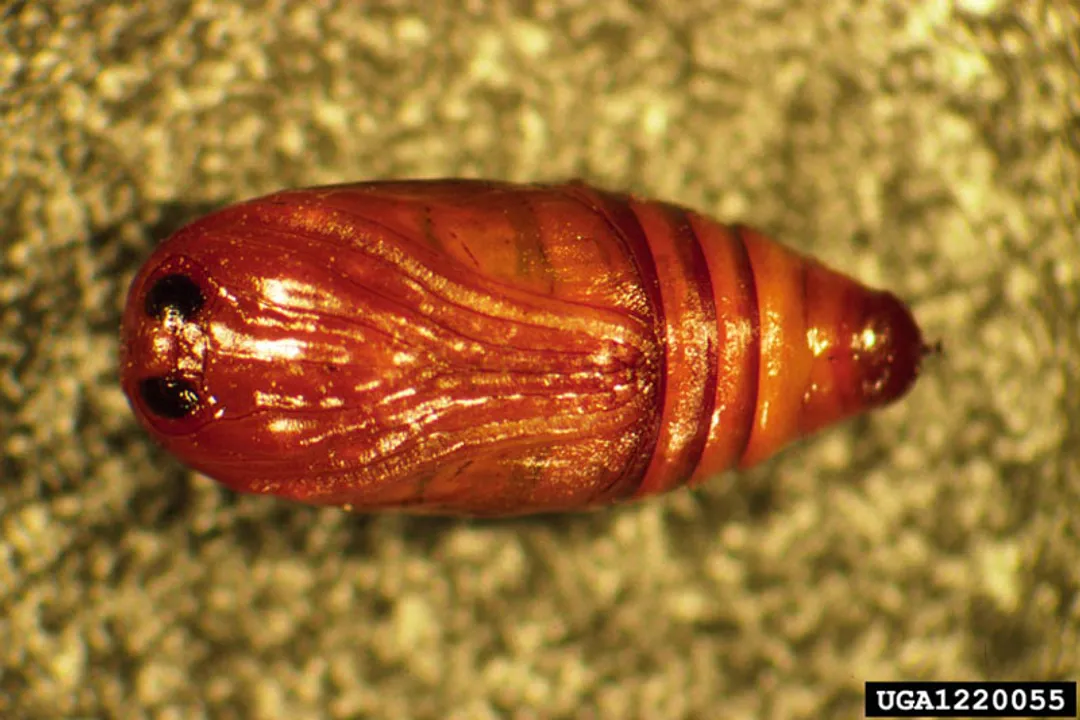
The designation within the Superorder Holometabola signals that *Operophtera brumata* employs a life cycle strategy known as complete metamorphosis. This process involves four distinct, morphologically separate stages: egg, larva (caterpillar), pupa, and finally, the adult moth. This complete separation of stages allows for distinct ecological specialization; the larval stage is highly focused on intensive feeding and growth—explaining why pale green, striped caterpillars cause defoliation in the spring—while the adult stage is specialized for reproduction and dispersal. This contrasts with hemimetabolous insects, which only transition through incomplete metamorphosis (egg, nymph, adult) without a distinct pupal stage.
Related Questions
What defining trait is associated with Phylum Arthropoda for *Operophtera brumata*?What characteristic defines the Order Lepidoptera for the adult *Operophtera brumata*?Why is the Family Geometridae sometimes translated as "Earth Measurer" for *Operophtera brumata* larvae?What is the origin and meaning of the specific epithet *brumata* in *Operophtera brumata*?Which Superorder placement indicates *Operophtera brumata* undergoes complete metamorphosis?Which native North American species shares the Genus *Operophtera* with the invasive Winter Moth?What larval trait distinguishes *O. brumata* from similar-looking caterpillars within Geometridae?What stage of *Operophtera brumata* is the overwintering form relevant to dormant oil application management?What combination of body sections and legs defines the Subphylum Hexapoda placement for *Operophtera brumata*?Which historical designation is listed as a synonym for *Operophtera brumata* (Linnaeus)?