Which of the following animals is specifically listed as potential prey actively hunted by the Tasmanian devil?
Answer
Wombats
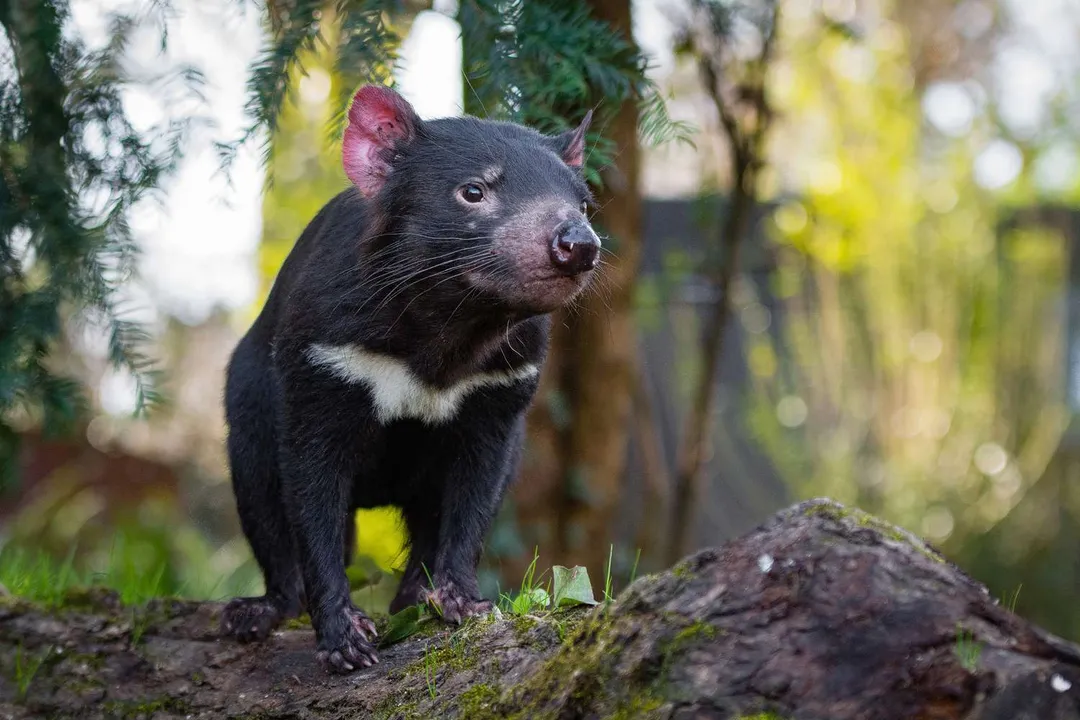
The active hunting repertoire of the Tasmanian devil includes several medium-to-small native animals found in Tasmania. The text explicitly names several examples of prey that devils actively pursue, often targeting individuals that are already compromised, such as the sick or young. Specific prey mentioned includes wallabies, possums, birds, reptiles, and notably, wombats, indicating that while scavenging is common, active predation also occurs.
Related Questions
What physical adaptation enables the Tasmanian devil to process bone material from a carcass?What is the primary ecological function of the Tasmanian devil’s near-total consumption of animal remains?Despite being obligate carnivores, what unexpected items might a starving Tasmanian devil opportunistically ingest?How does the Tasmanian devil's feeding specialization contrast with the behavior of omnivores?Approximately what percentage of its body weight can an average 8-kilogram Tasmanian devil consume in a single meal?What is the Tasmanian devil's status regarding carnivorous land mammals in its native Tasmanian ecosystem?Why is the ability of the Tasmanian devil to process bone nutritionally significant?What characteristic behavior occurs when Tasmanian devils gather around a large piece of carrion?Which of the following animals is specifically listed as potential prey actively hunted by the Tasmanian devil?What substance is the Tasmanian devil's digestive system adapted to break down, contrasting with plant matter?