What do eared grebes eat?
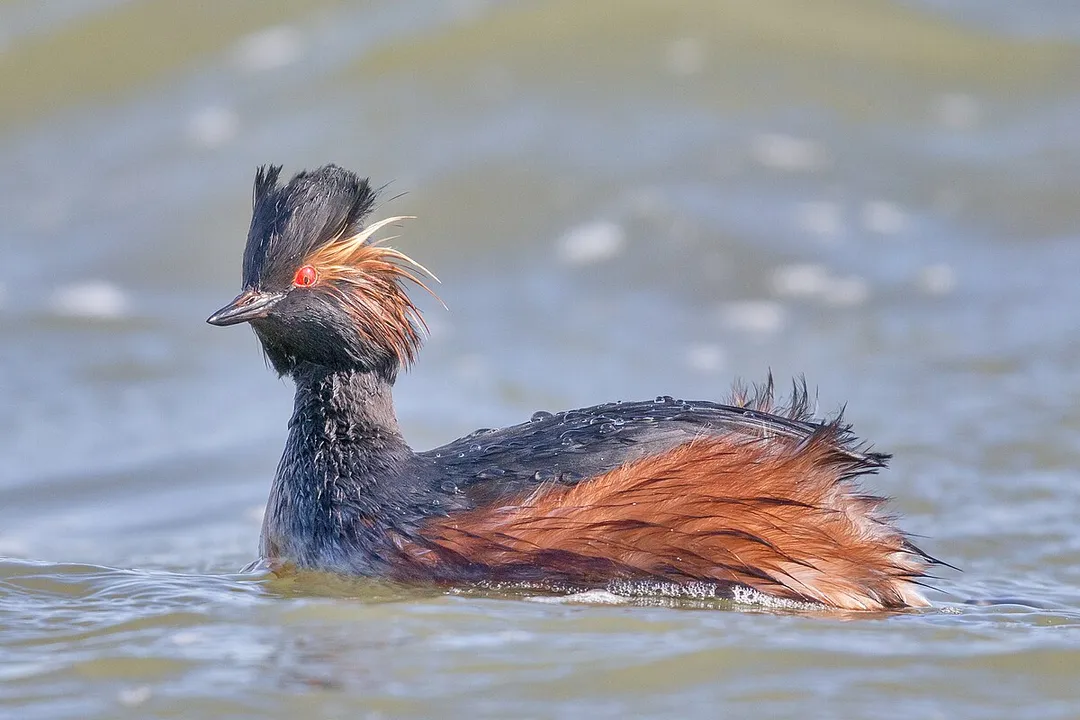
The diet of the Eared Grebe is strongly tied to its aquatic environment, centering overwhelmingly on small, abundant invertebrates found beneath the water's surface. [1][5][8] While they are known dive-foragers, their menu is less about sleek minnows and more about the crunchy exoskeletons of the smaller inhabitants of lakes and ponds. [7][10] This preference makes them specialists, often feeding on creatures that larger fish might overlook or find too small to bother with. [3]
# Aquatic Invertebrates

The foundation of the Eared Grebe's diet consists of a diverse group of tiny aquatic life. [9] This primary group includes various forms of insect life, particularly their larval stages which spend significant time submerged. [4][6] You will find that aquatic insects and their larvae make up a large portion of what they consume throughout the year in many locales. [1][5]
Beyond insects, crustaceans and mollusks feature prominently in their feeding habits. [1][4][6][10] The specific types of crustaceans can vary widely depending on the water body—one area might offer abundant amphipods, while another provides copepods or small freshwater shrimp. [9] Similarly, they will consume various small snails and bivalves when available. [8] The bird's ability to target these smaller items efficiently means that even highly productive, yet shallow, water bodies can sustain a large population of foraging grebes. [5]
One fascinating comparison in diet concerns the concentration of prey. In freshwater systems, the diet is a mix of these items, demanding consistent diving effort to capture enough biomass. However, when Eared Grebes gather on hypersaline lakes during migration or wintering periods, their primary food source often shifts dramatically toward brine shrimp, specifically Artemia. [9] This adaptation allows them to exploit environments too harsh for most other waterbirds, yet it introduces a different energetic challenge: brine shrimp, while plentiful, may offer a different nutritional balance compared to the mixed protein sources of a freshwater insect community. [9]
# Fish Inclusion
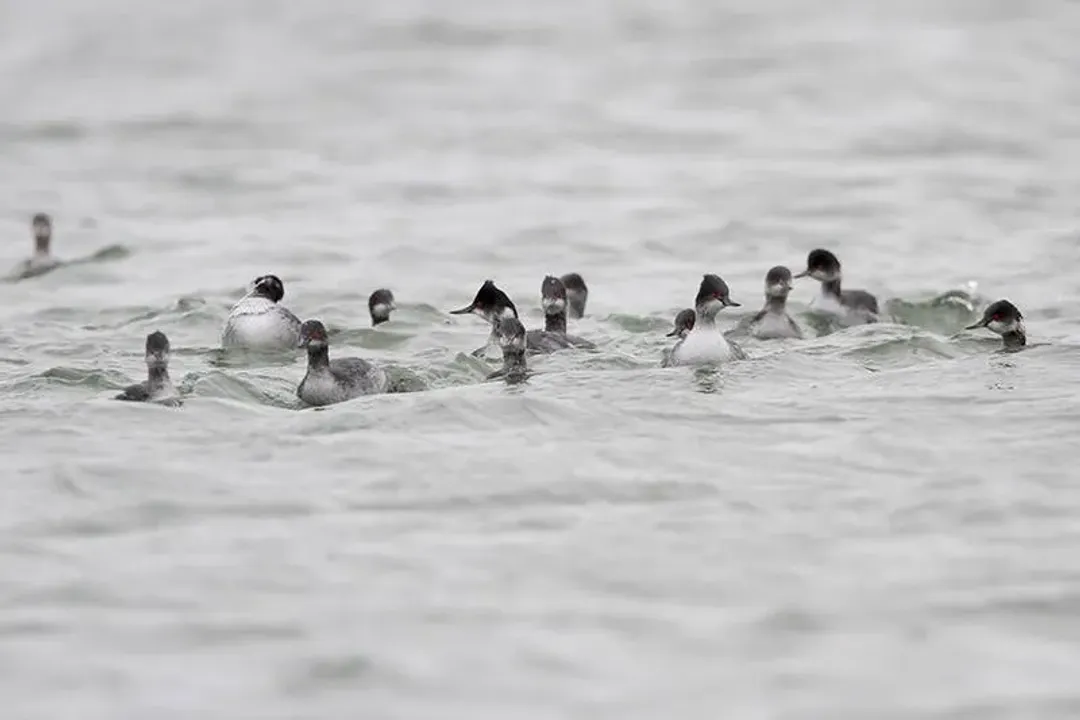
Although they are often categorized as primarily insectivorous, Eared Grebes will certainly include small fish in their meals when the opportunity arises. [1][4][6][10] These are typically very small specimens, perhaps only a few inches long, that can be easily subdued and swallowed whole after a dive. [5]
It is important to note that while fish are taken, they rarely seem to form the bulk of the diet unless local conditions force a major dietary shift or if other invertebrates become temporarily scarce. [1][9] A birder observing a grebe in a clear, rocky-bottomed lake might see more fish consumption, whereas one observing a shallow, muddy alkali flat will likely only see them consuming tiny crustaceans. [4] This flexibility, though leaning heavily toward invertebrates, is key to their widespread distribution across different types of wetlands. [10]
# Diving Technique

The process of acquiring this diet is an exercise in avian underwater mechanics. Eared Grebes are expert divers, using their sturdy legs, set far back on their bodies, to propel themselves deep underwater to snatch prey. [1][5] They are pursuit divers, meaning they actively chase down mobile prey rather than just plunging from above to grab stationary items. [8]
If you are near a feeding area, you might notice a characteristic head movement just before a dive—a slight bob or nod. This isn't just preening; it's often an adjustment of the head angle to visually confirm the location of a target insect or crustacean just before submerging. [3] Their foraging success is directly linked to water clarity, as they rely heavily on sight to locate prey underwater. [8] This dependence suggests that water quality, especially turbidity from silt or algae blooms, could have an immediate and negative impact on their local feeding success, making them potentially sensitive indicators of wetland health in areas where they breed or stage for migration. [6]
# Feather Ingestion

Perhaps the most peculiar aspect of the Eared Grebe's feeding ecology is their consistent habit of eating their own feathers. [2] This behavior is well-documented across several grebe species but is particularly pronounced in Eared Grebes, who may swallow surprisingly large quantities of plumage. [3] This ingestion is not accidental consumption during preening; rather, it is an intentional feeding behavior. [2]
The reason behind this strange dietary component is fascinating and relates directly to digestion and protection. [2][3] Eared Grebes feed on hard-shelled items like insect exoskeletons and mollusk fragments, which can be sharp or otherwise difficult for the stomach lining to process safely. [3] The swallowed feathers act as a gastric ballast or buffer. [2]
These feathers interweave in the gizzard and digestive tract, forming a soft, protective mat that helps cushion the stomach lining against the sharp bits of chitin and shell. [2][3] Over time, this accumulated, undigested matter—feathers, bones from small fish, and shell fragments—is compacted into a tight mass known as a pellet. [2] Like owls, grebes periodically regurgitate these pellets, effectively purging their digestive systems of indigestible material that could otherwise cause internal damage or blockages. [3] It is remarkable that an animal whose primary diet is so small and invertebrate-focused has evolved such a specialized, self-administered defense mechanism against its own food remains. [2]

# Dietary Adaptations
The success of the Eared Grebe across varied saline and freshwater environments relies heavily on this dietary adaptability. While the basic components—insects, crustaceans, mollusks—remain relatively constant across North America, the proportions change based on location and season. [9]
For instance, during the breeding season, the energy demands of courtship and egg-laying require a high-calorie, high-protein intake, which is usually met by the most readily available local aquatic invertebrates. [5] However, during the massive migratory movements, such as those seen in the Great Basin, the need to fuel thousands of miles of flight dictates reliance on whatever hyper-concentrated food source exists, which is often the brine shrimp found in those specific salt lakes. [9] This ability to rapidly switch prey type based on salinity and local abundance, while maintaining the unique feather-pellet system regardless of the main prey, speaks to a highly flexible digestive strategy. [2][9] A localized event like a lake drying up or an insecticide application that wipes out the small insects can force a population to move quickly or risk starvation, underscoring how specialized their niche within the general "water bird" category truly is. [6]
Related Questions
#Citations
Eared Grebe
Grebes Like Their Meals with a Side of Feathers—Here's ...
Eared Grebe – An Unusual Feeding Behavior
Black-necked grebe
Podiceps nigricollis - Eared Grebe - Utah Field Guides
Eared Grebe | Bird Gallery
Life history account for Eared Grebe
Diet and Foraging - Eared Grebe - Podiceps nigricollis