When running from danger, how does the warthog position its head compared to its rooting posture?
Answer
It keeps its head held high, which assists in surveying the immediate surroundings while sprinting
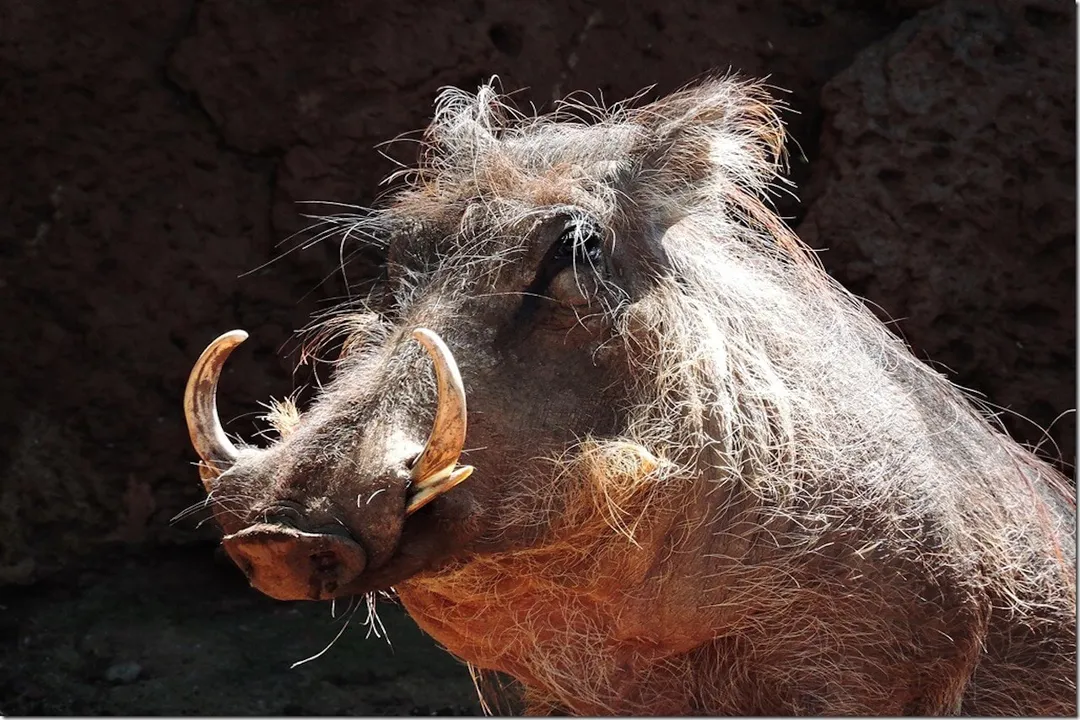
The way a warthog manages its head position is distinctly different depending on its current activity. When rooting or foraging, the head is positioned low to the ground, aided by their kneeling stance. However, when the animal perceives danger and initiates a sprint, the head posture changes dramatically. Instead of staying low, they hold their heads elevated high above the ground. This high-held position is essential for maintaining visual surveillance of the immediate area, helping them navigate and react while moving at speeds up to 30 mph.
Related Questions
What is the typical weight range for a mature common warthog boar?What specific protective structure are the famous 'warts' on a male warthog's face?How do the lower tusks of the warthog function in relation to the upper tusks during activity?During foraging or rooting, what characteristic kneeling posture do warthogs adopt?What is the primary function of the warthog carrying its thin tail straight up in the air?Which sense is described as being most critical to the warthog's survival and feeding habits?What distinctive skin/hair feature is often present and more developed in female warthogs (sows)?What physical characteristic aids the warthog's agility despite its sturdy build and weight?When running from danger, how does the warthog position its head compared to its rooting posture?What are the two sets of tusks found on the common warthog?