Warthog Physical Characteristics
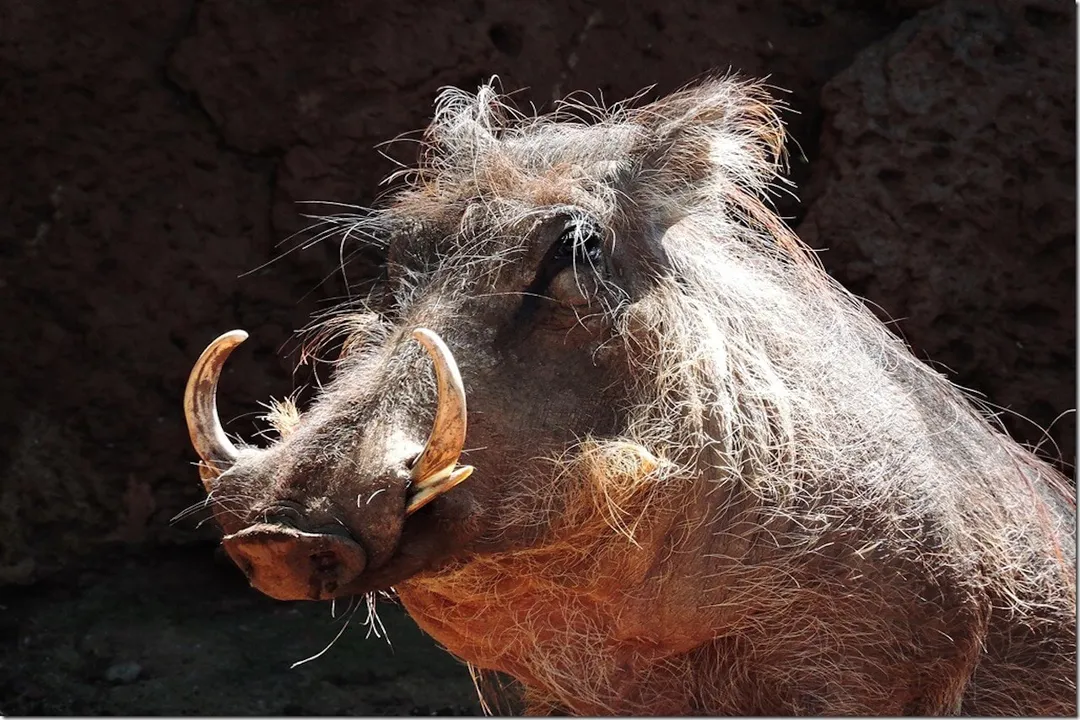
The common warthog, Phacochoerus africanus, presents one of the most unmistakable silhouettes in the African savanna, immediately recognizable by its imposing head and signature warts. These wild members of the pig family are adapted for life on the ground, possessing a sturdy build that belies surprising agility when speed is required. Their overall appearance is one of rugged utility, perfectly suited to grazing and rooting in often arid or semi-arid environments across sub-Saharan Africa.
# Size Weight
Warthogs exhibit noticeable sexual dimorphism, meaning males and females differ in size. Adult males, often called boars, are significantly larger and heavier than females, or sows. A mature boar might weigh in the range of 90 to 140 kilograms (about 200 to 309 pounds) and stand between 55 to 85 centimeters (21 to 33 inches) tall at the shoulder. Females are generally lighter, typically weighing between 45 and 70 kilograms (99 to 154 pounds). In terms of length, from the snout to the base of the tail, they usually measure between 90 to 130 centimeters (35 to 51 inches). Their powerful musculature is centered in the neck and shoulders, giving them a slightly hunched appearance which supports the heavy head and aids in digging. The sheer bulk they carry suggests a creature built for endurance in sparse environments, where storing energy reserves is a survival necessity.
# Head Warts
The most famous physical characteristic giving the animal its name is the presence of warts on its face. These are not true tumors or warts but rather thick pads of skin, composed of connective tissue, that develop prominently on the face, particularly in males. Adult males typically sport two pairs—a larger pair situated below the eyes and a smaller pair located closer to the mouth, although variations in appearance exist between individuals and genders. While both sexes have them, the warts on the male are generally more pronounced and serve as protective padding during ritualistic head-butting fights over territory or mates.
The warthog’s skull supports an impressive set of tusks, which are elongated canine teeth that continue to grow throughout the animal’s life. There are two sets of tusks present: the upper canines and the lower canines. The upper pair is the most noticeable, often curving upwards and outwards, sometimes reaching lengths of up to 60 centimeters (2 feet) in older males. The lower tusks are shorter but sharper, acting like blades as they rub against the longer upper pair during use. These tusks are vital tools used for defense against predators like lions and leopards, but also for digging up roots and tubers, which form a significant part of their diet. Sows possess tusks as well, but they are considerably smaller and less prominent than those found on boars.
# Skin Hair
The body of the warthog is covered in sparse, coarse hair that varies in color from greyish-brown to blackish-grey, providing camouflage within dry grasslands and woodlands. While they have hair, they are not densely furred like some other mammals; their skin is thick and provides a degree of protection. A distinctive feature is the mane—a long strip of hair running down the center of the back, from the back of the head to the middle of the back. This mane tends to be longer in males and often stands erect when the animal is agitated or alert. Furthermore, females often develop a prominent dewlap—a fold of skin hanging from the lower jaw and throat—which is usually absent or much less developed in males.
# Legs Stance
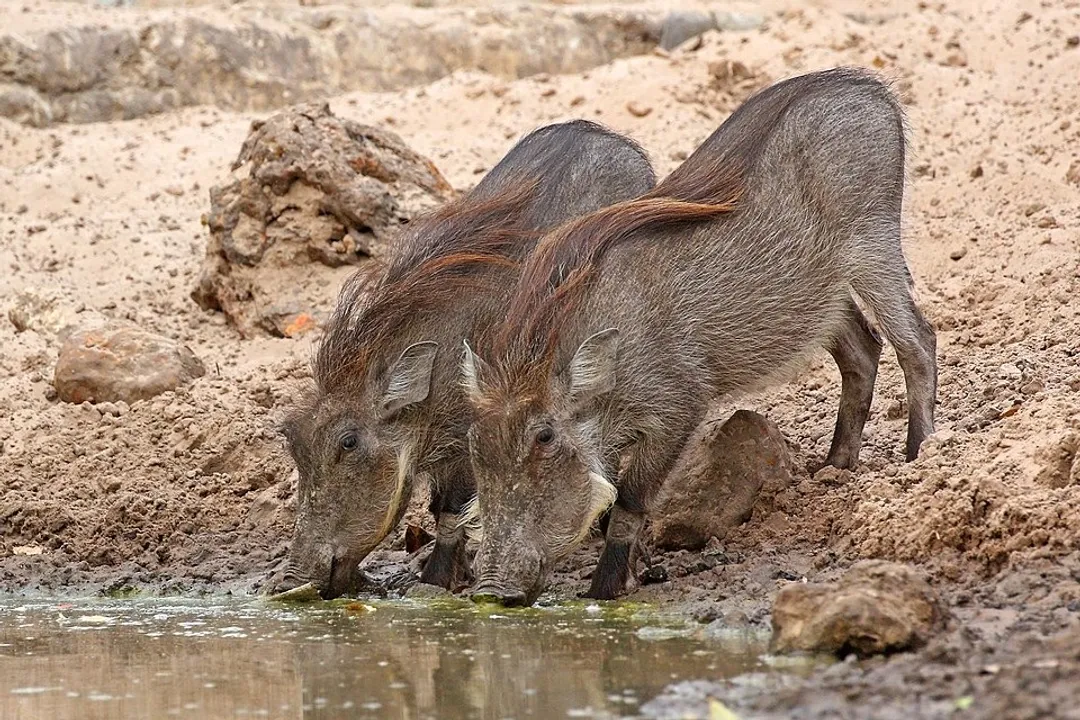
Warthogs possess relatively long, slender legs for a suid, adapted for swift movement across open terrain. They walk on their toes, and like all pigs, they have four toes on each foot, though the two outer toes are significantly reduced. They walk primarily on the two central toes, which are supported by hard, hoof-like nails. When foraging, however, they often adopt a characteristic kneeling posture. They achieve this by flexing their front wrists and resting the outside of the lower foreleg on the ground, effectively using the tough, padded wrist joint as a prop to lower the head closer to the ground for rooting.
Observing a warthog in motion reveals another fascinating physical adaptation. When alarmed and fleeing from danger, they do not drop their heads low as they might when rooting. Instead, they keep their heads held high, which aids in surveying the immediate surroundings while running at speeds that can reach up to 48 km/h (30 mph). It's interesting to consider that this elevated head posture during a sprint might be a necessity due to their facial structure, perhaps offering better aerodynamic clearance or visibility compared to a low-slung posture seen in other fleeing herbivores.
# Tail Signal
The tail of the warthog is thin and often carried straight up in the air when the animal is moving, especially when alarmed or traveling with piglets. This upright tail acts as a highly visible flag against the backdrop of savanna grasses. In situations where a sow is leading a group of young, this high-held tail serves as a visual beacon, allowing the piglets to easily follow their mother through dense vegetation or over low rises. When the warthog is relaxed or feeding, the tail is usually held down or slightly curved over the back. The combination of the long, erect tail and the high-held head during flight creates an easily identifiable signature, likely serving as a warning or directional marker for the rest of the group.
# Sensory Apparatus
While their eyesight is considered adequate for spotting predators at a distance, warthogs rely more heavily on their other senses. Their hearing is sharp, aided by the presence of tufts of hair on the tips of their moderately sized ears, which help funnel sound. Perhaps most critical to their survival and feeding habits is their sense of smell. The elongated snout is equipped with a broad, tough muzzle that is perfect for rooting and turning over soil to uncover bulbs, roots, and invertebrates. This keen olfactory sense is indispensable for locating subterranean food sources, a necessary adaptation for an omnivorous grazer in seasonally dry habitats.
Related Questions
#Citations
Common Warthog (Phacochoerus africanus) Fact Sheet - LibGuides
Common warthog - Wikipedia
Common Warthog - Zoo Atlanta
Warthog | Oakland Zoo
Phacochoerus africanus (common warthog) - Animal Diversity Web
Warthog - Honolulu Zoo Society
Warthog | Zoo Barcelona
Warthog - Louisville Zoo
Warthogs: Facts, Diet, Habitat, Threats, & Conservation | IFAW