During foraging or rooting, what characteristic kneeling posture do warthogs adopt?
Answer
They flex their front wrists and rest the outside of the lower foreleg on the ground
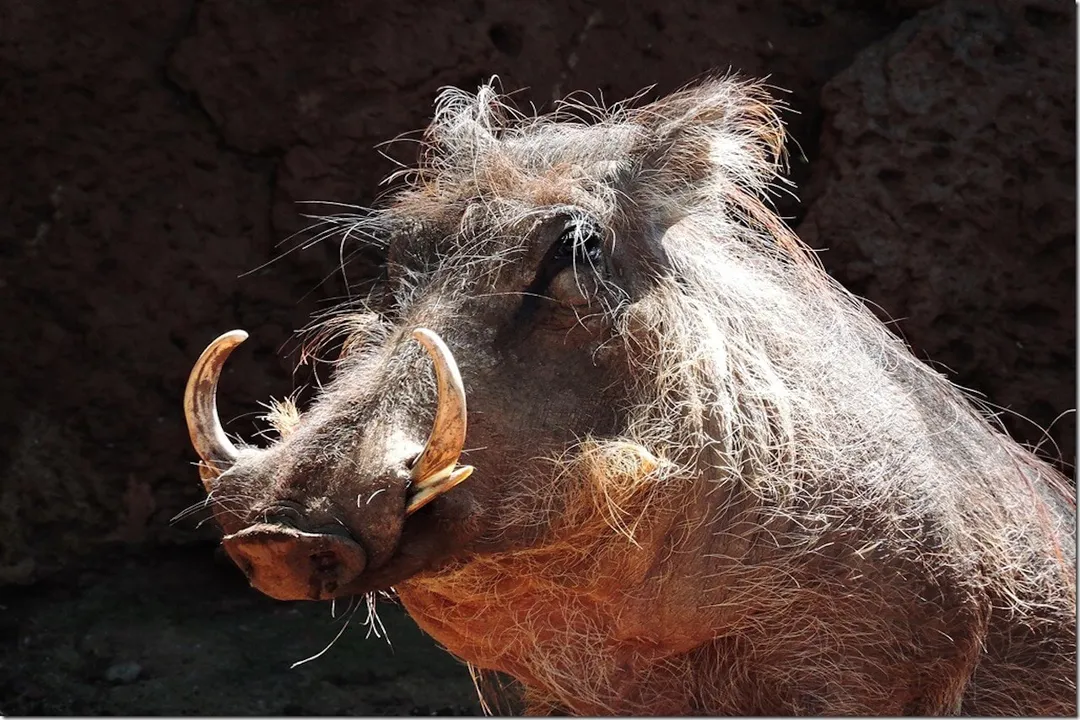
Warthogs utilize a unique posture when they need to lower their heads close to the ground to utilize their strong sense of smell and powerful muzzles for digging up subterranean food sources like roots and bulbs. This posture involves flexing the front wrists in such a way that they can rest the outer surface of the lower foreleg directly onto the earth. The tough, padded wrist joint acts as a supportive prop, allowing the animal to maintain this position stably while rooting through the soil.
Related Questions
What is the typical weight range for a mature common warthog boar?What specific protective structure are the famous 'warts' on a male warthog's face?How do the lower tusks of the warthog function in relation to the upper tusks during activity?During foraging or rooting, what characteristic kneeling posture do warthogs adopt?What is the primary function of the warthog carrying its thin tail straight up in the air?Which sense is described as being most critical to the warthog's survival and feeding habits?What distinctive skin/hair feature is often present and more developed in female warthogs (sows)?What physical characteristic aids the warthog's agility despite its sturdy build and weight?When running from danger, how does the warthog position its head compared to its rooting posture?What are the two sets of tusks found on the common warthog?