How do the lower tusks of the warthog function in relation to the upper tusks during activity?
Answer
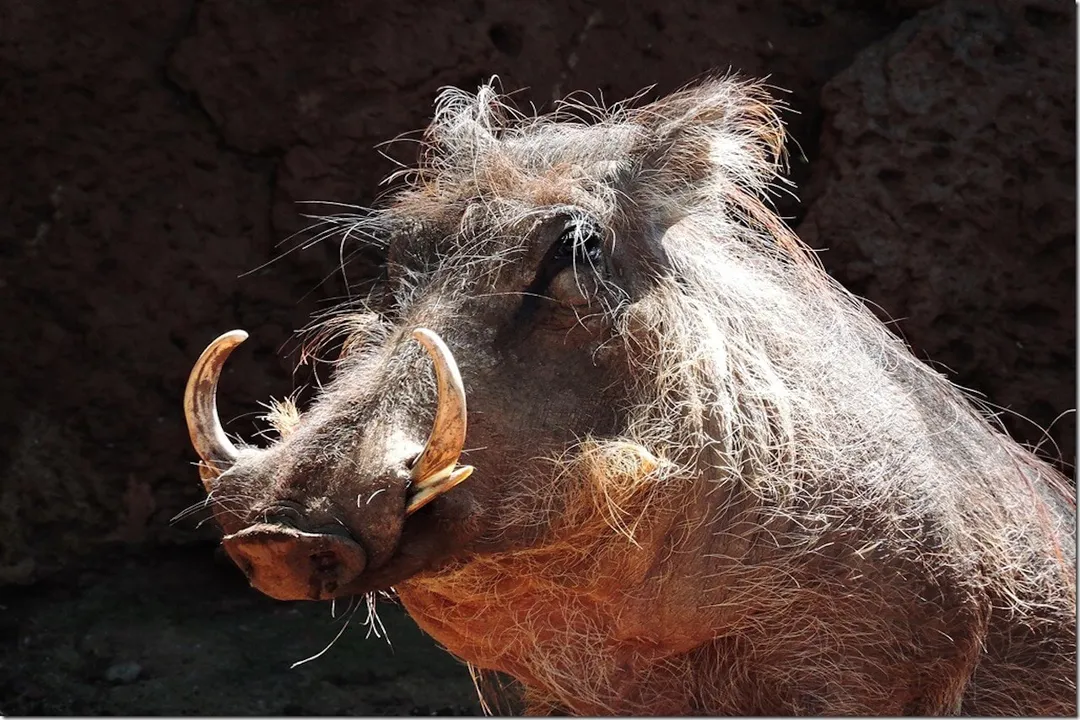
The lower tusks are sharper and act like blades as they rub against the longer upper pair
The warthog possesses two sets of growing canine teeth: the upper and lower tusks. The upper pair are noticeably long, often curving outwards and upwards significantly in older males, sometimes reaching up to two feet in length. In contrast, the lower tusks are considerably shorter but are honed to be much sharper. This specialized sharpening occurs because the lower tusks constantly rub against the longer upper tusks during use, effectively creating a blade-like edge essential for both defense against large predators like leopards and lions, and for efficiently excavating roots and tubers from the soil.
Related Questions
What is the typical weight range for a mature common warthog boar?What specific protective structure are the famous 'warts' on a male warthog's face?How do the lower tusks of the warthog function in relation to the upper tusks during activity?During foraging or rooting, what characteristic kneeling posture do warthogs adopt?What is the primary function of the warthog carrying its thin tail straight up in the air?Which sense is described as being most critical to the warthog's survival and feeding habits?What distinctive skin/hair feature is often present and more developed in female warthogs (sows)?What physical characteristic aids the warthog's agility despite its sturdy build and weight?When running from danger, how does the warthog position its head compared to its rooting posture?What are the two sets of tusks found on the common warthog?