When does the walking catfish typically exhibit peak interest in food due to its feeding pattern?
Answer
Late in the day or during the night
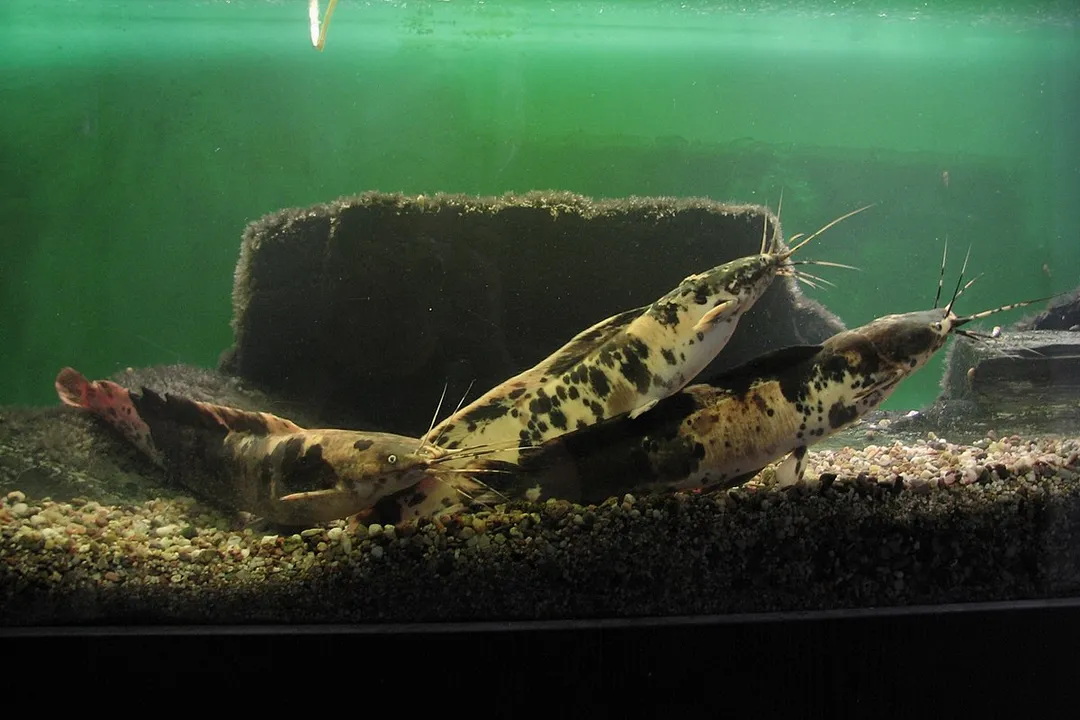
The walking catfish is characterized as a nocturnal or crepuscular feeder, meaning its most active periods for foraging and feeding generally occur when light levels are low. This behavior results in peak interest in food sources occurring late in the day or extending throughout the nighttime hours. This feeding pattern is also influenced by the fact that they are active bottom dwellers often using sensory methods to locate food, which can be more advantageous in the darkness compared to strictly visual feeders.
Related Questions
What is the fundamental dietary classification of Clarias batrachus?Where does a significant portion of wild Clarias batrachus energy intake originate?Which food type is considered an excellent staple for captive Clarias batrachus?In which non-native environment has the dietary versatility of the walking catfish caused significant ecological repercussions?How does the food acquisition style of Clarias batrachus differ from many Corydoras species?What is the primary function of the labyrinthine accessory breathing organ in Clarias batrachus?When does the walking catfish typically exhibit peak interest in food due to its feeding pattern?What benefit does the digestive plasticity of Clarias batrachus provide during periods of food scarcity?What risk is posed to smaller tankmates by the opportunistic nature of Clarias batrachus in captivity?Which geographical region is identified as the native habitat for the walking catfish?What do sinking pellets cater to regarding the bottom-feeding nature of Clarias batrachus?