Where do banjo catfish come from?
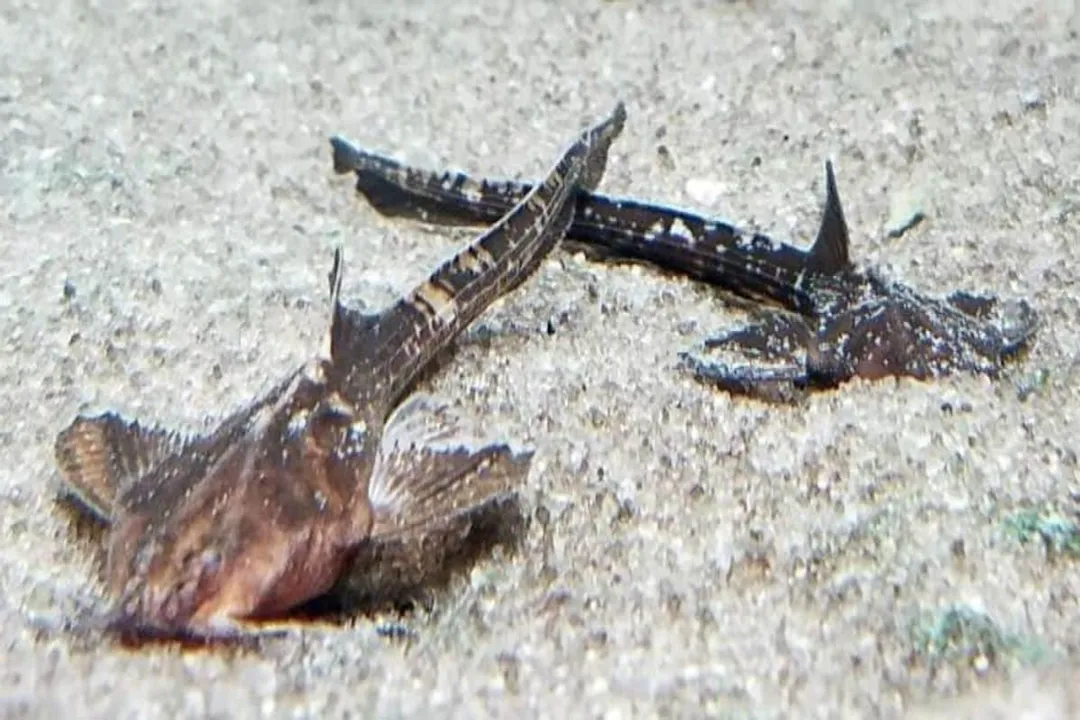
The appearance of the Bunocephalus coracoideus, commonly known as the Banjo Catfish, immediately suggests a life spent hidden on the river bottom. Its flattened body, mottled coloration, and oddly shaped head are adaptations perfectly suited to a specific corner of the globe. [1][2] To understand where this unique creature originates, one must trace its lineage back to the vast, warm freshwater systems of South America. [2][7]
# Common Names
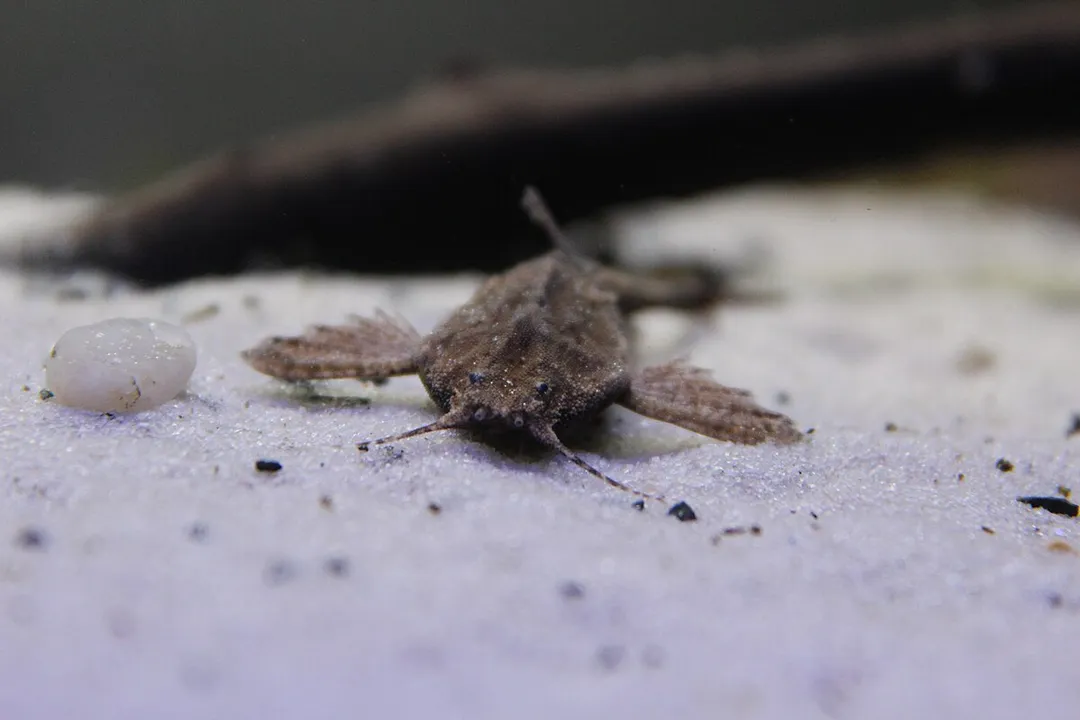
This fish carries a variety of common names, which often speaks to its unusual appearance or behavior. Depending on the region or the vendor, it might be referred to as the Spotted Banjo Catfish, the Shovelnose Catfish, or the Horned Placostomus. [1][4][5][9] The name "Banjo Catfish" itself seems descriptive, perhaps alluding to its shape or the sound it might make—though the latter is less documented than its visual characteristics. [7] These different monikers often apply to several species within the Aspredinidae family, but Bunocephalus coracoideus is the most frequently encountered representative of this group in the aquarium trade. [2]
# South American Rivers
The definitive origin of the Banjo Catfish lies within the massive Amazon basin of South America. [2] Specifically, records place its native range within the river systems stretching across countries such as Brazil, Peru, and Bolivia. [7] These are not fish adapted for the fast, cold currents of mountain streams; rather, they are creatures of the lowland tropics. [1][5] Their natural habitat consists of sluggish, slow-moving waters, or even somewhat stagnant sections of rivers and their associated tributaries. [2][7] This environment is characterized by consistently warm temperatures and generally soft, silty, or muddy bottoms. [5]
When considering the sheer scale of the Amazon River system, this origin point represents an enormous, interconnected network of habitats. Unlike species confined to a single lake or small river section, the Banjo Catfish's range spans thousands of kilometers across several nations, suggesting a high degree of adaptability to minor local variations within the tropical lowland river structure. [7]
# Benthic Lifestyle
The physical structure of the Banjo Catfish is a direct reflection of its life spent on the substrate. It is classified as a benthic organism, meaning it lives on, in, or near the bottom of the water body. [1][2] The body is severely depressed or flattened dorsoventrally, which helps it remain close to the riverbed, minimizing resistance to any slight current and allowing it to settle securely. [2]
One of the most striking features linked to its origin is its dermal plating. The body is covered in bony plates, giving it a rough texture. [2] This structure, combined with the earthy, mottled shades of brown, black, and tan, creates near-perfect camouflage against a backdrop of leaf litter, detritus, and soft mud common to the Amazonian understory. [1][4] They are also known to bury themselves completely in the substrate, leaving only their eyes or mouth exposed, a behavior that solidifies their reliance on that soft bottom found in their native environment. [1][4]
This lifestyle dictates much about their activity patterns. They are predominantly nocturnal feeders. [1] During the daylight hours, they use their camouflage and ability to burrow to avoid detection by potential predators—which in the Amazon could range from larger predatory fish to wading birds—before emerging under the cover of darkness to forage for small invertebrates. [1]
When observing a typical South American floodplain environment, one notices that during the dry season, water levels recede significantly, concentrating nutrients and organic matter on the exposed banks and within shrinking pools. The Banjo Catfish's ability to tolerate these changes, often remaining hidden in damp mud or shallow residual pools, is a critical survival trait honed over millennia in river systems subject to dramatic seasonal fluctuation. [2][7] This reliance on soft sediment, as opposed to gravel or rock, is a key fingerprint of its tropical origin where fine sediment deposition is the norm. [4]
# Environmental Adaptation
The waters these fish call home are complex ecosystems. While they prefer slower flows, their native rivers are often teeming with life, and the water quality can vary widely, sometimes being quite acidic due to tannins leaching from decomposing vegetation. [7] The Banjo Catfish appears physiologically equipped to handle these conditions, which is a necessary trait for any organism that thrives in the leaf litter and detritus-laden areas of the rainforest floor. [2]
The shovel-like snout mentioned in some descriptions serves a functional purpose related to sourcing food in this substrate. [4] It is likely used for sifting through the fine mud and decaying matter, probing for small worms, insect larvae, or other tiny benthic creatures that constitute their diet. [1] The mouth structure is inferior (located on the underside), further confirming that food is sought from the bottom rather than suspended in the water column. [2]
If we look at the family distribution, the Aspredinidae family—which includes the Banjo Catfish—is almost entirely confined to freshwater in South America, generally east of the Andes Mountains, reinforcing the Amazonian connection as the center of their natural heritage. [2] While some related catfish species might inhabit slightly different niches, the Bunocephalus genus is strongly associated with these slow, soft-bottomed tropical waters.
# Localized Behavior Insights
Thinking about how this fish interacts with its native substrate reveals an important ecological consideration. In the Amazonian floodplains, the composition of the "bottom" shifts dramatically between high and low water periods. When the river floods, fine silts and organic debris are washed far into the surrounding forest. As waters recede, this material settles, creating meters-deep layers of soft mud and decaying vegetation. The Banjo Catfish's primary defense—burying itself—is only effective because the substrate remains soft enough to penetrate, a condition guaranteed by the yearly inundation and subsequent drying cycles of its native environment. [1][4] An area dominated by coarse gravel, while perhaps having similar temperatures, would offer them no effective hiding place, thus explaining their consistent preference for muddy, silty areas within that massive South American range. [7]
Furthermore, while they are widely distributed, the local populations likely exhibit subtle genetic drift based on watershed isolation during dry seasons. For example, a population isolated in a várzea lake in central Brazil might develop slightly different camouflage patterning than one in a blackwater tributary in Peru, simply due to the specific dominant leaf litter and silt composition of that localized, seasonally isolated habitat within the broader Amazonian context. [2] This variation, though minor, underscores that while the origin is broad, the life is very local and tied to the immediate, specific patch of substrate they inhabit. [1]
# Freshwater Dependency
A crucial aspect of their origin story is their absolute requirement for freshwater environments. [5] Unlike some tropical fish that might tolerate brackish or even marine conditions, the Banjo Catfish is strictly freshwater. [5] This dependency immediately excludes coastal estuaries or mangrove swamps, unless those areas are fed by low-salinity river outflow. Their physiology is calibrated for life in freshwater, making the South American inland river systems their sole natural domain. [7] The information confirming their presence across various South American countries solidifies their status as a true Amazonian native, rather than an inhabitant of a smaller, isolated drainage system. [2][7]
Related Questions
#Citations
Banjo Catfish Fish Facts - A-Z Animals
Bunocephalus coracoideus - Wikipedia
Banjo catfish species found in South America - Facebook
Banjo Catfish (Bunocephalus coracoideus) - Arizona Aquatic Gardens
Banjo Catfish (Aspredo aspredo): Care, Diet, and Tank Requirements
Banjo Catfish (Bunocephalus coracoideus) - Aqua Imports
Banjo Catfish - Bunocephalus coracoideus Fish Profile & Care Guide
Banjo catfish - Aspredo - FishBase
Banjo Catfish - AquaInfo