When are Waterbucks known to supplement their diet by browsing leaves and shrubs?
Answer
When preferred grasses become depleted due to dry spells or local competition.
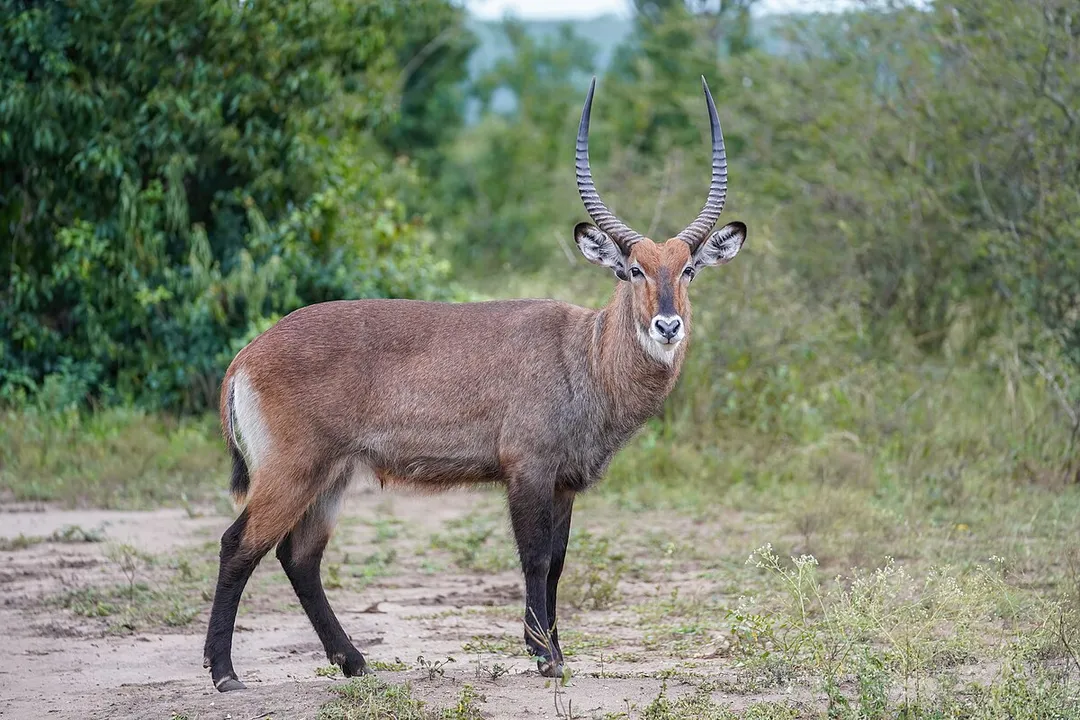
Although primarily grazers, waterbucks are known to exhibit dietary flexibility by becoming opportunistic feeders when their preferred sustenance—grass—is insufficient. This usually occurs during periods of scarcity, such as prolonged dry spells or when intense local competition has depleted the available grassy forage. In these instances, they will shift to browsing, which involves consuming leaves, shoots, and shrubs to supplement their energy needs. This browsing behavior is secondary and typically introduced only out of necessity rather than choice.
Related Questions
What is the primary dietary classification of the Waterbuck animal?How does the Waterbuck's water dependency impact its feeding range selection?What quality of grass do Waterbucks show a marked preference for in their primary diet?When are Waterbucks known to supplement their diet by browsing leaves and shrubs?What specific scientific name is provided for the Waterbuck species?During which parts of the day are Waterbucks generally most active when feeding?What physiological burden do Waterbucks face when relying on dry grass during the dry season?What are the two specific Waterbuck subspecies mentioned in relation to regional variations?How is the Waterbuck's grazing style characterized when selecting high-quality forage?What primary habitat type must support abundant forage for the Waterbuck's existence?In terms of dietary flexibility, how does the Waterbuck compare to a Kudu?