What unique anatomical feature aids the White Crappie’s visual acuity, especially in low light?
Answer
An extra lens in its eyeball
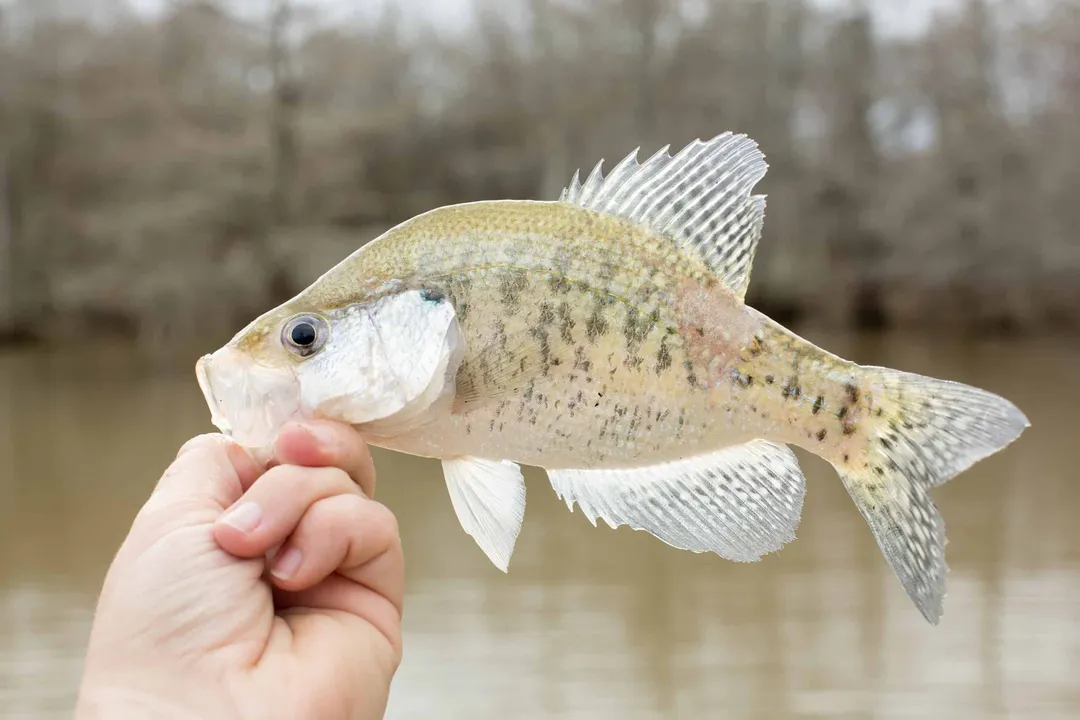
The white crappie possesses remarkable visual capabilities, essential for its feeding strategy that involves straining small zooplankton and later consuming larger fish prey. This high visual acuity, particularly valuable in dimmer underwater conditions, is supported by two key adaptations. First, it has an extra lens structure located in its eyeball. Second, its retina contains a high concentration of pigments specifically sensitive to red light, allowing it to perceive visual stimuli and detect movement very effectively even when light penetration is poor.
Related Questions
How many dorsal fin spines does the White Crappie (P. annularis) characteristically possess?What is the defining body pattern displayed across the sides of the White Crappie?What characteristic does the Latin name 'annularis' reference in P. annularis?How is the lateral compression of the White Crappie’s deep-bodied profile often described?Compared to the black crappie, what is the White Crappie’s general habitat preference regarding water clarity?What term describes the arrangement of small, conical teeth found in two rows inside the White Crappie’s mouth?What unique anatomical feature aids the White Crappie’s visual acuity, especially in low light?What was the recorded weight of the world record White Crappie caught in Mississippi in 1957?What temporary physical change do male White Crappie undergo during the spring spawning period?To which specific family does the White Crappie, *Pomoxis annularis*, belong?