What types of dense, low cover are essential habitats that support the White-Eyed Vireo's active foraging style?
Answer
Thickets, brambles, and overgrown pastures.
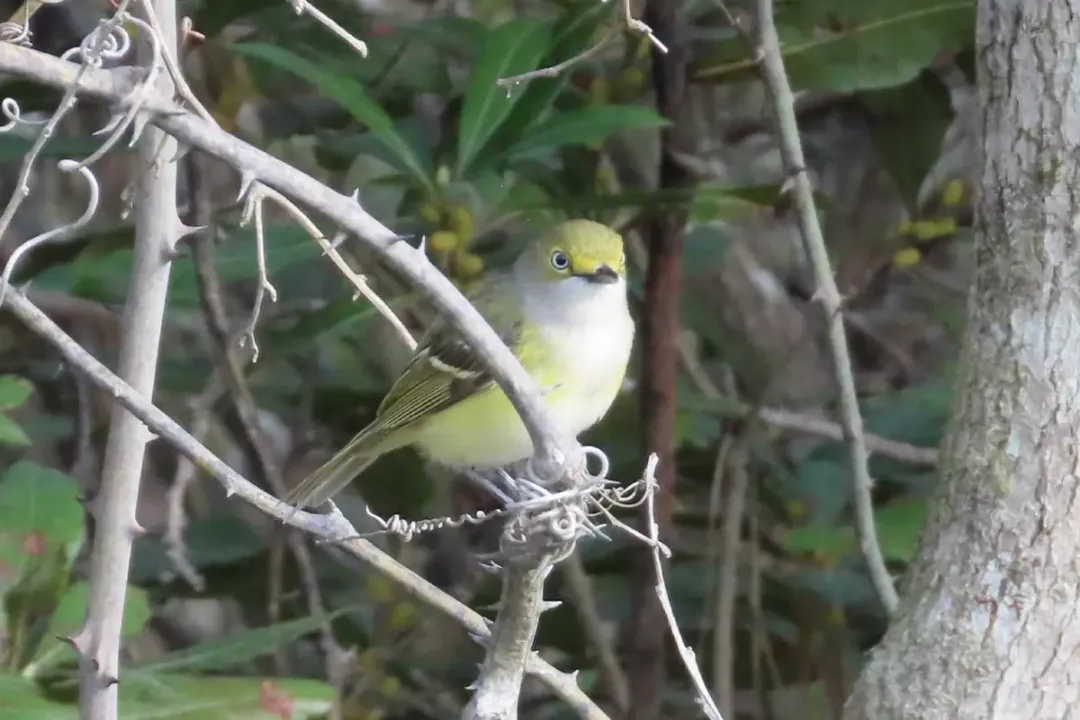
The White-Eyed Vireo's reliance on staying hidden while feeding dictates its habitat preference. Its foraging technique requires moving actively among fine structures like twigs and leaves, sometimes involving momentary hovering to snatch insects directly off leaf surfaces. To facilitate this secretive movement and provide cover from predators while actively feeding, the bird requires dense, low-lying vegetation. The specific environments that meet this requirement include thickets, areas dominated by brambles, and overgrown pastures. This preference for dense tangles is precisely why direct observation of the bird while it feeds is notoriously challenging for birdwatchers.
Related Questions
What insect group makes up nearly one-third of the White-Eyed Vireo's summer diet while nesting in the eastern United States?How is the foraging movement style of the White-Eyed Vireo described in contrast to warblers?What specific technique does the White-Eyed Vireo employ when capturing a larger or more awkward piece of prey?Why does the diet of the White-Eyed Vireo shift to incorporate more fruit as the weather cools and migration nears?Which specific berries are listed as dietary components for the White-Eyed Vireo during the fall and winter migration period?What types of dense, low cover are essential habitats that support the White-Eyed Vireo's active foraging style?What key difference exists in eye appearance between a mature White-Eyed Vireo and its young juveniles?Which two specific fruits found in the non-breeding range might White-Eyed Vireos consume in the southeastern U.S. or Central America?During the nesting period, why is locating active insect populations in the shrub layer the key strategy for observing the White-Eyed Vireo?What evidence suggests the White-Eyed Vireo acts as an opportunistic feeder within its dense shrubbery environment?