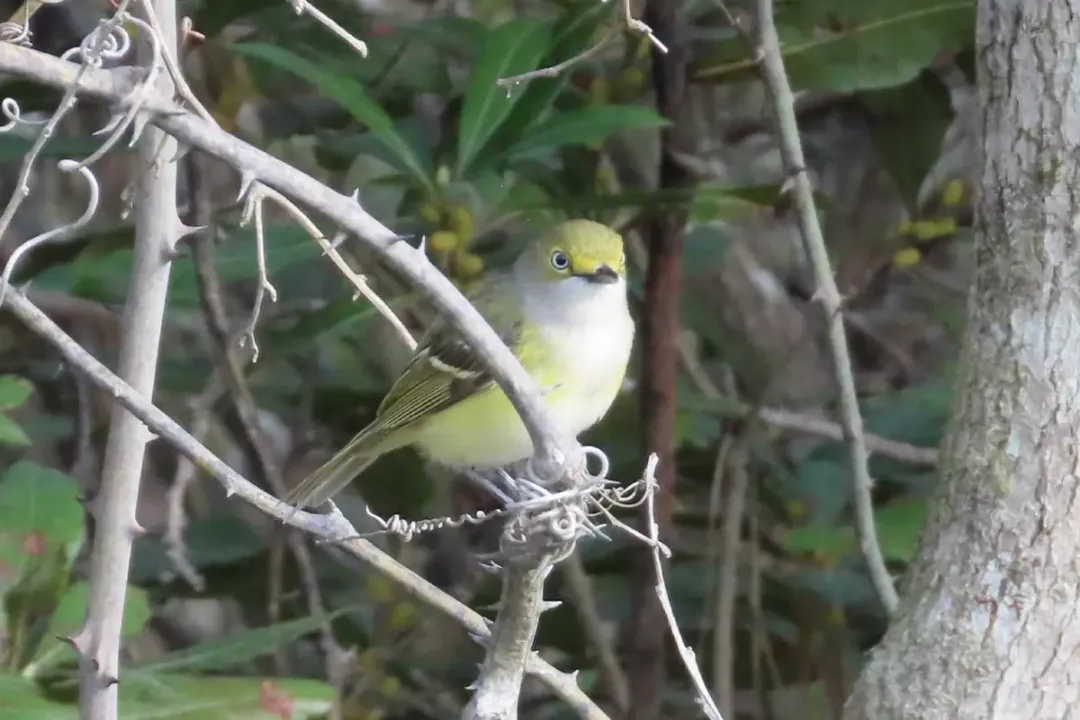
During the nesting period, why is locating active insect populations in the shrub layer the key strategy for observing the White-Eyed Vireo?
Because the diet is so heavily weighted toward insects during this energy-intensive nesting phase.
For birdwatchers aiming to spot the visually shy White-Eyed Vireo, understanding the seasonal diet provides a distinct advantage. During the spring and early summer, the species is primarily focused on nesting and raising young. This period is characterized by extremely high energy demands, which are met almost exclusively through a diet heavily weighted toward protein-rich insects. Consequently, the most reliable method for locating the bird when it is actively breeding is to find areas within the shrub layer where insect populations are currently thriving and active. This contrasts sharply with late fall observation, where focusing on fruiting shrubs yields better results as the birds prepare for migration.