What two Greek words form the genus name *Stegostoma*, referencing a key physical trait?
Answer
*stego* (cover) and *stoma* (mouth)
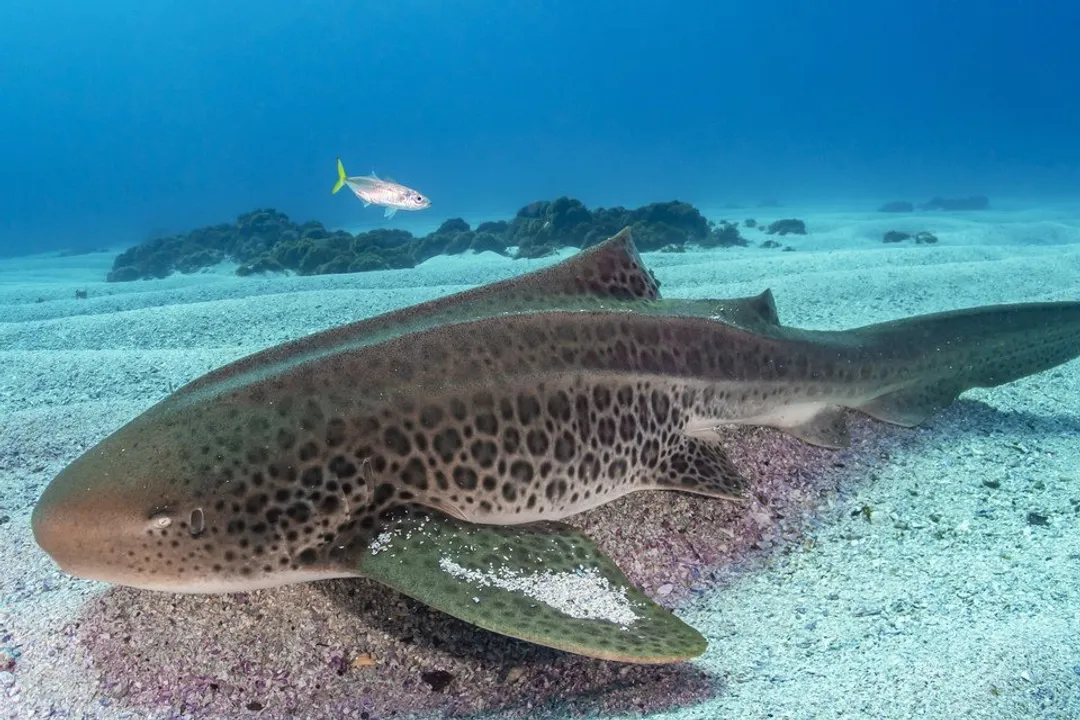
The genus name *Stegostoma* is a compound derived from two Greek words: *stego*, meaning 'cover,' and *stoma*, meaning 'mouth.' This etymological construction directly describes a significant physical attribute of the shark. This attribute is the presence of a thick, membranous bulge situated on the snout region of the shark. This bulge functions visually to conceal or 'cover' the actual mouth opening located underneath it. This feature was deemed important enough by taxonomists to be incorporated into the genus name, linking the scientific label directly to a visible morphological characteristic of the species.
Related Questions
To which Class does the Zebra Shark belong, defined by its cartilaginous skeleton?What common name is associated with the Order Orectolobiformes, where the Zebra Shark is placed?According to the 2019 taxonomic review, what is the senior synonym for the Zebra Shark's species name?What reproductive strategy has been documented in female Zebra Sharks reproducing without fertilization?What material primarily composes the skeleton of members within Class Chondrichthyes?What defining morphological feature secures the Zebra Shark's placement within Family Stegomatidae?What structure must a Chordata possess at some stage in its life cycle to qualify for the Phylum Chordata?What two Greek words form the genus name *Stegostoma*, referencing a key physical trait?How does the global IUCN listing for *Stegostoma tigrinum* contrast with the Australian coastal population listing?What specialized feeding mechanism does the Zebra Shark use to procure prey from reef crevices?