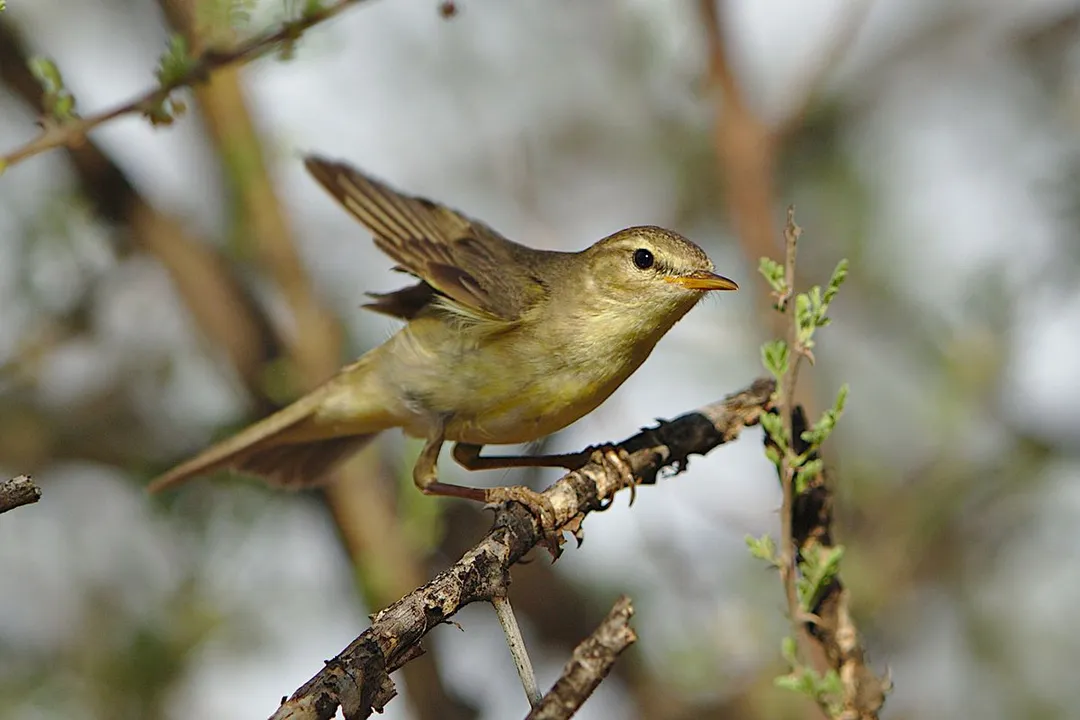
What trend characterized mean wing lengths in British Willow Warblers from 1986 through 2008?
A significant decrease.
The British Isles provide a distinct perspective on population structure compared to the sharp genetic split seen in Scandinavia, focusing instead on morphological changes over time. Ringing data tracked wing length, a proxy for body size and migration distance, across several decades. The analysis revealed a two-phase pattern: an initial significant increase in mean wing lengths for both sexes between 1967 and 1985. Following this initial warming period trend, the pattern reversed sharply. From 1986 through 2008, mean wing lengths exhibited a significant decrease. This shift implies that the dominant selective pressures influencing optimal body size in the British breeding population changed significantly midway through the observation period, possibly aligning with Bergmann's rule in the later phase, contrasting with the potential alignment with Allen's rule observed earlier.