What is the rarest warbler in the world?
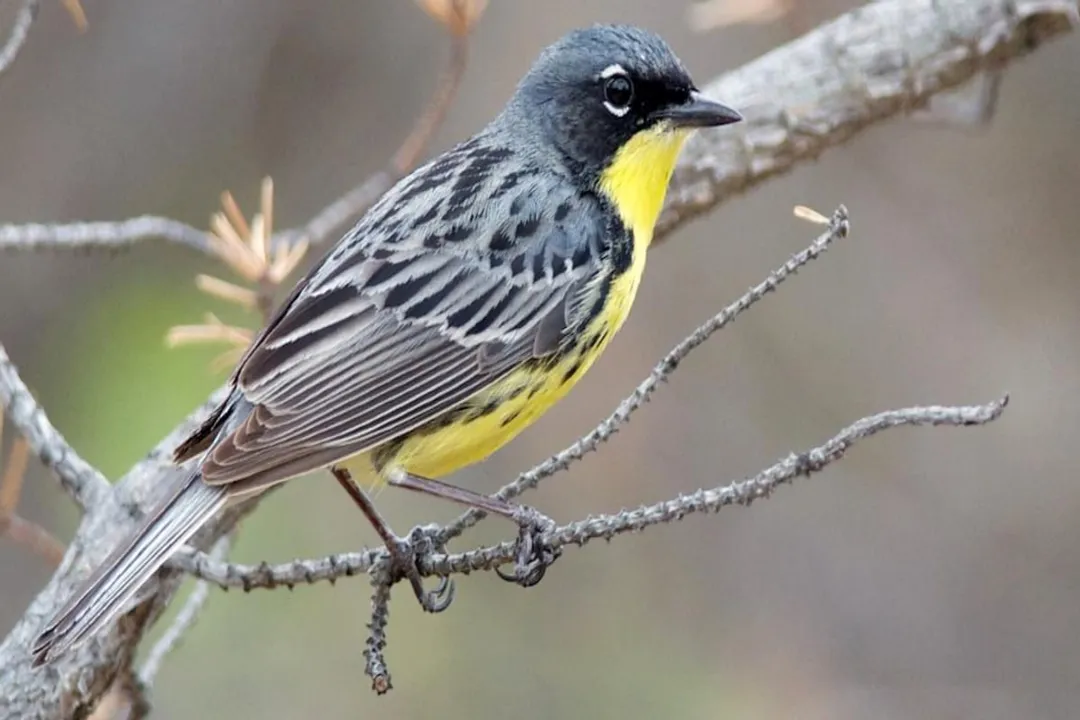
The title of "rarest warbler" in North America belongs to a small, energetic bird with a sharp, distinctive appearance: the Kirtland's Warbler (Setophaga kirtlandii). Though it recently achieved a significant conservation milestone by coming off the endangered species list in the United States in 2019, its existence remains inextricably linked to a highly specific, human-influenced habitat, making its story a profound case study in avian survival. First formally described in 1852 after a specimen was collected near Cleveland, Ohio, the bird's breeding grounds were not discovered until 1903, a late recognition given its restricted range.
# Description and Appearance
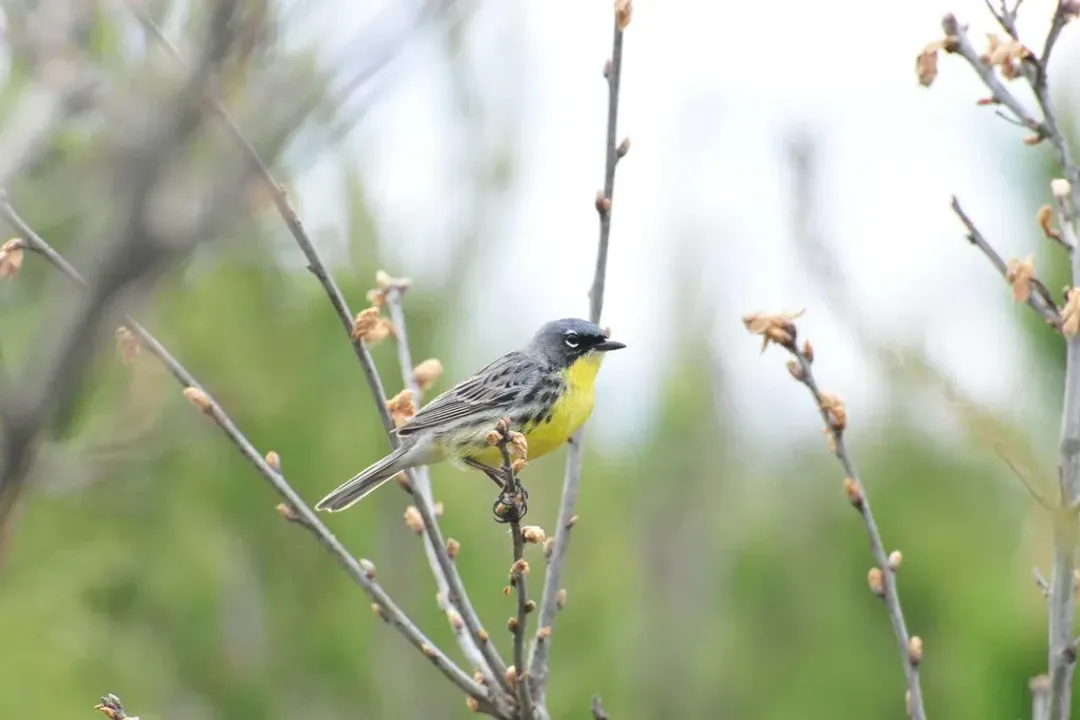
This warbler is notable for being one of the largest members of the Setophaga genus, measuring about 14 to 15 centimeters long. The adult male presents a striking combination of colors: a bluish-gray back often lightly streaked with darker markings, contrasting sharply with a bright, nearly uniformly yellow breast and flanks. Perhaps its most immediate field mark, shared with few other species, is a conspicuous, large, and broken white eye-ring. Juveniles and females are duller, tending toward browner tones on the back and wings, and lack the bold markings of the male. Behaviorally, the Kirtland's Warbler is also easily spotted by its habit of constantly bobbing its tail up and down while perched, a motion uncommon among many northern warblers. In its breeding territory, the male announces his presence with a loud, clear, warbly song that can carry over 400 meters on a good day.
# Specialized Nests
The primary reason this bird is so rare lies in its incredibly narrow breeding habitat requirements. The Kirtland's Warbler is a habitat specialist that nests only on the ground in specific stands of young jack pine (Pinus banksiana) growing on sandy soil, predominantly found in the northern Lower Peninsula of Michigan. They require large areas—historically estimated around 160 acres, or 65 hectares—of this dense, young forest.
The ideal stand is between 6 and 20 years old, with trees typically 5 to 16 feet tall. Crucially, the canopy must be open enough to allow sunlight to penetrate to the forest floor, keeping the lower branches alive and bushy. These low branches conceal the ground nests, often built near grasses or blueberry bushes. Once the pines grow too tall, their lower branches shade out, die, and the resulting dense, shady understory becomes unsuitable habitat, causing the warblers to abandon the area.
This absolute dependence on a narrow successional stage of a single tree species shapes its entire life history. In fact, the bird's vernacular name in Michigan is often the jack pine bird.
# The Long Migration
This species undertakes a substantial journey between its breeding grounds in the Great Lakes region (Michigan, Wisconsin, and Ontario) and its wintering grounds in the West Indies. While the bird is most famous for its nesting in Michigan, it spends the majority of the year in migration or overwintering, primarily on the islands of The Bahamas, but also Cuba, the Turks and Caicos Islands, and Hispaniola.
The migration route is remarkably consistent. Birds depart their breeding areas between August and October, flying southeast toward Florida and South Carolina before moving further west and northwest up the Mississippi River system to reach their destination. In the spring, they reverse this journey, moving north from the Caribbean through Florida in late April or early May.
It is fascinating to consider the ecological pressures faced across such a vast migratory path. While the breeding habitat is geographically localized and intensively managed, the wintering grounds are spread across an archipelago, making comprehensive monitoring exceptionally difficult.
# A Conservation Paradox
The Kirtland's Warbler’s history reveals a strange ecological paradox tied directly to human intervention. During the Ice Ages, the bird likely survived in small relict populations while the jack pine range shifted. As the climate warmed and western forests matured beyond the bird’s needs, the species would have naturally contracted. However, the arrival of European settlers and intensive logging in the 1800s inadvertently created massive tracts of perfectly aged, young jack pine through widespread clear-cutting followed by uncontrolled wildfires in the slash. This period of industrial disturbance is believed to have coincided with an all-time high in the warbler population.
When fire suppression became the norm in the 20th century to protect settled areas, the jack pine habitat rapidly aged past its prime, causing a steep population decline. By the 1970s, after being listed as endangered, the population had plummeted, with a 1974 census finding only 167 singing males.
The second major threat compounded this issue: brood parasitism by the native Brown-headed Cowbird. As bison disappeared and forests fragmented, cowbirds expanded eastward and began exploiting the Kirtland’s ground nests, sometimes resulting in parasitism rates as high as 70% or 80%.
# Decades of Intervention
The recovery of the Kirtland's Warbler is a monumental success story built on coordinated, costly, and dedicated management. A multi-agency recovery team was established in 1973. The strategy had two main components, which required overriding natural processes:
- Habitat Engineering: Since natural wildfires are too dangerous and difficult to manage reliably, federal and state agencies, in coordination with the timber industry, began managing the forest on a strict rotation. Mature jack pines (around 50 years old, when they are commercially valuable and disease-prone) are harvested via clear-cutting, and the area is replanted with dense jack pine seedlings to mimic the early successional stage required by the birds. This management cycle aims to provide a continuous supply of suitable habitat in perpetuity.
- Parasite Control: Intensive trapping of Brown-headed Cowbirds began in the 1970s, removing thousands of birds seasonally. This effort drastically reduced nest parasitism, sometimes to as low as 3%, which allowed the warbler’s reproductive success to triple.
These combined efforts saw the population steadily rise, surpassing the recovery goal of 1,000 pairs and leading to its delisting in 2019. Today, the bird is also establishing small colonies in Wisconsin and Ontario, expanding its breeding range slightly.
# Managing the Rarity
The sheer cost and perpetual nature of this management present an ongoing challenge. As of the early 2000s, managing habitat and controlling cowbirds cost roughly \1 million annually, rising to \1.5 to $2 million later. While the timber sales offset some costs, the expectation is that this intensive management must continue indefinitely to support the species. The dedication required to maintain a species that depends on a managed disturbance—mimicking a natural catastrophe—is an extraordinary commitment by local communities and conservationists, drawing international attention and tourism to Northern Michigan. For birders, this translates into two distinct pursuit challenges: attempting to find a singing male in the dense Michigan pine stands during the summer, or searching for a non-singing, secretive bird foraging low in the Bahamian scrub during the winter months. The survival of this small songbird is now a direct reflection of sustained human effort, balancing ecological necessity with economic viability across two different continents.
#Videos
I Tracked Down the RAREST Warbler in the United States! - YouTube
Related Questions
#Citations
Kirtland's Warbler Overview, All About Birds, Cornell Lab of ...
I Tracked Down the RAREST Warbler in the United States! - YouTube
The Kirtland's Warbler: Eleuthera Island, Bahamas - Field Guides
North America's Rarest Warbler Comes Off the Endangered List
Kirtland's Warbler: The Rarest Warbler : r/birding - Reddit
Kirtland's warbler - Wikipedia
[PDF] Kirtland's Warbler - U.S. Fish and Wildlife Service