Warbler Evolution
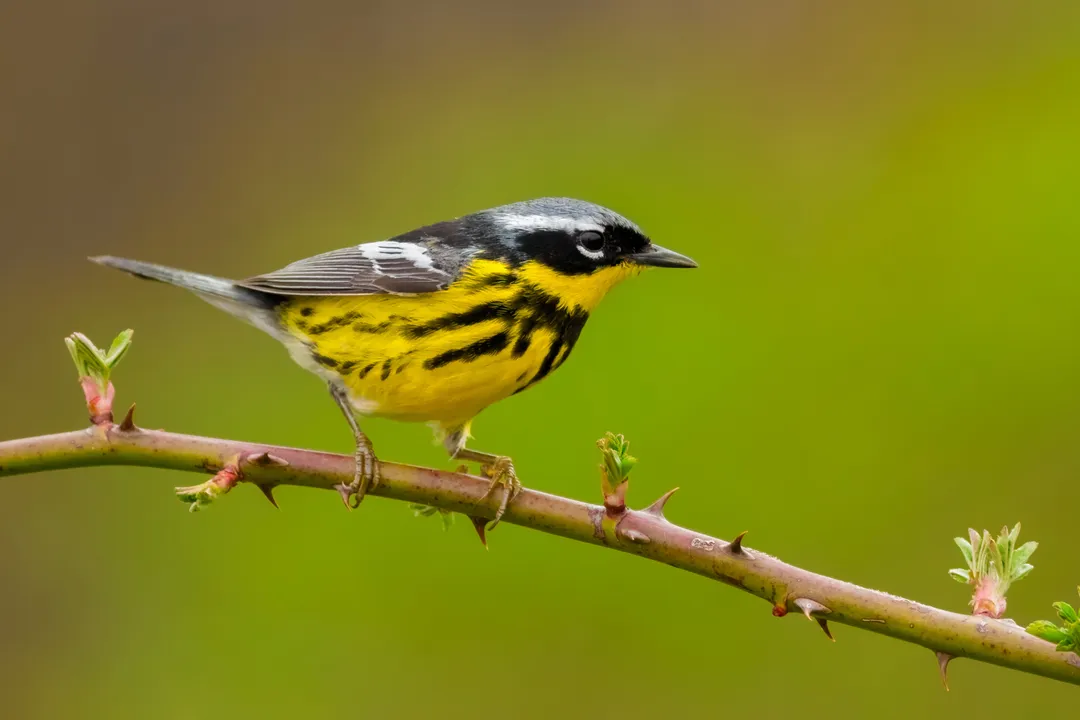
The evolution of warblers, those often small, energetic songbirds, presents a fascinating case study in how speciation occurs, sometimes through neat, isolated pathways and other times through messy, interconnected genetic exchange. The sheer diversity seen across different groups, such as the wood warblers native to the Americas or the vastly different lineage of Old World warblers, hints at multiple major evolutionary radiations that have shaped these families over time. [8][9] For instance, the evolutionary explosion that gave rise to the wood warblers involved distinct paths of diversification, suggesting different regions or ecological niches applied unique selective pressures on separate groups of ancestors. [8]
# Explosion Shapes
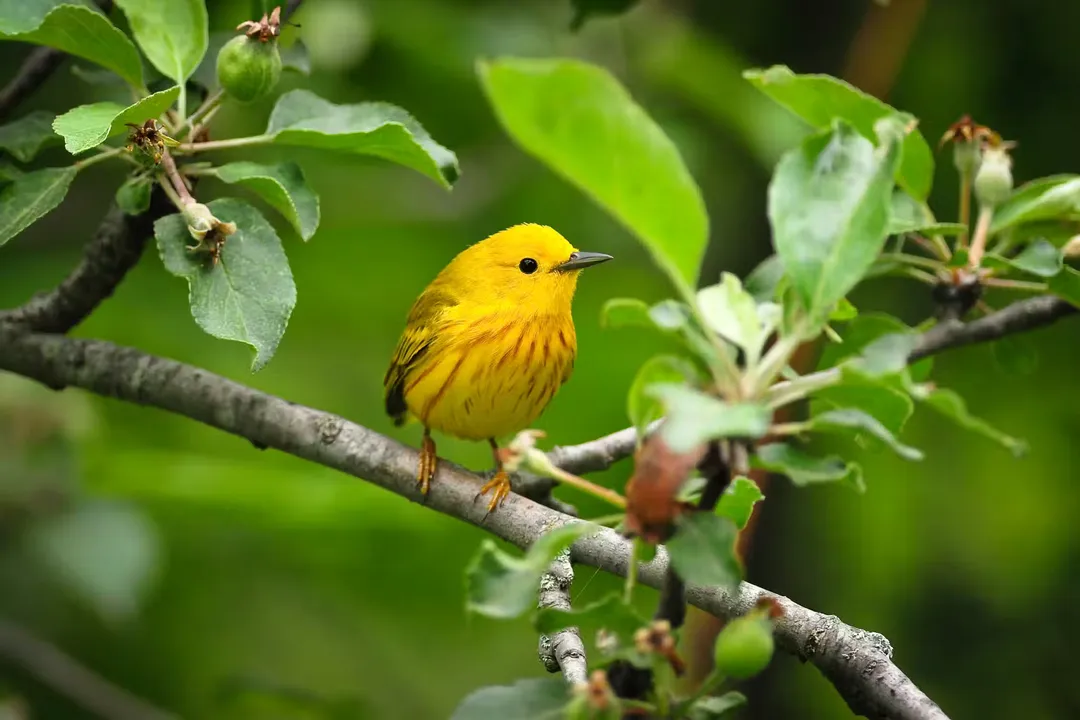
The process of speciation isn't always a clean break where one lineage splits cleanly into two. In warblers, especially within groups like the New World wood warblers (Parulidae), the diversification event seems to have involved multiple, perhaps simultaneous, radiations leading to the array of species we see today. [8] This rapid increase in diversity, often termed an "evolutionary explosion," implies strong, immediate selective advantages for new forms that could exploit underused resources or simply occupy newly available habitats. [8]
However, examining the genetic underpinnings reveals that these distinct paths were not always perfectly walled off from one another. While the resulting species look and behave differently—a hallmark of reproductive isolation—their genetic building blocks sometimes tell a story of cooperation, or at least, intermingling. Specifically, when looking at physical traits like plumage coloration, the evolution of color may have proceeded along these distinct pathways, but the genes responsible for that color appear to have been shared among species that are evolutionary neighbors. [1][2] This pattern suggests that different traits—song, habitat preference, or breeding biology—might be evolving independently of, or perhaps even be constrained by, the flow of genes related to visible characteristics like feather pigments. [4]
It is interesting to consider that while species are defined by their inability to successfully interbreed, the sheer number of warbler species suggests that the initial reproductive barriers must have evolved quickly to prevent genetic blending, even as the raw material for visible variation, the plumage genes, was being traded across nascent species boundaries. [1][4] This dynamic exchange of superficial traits while deeper barriers solidify creates a complex picture of divergence. Where local populations of wood warblers share territory, the pressure of natural selection can quickly drive differences in both color and song to help maintain species boundaries, even as their genes are being exchanged with other, more distant relatives. [7]
# Plumage Gene Flow
The concept of gene flow—the transfer of genetic material from one population to another—is central to understanding warbler evolution, particularly concerning their vibrant colors. Studies have shown that songbirds can swap genes related to colorful plumage across species lines, specifically among those lineages that are closely related or evolutionary neighbors. [4] This is not just a theoretical possibility; researchers have found direct evidence of this genetic mixing. [2]
This phenomenon means that a certain shade of yellow or a specific pattern of black might not be unique to one species’ evolutionary history but could have been acquired from a neighbor. The exchange seems favored among close relatives, perhaps because their genomes are similar enough that the introduced genes are not immediately purged by natural selection. [2] This movement of specific genes, sometimes referred to as introgression, can rapidly introduce novel variations into a population without waiting for de novo mutation. [4]
If we were to construct a hypothetical scenario for a specific warbler group, say one where two species diverged fifty thousand years ago, one might expect their plumage genes to be largely independent. Yet, finding a high degree of shared variation in those genes, as opposed to genes controlling, say, migratory timing, would imply that the selection pressures favoring color distinction were weaker or slower to establish than the ongoing genetic drift or occasional hybridization events that allowed the color genes to spread. [1] The actual finding, however, is that the patterns of these introgressed genes are distinct depending on which species is the recipient and which is the donor, indicating that the history of these exchanges is complex and layered. [2]
# Sympatry Drives
When different species live in the same geographical area—a condition known as sympatry—the selective pressures to avoid misidentification or hybridization become very intense, often acting as a major catalyst for evolutionary change. [7] In wood warblers, this local pressure appears to directly influence the evolution of both visual signals, like color, and auditory signals, like song. [7]
In a sympatric setting, an individual bird needs to quickly and accurately identify a mate of the correct species. If the songs or colors are too similar to a closely related, sympatric species, the risk of costly hybridization (producing unfit offspring) increases significantly. [7] Therefore, selection rapidly favors individuals whose song or plumage differs slightly from the common local neighbor. This sharpens the distinction between species where they overlap geographically, even if they look more similar where they live separately (allopatry). [7]
This interplay between local selection and genetic exchange presents a compelling counterpoint to the simple model of geographic isolation leading to speciation. Consider a species that breeds in two areas: one where it is alone, and another where it coexists with a close relative. In the isolated area, color evolution might drift slowly. In the shared area, however, the genes for color and song might experience a rapid "arms race" to become distinct from the competitor, pushing the two species further apart phenotypically in that specific region. [7] This local fine-tuning contrasts sharply with the broader, historical gene swapping seen across the entire group. [2][4]
# Neighbor Genes
The genetic architecture underlying these evolutionary differences seems highly structured. Researchers have investigated how genes are inherited across related warbler species, finding that warblers share specific segments of DNA with their evolutionary neighbors. [2] This sharing isn't random across the entire genome; rather, it appears concentrated in specific regions, suggesting that certain parts of the genome are more permeable to gene flow than others. [2]
For instance, if a specific segment of DNA controls beak shape—an adaptation critical for diet—and that segment is under strong, unique selection in one lineage, it is less likely to be shared widely across neighbors than a segment controlling a trait under more generalized or weaker selection, like some aspects of immune response or, as noted, plumage color. [1][4] The study of these genomic patterns helps map the history of interactions between these lineages, allowing scientists to pinpoint when and where genetic exchange occurred, even if the evidence is hundreds of thousands of years old. [2]
Furthermore, the study of genomic organization in related species often involves looking at concepts like linkage disequilibrium—the non-random association of alleles at different loci—to trace the history of recombination and gene flow. [5][6] The ability to trace these specific genetic exchanges underscores a general principle in evolutionary biology: relatedness is not always a linear path but often involves extensive cross-talk between sister groups before full reproductive isolation is achieved. [2] The Old World warblers, for example, represent a massive superfamily (Sylvioidea) where diversification has occurred across various regions, likely involving a mixture of isolation and subsequent contact and exchange. [9] The success of the wood warbler groups in establishing many species rapidly suggests their genetic toolkit allowed for both specialization and selective sharing. [8]
# Warbler Groups
To appreciate the evolutionary story, one must recognize the broad scope of the term "warbler." While the New World wood warblers (Parulidae) often dominate discussions about rapid diversification, they belong to a different evolutionary branch than the much larger and more ancient group known as the Old World warblers. [9] The Old World warblers are part of the superfamily Sylvioidea, a group that includes not just the true warblers (Sylviidae) but also swallows and larks, highlighting deep evolutionary splits. [9]
The incredible species richness within these groups highlights that the ecological roles these small, insectivorous birds occupy have been successful and repeatedly filled across different continents and time periods. [9] The fact that two separate evolutionary trajectories—one leading to the Parulidae and one leading to the various Old World warbler families—resulted in birds with similar diets, sizes, and behaviors is a classic example of convergent evolution. Their evolutionary history, therefore, is less a single narrative and more a collection of parallel stories shaped by similar ecological pressures across the globe. [8]
Observing the subtle differences in plumage between two closely related, sympatric warbler species in the field—say, a difference in the brightness of a yellow breast patch—is witnessing the direct result of these localized evolutionary pressures acting upon shared ancestral genetic material. [7] Even a slight, inherited advantage in avoiding hybridization or attracting a conspecific mate in a crowded local environment can be enough to drive the rapid divergence of those specific genes away from the shared pool, solidifying reproductive boundaries over time, regardless of what the rest of the genome is doing. [1][4]
Related Questions
#Citations
Warbler coloration shaped by evolution via distinct paths - Penn State
Warblers borrow color-related genes from evolutionary neighbors ...
evolution of wood warbler flight calls: Species with similar migrations ...
Songbirds swap colorful plumage genes across species lines ...
Evolution of leaf warbler songs (Aves: Phylloscopidae) - PMC - NIH
A phylogenomic tree of wood-warblers (Aves: Parulidae)
Sympatry drives colour and song evolution in wood-warblers ...
Evolutionary Explosion of Wood Warblers Took Distinct Paths
Old World warbler - Wikipedia