Willow Warbler Physical Characteristics
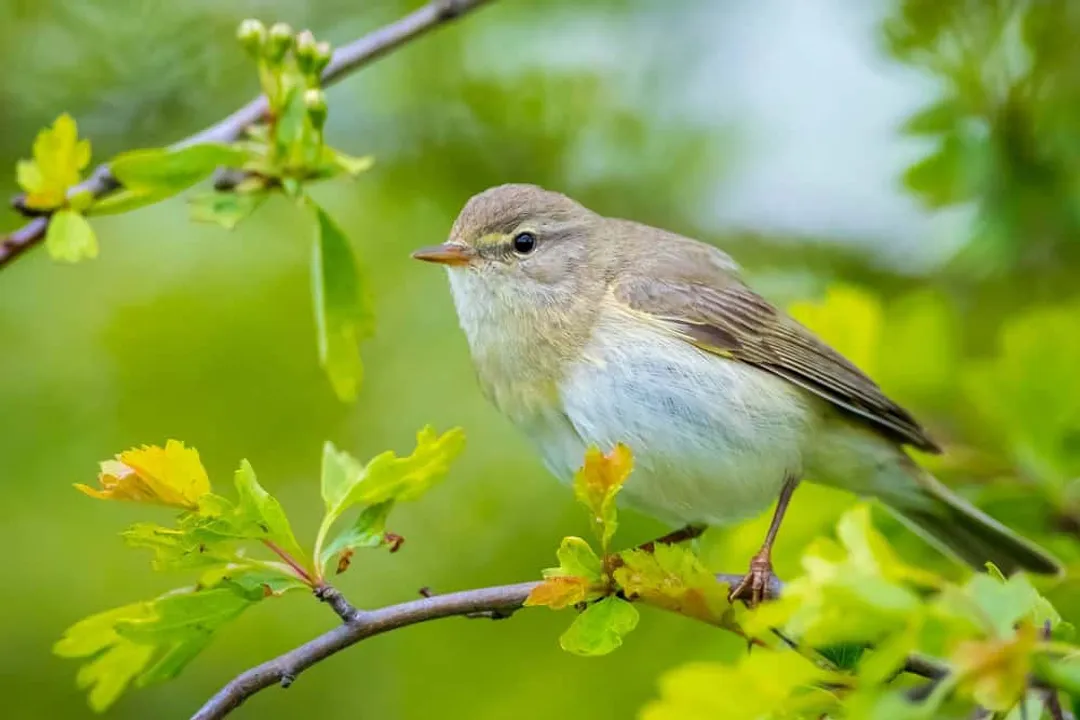
The Willow Warbler, Phylloscopus trochilus, is one of those small, unassuming birds whose physical characteristics demand close observation, especially when encountered alongside its near-twin, the Chiffchaff. It belongs to the leaf warbler family, known for being generally small, active, and outwardly drab, relying on subtle features for precise identification. [1][5] To the casual observer, it appears as a tiny, flitting olive-green insectivore moving quickly through foliage, making the slight differences in plumage tone, leg colour, and facial markings essential knowledge for any birder. [8]
# Size Stature
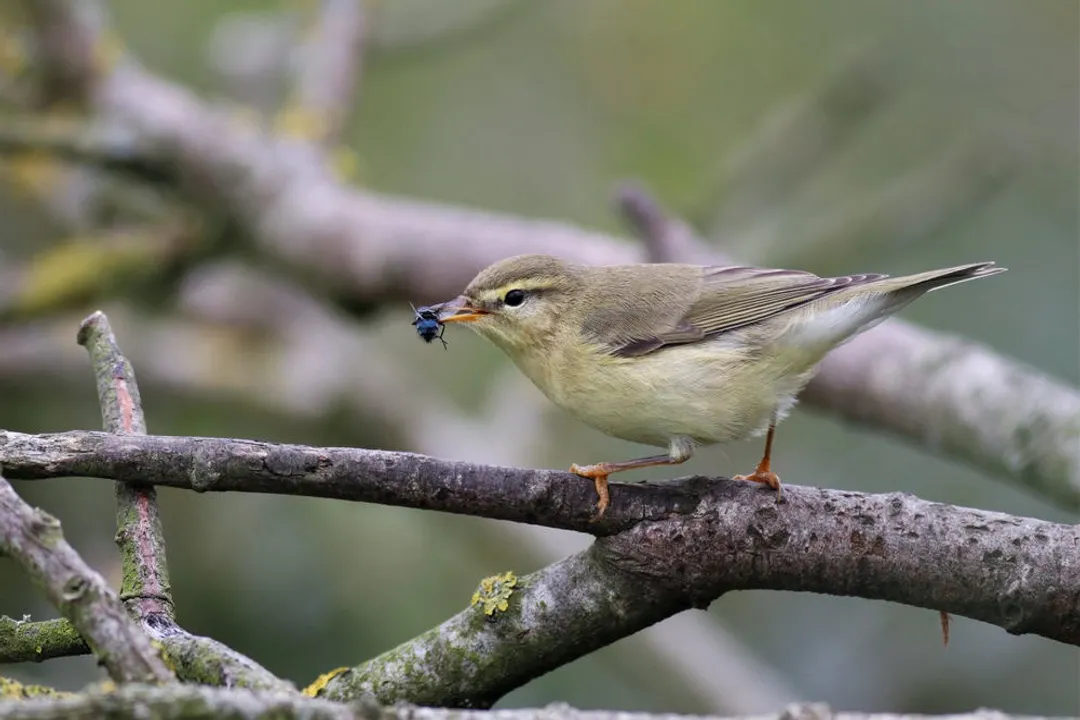
Measuring approximately 10 to 11 centimetres in length, the Willow Warbler fits squarely into the category of small passerines. [1][5] Its build is generally slender and graceful. [5] While size alone is often unreliable for identification in the field, especially when comparing individuals, understanding its mass can be informative. Adults typically weigh in the range of 5 to 11 grams. [1] This slight build contributes to its energetic, almost buoyant movement through the canopy, which contrasts subtly with the slightly more upright posture sometimes adopted by the Chiffchaff. [2][5]
# Feather Colors
The general coloration of the Willow Warbler is dominated by greens and pale washes, lending it a somewhat plain appearance when seen from a distance. [2] The upperparts, covering the back, crown, and wings, are typically a dull olive-green or brownish-green. [1][5] This olive tone is often richer or warmer than that of the Chiffchaff, though this can be heavily influenced by lighting conditions and the bird's current state of feather wear. [2]
The underparts provide a necessary contrast. These areas, including the breast, belly, and vent, are generally pale, appearing off-white or very pale buff. [5] While some individuals might show a faint yellowish wash on the flanks or throat, this yellowing is usually less intense and less extensive than what is often found on a Chiffchaff. [1][8] The primary and secondary feathers of the wings are dark, edged with pale yellowish-green or olive, though the wing itself lacks strong wing bars, which helps distinguish it from certain other warbler species. [2][5]
# Appendages Specifics
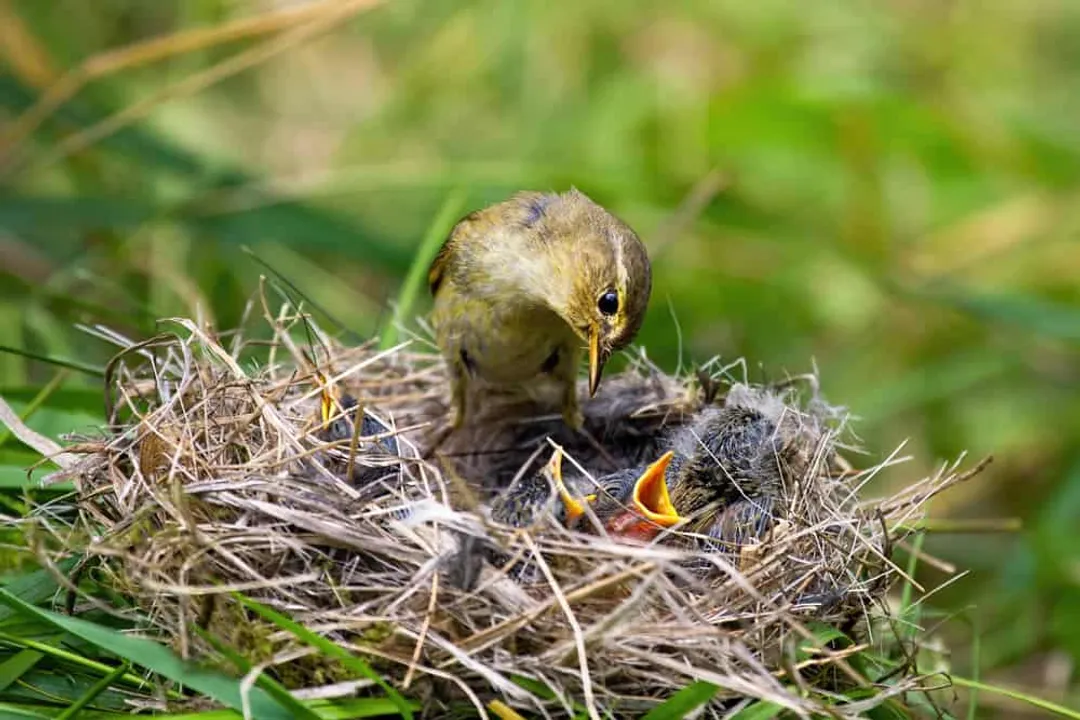
The colour of the legs is frequently cited as one of the most reliable physical markers separating the Willow Warbler from its close relative. [2] Willow Warblers almost invariably possess pale legs, which are typically described as pinkish, pale brownish-pink, or yellowish-brown. [1][5] In good light, this pale colouration stands out against the darker substrate of bark or branches. [2] In contrast, the Chiffchaff usually exhibits dark, blackish legs. [1]
The bill structure is also characteristic of a species specializing in catching small, aerial insects. It is relatively fine and pointed, though perhaps slightly heavier than the bill of some other Phylloscopus warblers. [2][5] The upper mandible is dark, while the lower mandible is usually paler, often yellowish or horn-coloured at the base. [1] This fine structure is perfectly adapted for picking tiny invertebrates from leaves and twigs, or perhaps snatching insects directly from the air during short sallies. [4]
# Facial Details
Attention to the head pattern is crucial, as is often the case with visually similar songbirds. The Willow Warbler features a relatively distinct, pale supercilium—the stripe above the eye. [1][8] This eyebrow stripe is often well-defined, long, and contrasts nicely with the darker eye stripe running through the eye. [2][5] It usually extends noticeably behind the eye. [2] Furthermore, the area immediately surrounding the eye is often paler than the crown, contributing to a somewhat bright-eyed expression. [1] The ear coverts (the feathers covering the ear area) are usually slightly darker than the supercilium but blend smoothly into the mantle. [5]
When observing these features in the field, it is helpful to gauge the overall effect. A helpful mental guide when distinguishing this species is to look for a bird with a generally cleaner look—less streaky, paler legs, and a longer, more prominent pale eyebrow—when compared side-by-side with a Chiffchaff. [1][2]
# Chiffchaff Contrast
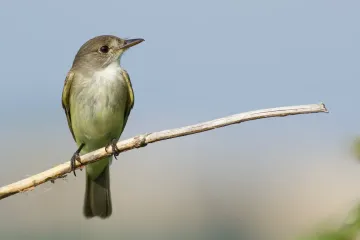
The physical comparison between the Willow Warbler and the Chiffchaff (Phylloscopus collybita) represents the single greatest challenge in identifying this species based on appearance alone. [5] While the leg colour (pale vs. dark) is a significant field mark, it is not absolute, as variation exists, particularly in juvenile or non-breeding plumage. [1] A typical adult Willow Warbler presents with the combination of pale legs, a long supercilium, and generally paler underparts compared to the Chiffchaff. [2]
To make this distinction more systematic, one might consider a quick checklist of averages. While direct measurement in the field is impractical, understanding the typical range can aid confidence:
| Feature | Willow Warbler (P. trochilus) | Chiffchaff (P. collybita) |
|---|---|---|
| Leg Colour | Pale pinkish to yellowish-brown [1][5] | Dark, often blackish [1][5] |
| Supercilium | Longer, more prominent, often paler [2] | Shorter, less contrasting [1] |
| Underparts | Generally paler overall, faint yellow wash [1] | Often slightly dingier or yellower wash on flanks [2] |
| Wing Projection | Generally longer primary projection (harder to see) [1] | Shorter primary projection [1] |
It is worth noting that migration status profoundly affects identification confidence. A bird encountered on spring passage might still show residual duller winter feathering, making its typical bright olive tones less apparent, while the leg colour often remains a relatively stable identifier across seasons. [1] Furthermore, young birds in their first autumn can be notoriously difficult, as their plumage is often duller and the leg colours may not have fully settled into their adult hues. [5] In such cases, observation of behaviour or listening for the song becomes the critical fallback, yet understanding these precise physical markers ensures that observers are focused on the correct structural elements when a clear view is afforded. [8]
# Plumage Variation
While the base description holds true, understanding that this species undergoes complete moults, which changes the appearance of the feathers, is important for advanced identification. [1] Willow Warblers breed across Europe and Asia, and subtle variations exist across this vast range, though these geographic differences are usually too slight for identification in the field. [1] For instance, northern and eastern populations may appear slightly brighter or greener than their western counterparts. [5]
When considering the physical characteristics, one must always factor in wear and tear. Old feathers, particularly towards the end of the breeding season before the autumn moult, become faded, bleached, and worn, often turning the olive-green top to a duller, brownish hue. [1] This feather wear can temporarily make a Willow Warbler look much more like a Chiffchaff, as the key visual contrast (the richness of the green) is diminished. Therefore, an observer in late summer should place increased reliance on the pale leg colour and the shape/length of the pale eyebrow stripe over the overall body tone, as these features tend to be less affected by normal feather abrasion. [2]
The first-winter bird provides another physical puzzle. These young birds often show more yellow in the plumage, sometimes leading to confusion with other leaf warblers. However, the structure—the slim build, pale legs, and the tendency toward a long supercilium—usually remains the most consistent suite of characteristics pointing towards trochilus over collybita. [5] Being aware that the subtle physical cues are the difference between the two species underscores the need for meticulous attention when these birds are foraging actively, as a quick glimpse might suggest a generic "small brown bird" when in fact a distinct species is present. [8]
Related Questions
#Citations
Willow warbler - Wikipedia
Willow Warbler Bird Facts | Phylloscopus Trochilus - RSPB
Willow Warbler (Phylloscopus trochilus) - Woodland Trust
Bird Fact File: Willow Warbler - Beaky Bites
Willow Warbler Bird Facts - Phylloscopus trochilus - A-Z Animals
Willow warbler | Herefordshire Wildlife Trust
Willow Warbler Phylloscopus trochilus - eBird
Willow Warbler - Phylloscopus trochilus - NatureSpot
Willow Warbler | Bute Bird Group