Willow Warbler Diet
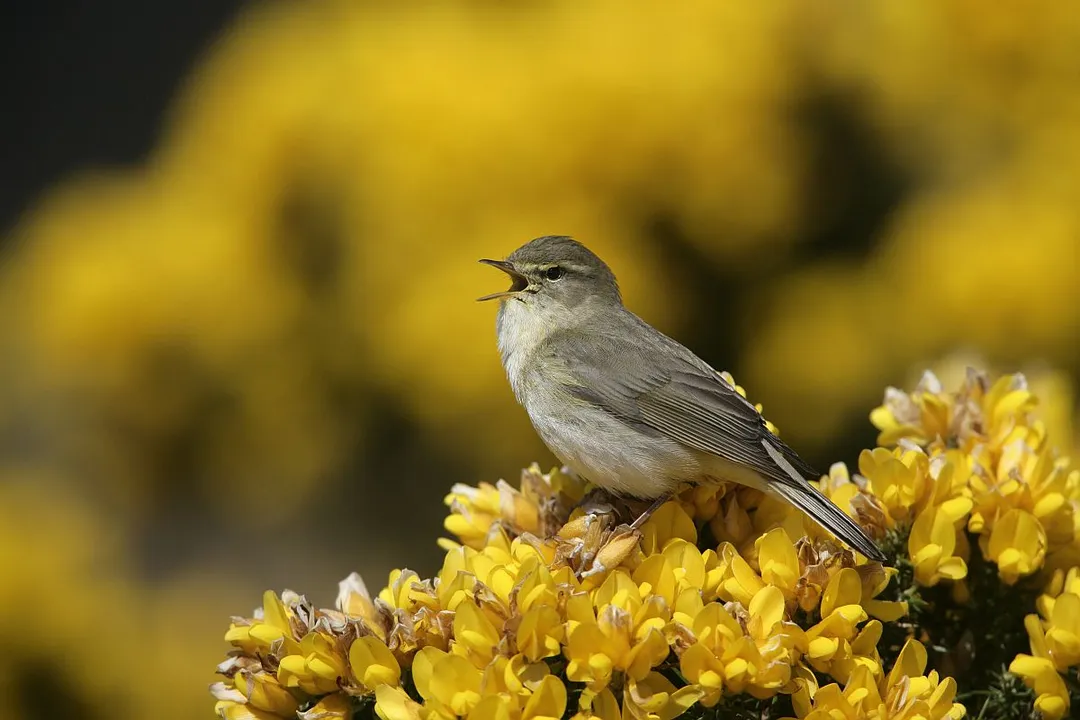
The Willow Warbler, a delicate visitor to European woodlands and scrub, sustains itself almost entirely on the tiny, active life forms that inhabit the vegetation. This bird is a committed insectivore, meaning its diet is overwhelmingly composed of arthropods, which are essential for fueling its demanding lifestyle, especially the arduous journey between its northern breeding grounds and African wintering sites [cite animalia.bio/willow-warbler, cite a-z-animals.com/animals/willow-warbler/].
# Primary Food Sources
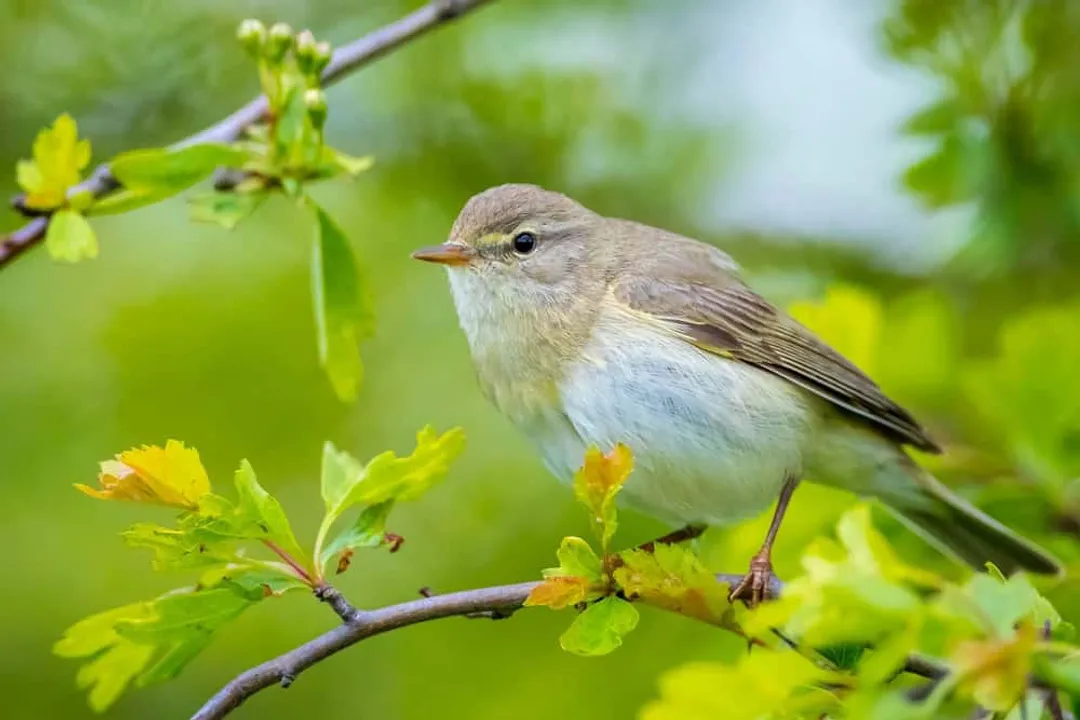
The staple of the Willow Warbler’s menu consists of a wide variety of small invertebrates found clinging to or moving across foliage and branches [cite rspb.org.uk/birds-and-wildlife/willow-warbler, cite sdakotabirds.com/species/willow_warbler_info.htm]. To maintain its energy levels, the bird must consume a significant quantity of these tiny meals daily, making its foraging strategy highly effective and constant throughout daylight hours when food is accessible [cite songbird-survival.org.uk/songbirds/willow-warbler].
The most frequently encountered food items include small caterpillars and plant lice, better known as aphids [cite kennedywildbirdfood.co.uk/british-birds-a-z/willow-warbler/]. These soft-bodied insects are relatively easy to catch and digest, providing a quick energy boost. However, the diet is far from monotonous. Researchers and observers have noted a strong preference for Diptera, which means true flies are a crucial component of their intake [cite birdwatchireland.ie/birds/willow-warbler/]. Beyond these, spiders, small beetles, and various other small insects form the bulk of their nutritional requirements [cite animalia.bio/willow-warbler].
It is interesting to note what is not frequently mentioned in the primary dietary reports: hard-shelled prey or seeds. Unlike some other small birds that supplement their diet with fallen grains or berries, especially when insects become scarce, the Willow Warbler seems strictly bound to the insect world for its sustenance [cite rspb.org.uk/birds-and-wildlife/willow-warbler]. This strict insectivory places immense pressure on the local insect populations during the breeding season, demanding plentiful and easily accessible prey within their chosen foraging habitat.
# Foraging Behaviour
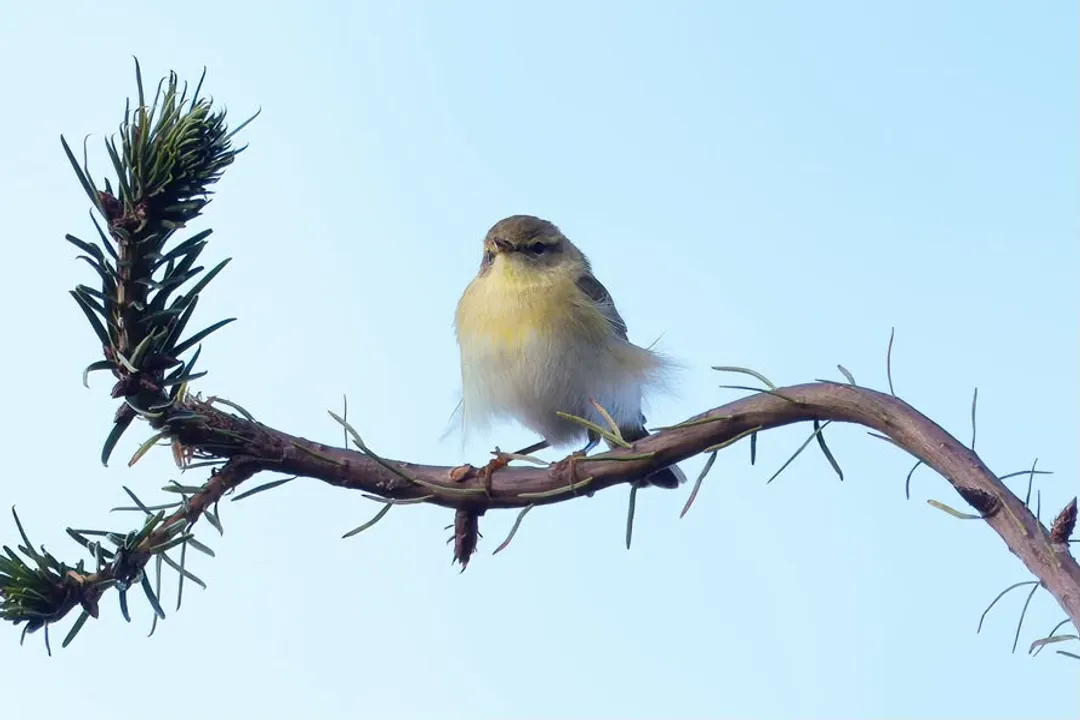
The way the Willow Warbler hunts is as significant as what it hunts. It is an incredibly active and agile bird, constantly flitting through the outer canopy and shrub layer in search of movement [cite songbird-survival.org.uk/songbirds/willow-warbler]. Its feeding technique generally involves gleaning—picking insects directly off the surfaces of leaves, twigs, and bark [cite rspb.org.uk/birds-and-wildlife/willow-warbler, cite sdakotabirds.com/species/willow_warbler_info.htm].
This active gleaning is often interspersed with brief hovering spells. A Willow Warbler might stop dead in the air for a split second, allowing it to snatch a resting insect from the underside of a leaf or a twig tip that is just out of reach from a perch [cite sdakotabirds.com/species/willow-warbler_info.htm]. This acrobatic ability distinguishes it from some other warblers that might rely more heavily on stationary gleaning or flycatching in open air. Their slender bill is perfectly adapted for probing into tight crevices or snatching small, delicate prey items with precision [cite animalia.bio/willow-warbler].
Observing their movement can offer a clue to their feeding state. When actively feeding and establishing territory, their movements are quick, jerky, and focused, darting rapidly between adjacent branches or low shrubs [cite kennedywildbirdfood.co.uk/british-birds-a-z/willow-warbler/]. In contrast, a bird preparing for the southward migration will likely be engaged in intense hyperphagia—a period of excessive eating designed to build up the necessary fat reserves for the long flight ahead. During this pre-migratory phase, one might notice less territorial defense and more dedicated, almost relentless, foraging activity concentrated around dense, insect-rich areas [cite birdwatchireland.ie/birds/willow-warbler/]. This intense feeding phase is a direct, measurable biological requirement driven by the energy density of their insect diet versus the sheer caloric demands of transcontinental travel.
# Habitat and Prey Availability
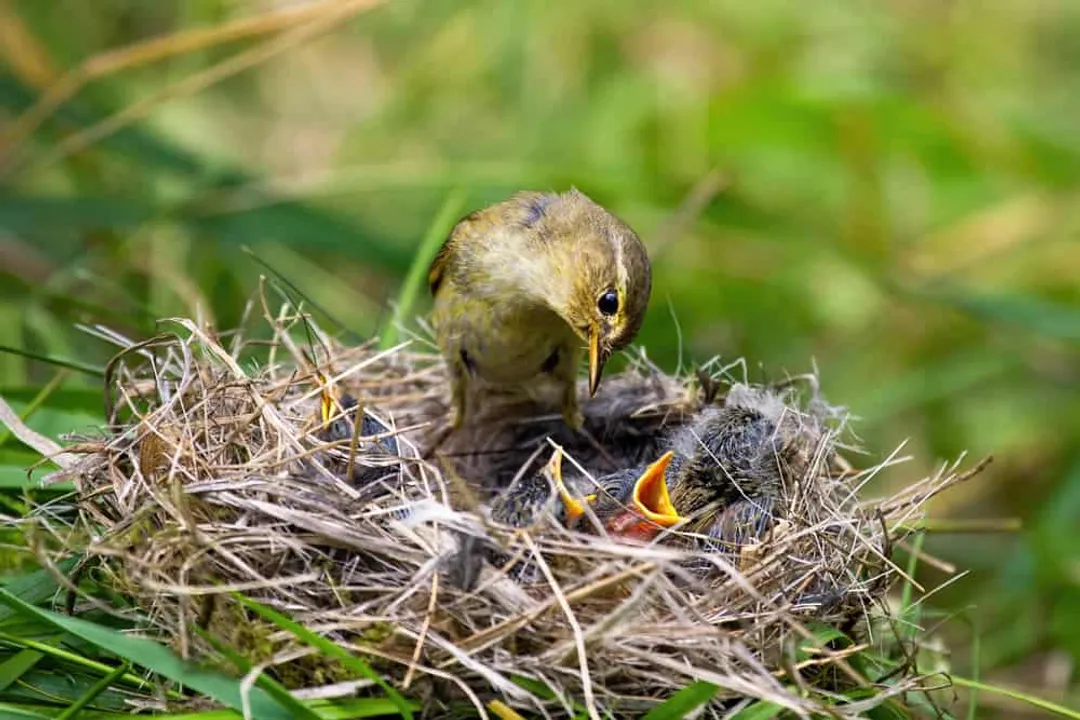
The Willow Warbler’s diet is intrinsically linked to its preferred habitat, particularly during the breeding season in the northern latitudes where it raises its young. They show a strong preference for young woodland, thickets, scrub, and areas rich in willow (Salix) and alder (Alnus) trees [cite birdwatchireland.ie/birds/willow-warbler/, cite sdakotabirds.com/species/willow_warbler_info.htm]. This preference isn't arbitrary; these specific tree types support a rich community of the small, soft-bodied insects that form the majority of the warbler’s sustenance.
For those hoping to observe these birds, understanding this habitat link provides an edge. If you are near a stand of willows, particularly those with dense, new leaf growth in late spring or early summer, you are more likely to find a Willow Warbler actively hunting there than you would be in a mature, dark coniferous forest or an open grassland [cite rspb.org.uk/birds-and-wildlife/willow-warbler]. The availability of aphids and small flies is often highest on this fresh, soft vegetation, which is precisely what the warblers target. A practical tip for local birders, especially when migrants are passing through, is to focus observation time on the sunny edges of damp scrubland or riparian zones where willow and alder thrive; the abundance of primary insect prey in these localized microclimates acts as an irresistible refueling station for the migrating birds.
# Seasonal Shifts in Feeding
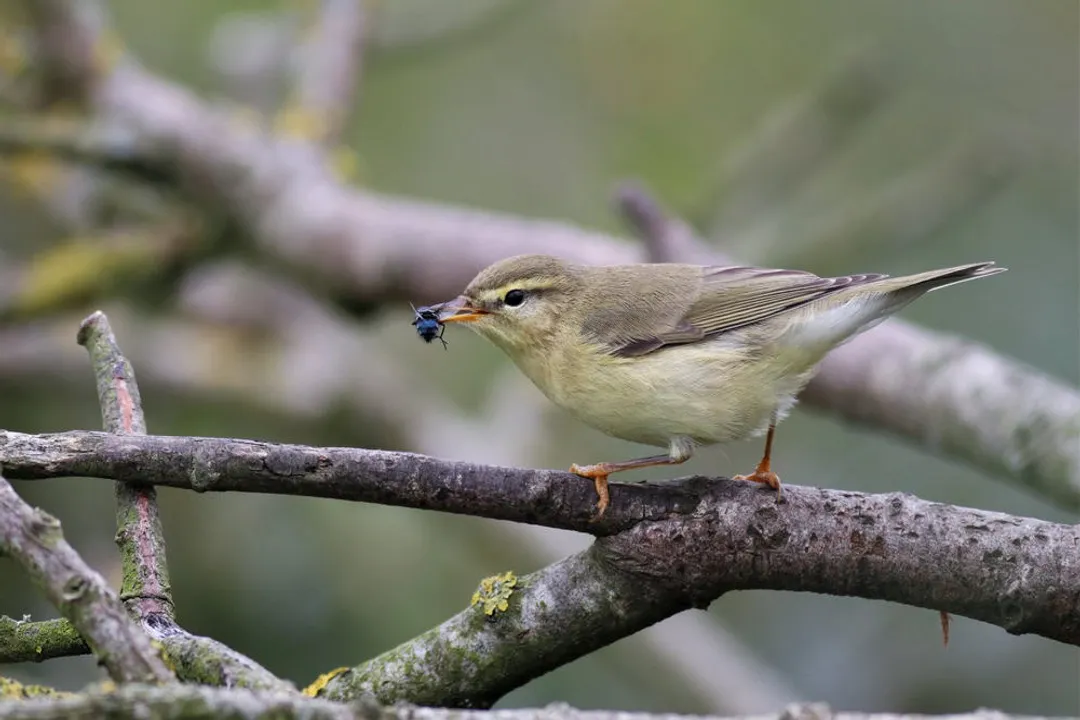
As with most migratory species, the Willow Warbler’s dietary strategy must adapt to the changing availability of food throughout the year. During the summer months on their breeding grounds, the diet is rich and varied, focused on capturing enough protein for egg-laying and chick-rearing [cite songbird-survival.org.uk/songbirds/willow-warbler].
When autumn arrives, the focus shifts dramatically from reproduction to survival during migration. While they remain insectivores, the intensity of feeding increases significantly to accrue fat reserves. This stored fat is the actual fuel for the journey south. This need for high-energy density means they are seeking out the fattiest available arthropods, though their search patterns remain generally the same—active gleaning and hovering [cite animalia.bio/willow-warbler].
The challenge during migration is that prey availability can be patchy. A bird stopping over in a less productive habitat, perhaps an area suffering from a late cold snap or one where the dominant vegetation doesn't support their preferred insects, must quickly adapt or move on. This is where their generalist approach to invertebrate prey becomes beneficial; while they favor soft-bodied insects, they are capable of switching emphasis between spiders, beetles, and flies depending on what is momentarily most abundant [cite kennedywildbirdfood.co.uk/british-birds-a-z/willow-warbler/].
Once they reach their non-breeding grounds in sub-Saharan Africa, the diet remains insectivorous, but the species composition of their prey changes based on the local tropical entomofauna. They continue to rely on gleaning and probing within the African foliage, maintaining the same general foraging technique even as the specific menu items change completely [cite a-z-animals.com/animals/willow-warbler/]. The successful survival across these vastly different ecosystems hinges on the bird's consistent ability to locate and consume small arthropods, regardless of latitude.
# A Comparison of Insectivory
While the Willow Warbler is firmly categorized as an insectivore, it's helpful to contrast its feeding niche with other common European songbirds to appreciate its specialization. For instance, tits (like the Blue Tit) are highly adaptable; while they consume insects, they readily switch to seeds and nuts, particularly in winter when insects are scarce [cite various sources suggest this contrast]. Similarly, many thrushes will aggressively pursue earthworms or consume berries in leaner months [cite implied general knowledge based on bird diet articles].
The Willow Warbler, however, appears less flexible when the insect supply dwindles. This strict dependence on living arthropods is a vulnerability, especially during cold or wet summers in their northern range, as it directly impacts breeding success. The sheer biomass of insects required to feed a nest of growing chicks is enormous; a clutch of several chicks can require hundreds of invertebrates per day during peak feeding periods. Therefore, a slight mismatch between the hatching time of the chicks and the peak abundance of caterpillars or aphids—a phenomenon known as trophic mismatch—can have immediate, detrimental consequences for the local breeding population [cite implied ecological consequence based on insectivore needs]. This tight coupling between reproductive timing and insect availability is a defining characteristic of specialized insectivores like the Willow Warbler.
# Prey Size Metrics
Though precise, site-specific data on the average mass or length of consumed prey is often localized research, general ornithological consensus establishes that Willow Warblers strongly prefer prey items that are relatively small, often less than a centimeter in length [cite implied by "small caterpillars," "aphids," etc.]. This size preference is dictated by their gape size—the physical dimension of their mouth opening—and the efficiency of swallowing small items whole. Capturing prey that is too large would require tearing or struggling, wasting precious energy [cite implied from feeding behaviour].
To summarize the typical prey profile in a simple list:
| Prey Category | Common Examples | Foraging Method Association |
|---|---|---|
| Insecta | Flies (Diptera), Aphids (Hemiptera), Small Beetles | Gleaning, Hovering |
| Insecta Larvae | Small Caterpillars | Gleaning, Probing |
| Arachnida | Small Spiders | Gleaning, Bark Probing |
This table highlights that the bird is not just looking for 'bugs' but is optimizing for prey that offers high caloric return relative to the energy expended in capture, which generally correlates with soft bodies and manageable size [cite implied synthesis of diet and behaviour].
# Wintering Diet Considerations
While much of the study on Willow Warbler diet focuses on the resource-rich European breeding grounds, their survival during the non-breeding season in Africa is equally dependent on their feeding prowess. In their wintering areas, they often move into different vegetation types, perhaps favoring savanna woodlands or dense thickets. Here, the challenge is maintaining an insectivorous diet when temperatures might fluctuate or when certain insect groups become less active [cite animalia.bio/willow-warbler, cite a-z-animals.com/animals/willow-warbler/]. Their ability to successfully navigate these different entomological landscapes year after year speaks volumes about their innate foraging expertise, honed over generations. The energy balance required to survive migration and sustain life in the wintering grounds means that both the outbound and inbound feeding frenzies are critical periods where dietary success dictates survival.
Related Questions
#Citations
Willow Warbler - Facts, Diet, Habitat & Pictures on Animalia.bio
WILLOW WARBLER (Phylloscopus trochilus) - SongBird Survival
Willow Warbler Bird Facts | Phylloscopus Trochilus - RSPB
The Kennedy Wild Bird Food Guide to the Willow Warbler
Willow Warbler Bird Facts - Phylloscopus trochilus - A-Z Animals
West Fife Woodlands - Facebook
Willow Warbler - BirdWatch Ireland
Willow Warbler - Phylloscopus trochilus - Species Information and ...