Willow Warbler Locations
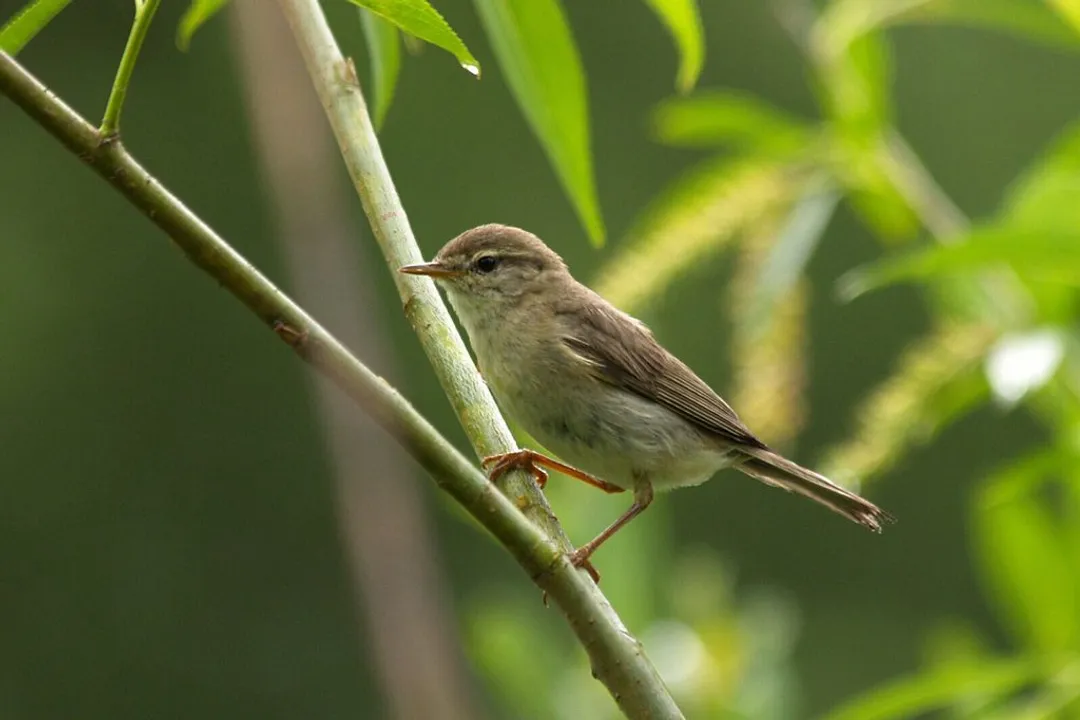
The Willow Warbler, Phylloscopus trochilus, is a small, active songbird whose presence is closely tied to the seasonal pulse of the Palearctic and the vast expanse of sub-Saharan Africa. Pinpointing its location requires understanding this immense annual circuit, which sees this tiny creature undertake one of the longest migrations relative to its size of any animal. [4] To find a Willow Warbler, one must first decide which season they are interested in, as its distribution shifts dramatically between the northern summer breeding grounds and the African wintering refuges. [4]
# Breeding Map
The core summer residence of the Willow Warbler stretches across a massive territory spanning northern and temperate Europe and eastwards deep into the Palearctic, reaching as far as the Anadyr River basin in eastern Siberia. [4] This bird is considered a common and widespread breeder throughout this enormous zone. [4]
Within Europe, the bird’s distribution is anything but uniform in density. Scandinavian countries stand out as the species’ stronghold, supporting the highest population concentrations recorded anywhere in their range. [4] In Sweden and Finland combined, estimates suggest millions of breeding pairs, with local densities reaching an astonishing peak of up to 1,100 pairs per square kilometre. [4]
Moving eastward across Eurasia, the density generally decreases. Central Siberia still supports significant populations, though peak densities drop markedly to around 27 pairs per square kilometre. [4] On the southern margins of the breeding range, numbers thin out considerably. For instance, Switzerland hosts only about 9 pairs per square kilometre, and northern Spain supports a mere total of around 100 pairs across the entire region. [4]
In the British Isles, the Willow Warbler is a widespread summer visitor, typically present from April through September. It is often considered particularly numerous in the northern parts of the UK. However, this apparent abundance masks a worrying trend; like many Palearctic migrants, its numbers have seen significant reduction, with the population in England having decreased by approximately 70% over the last 25 years, with the most severe declines concentrated in the southeast. [4] Conversely, some areas in Scotland have actually registered minor increases, suggesting regional recovery or shifting suitability. [4]
# Habitat Niche
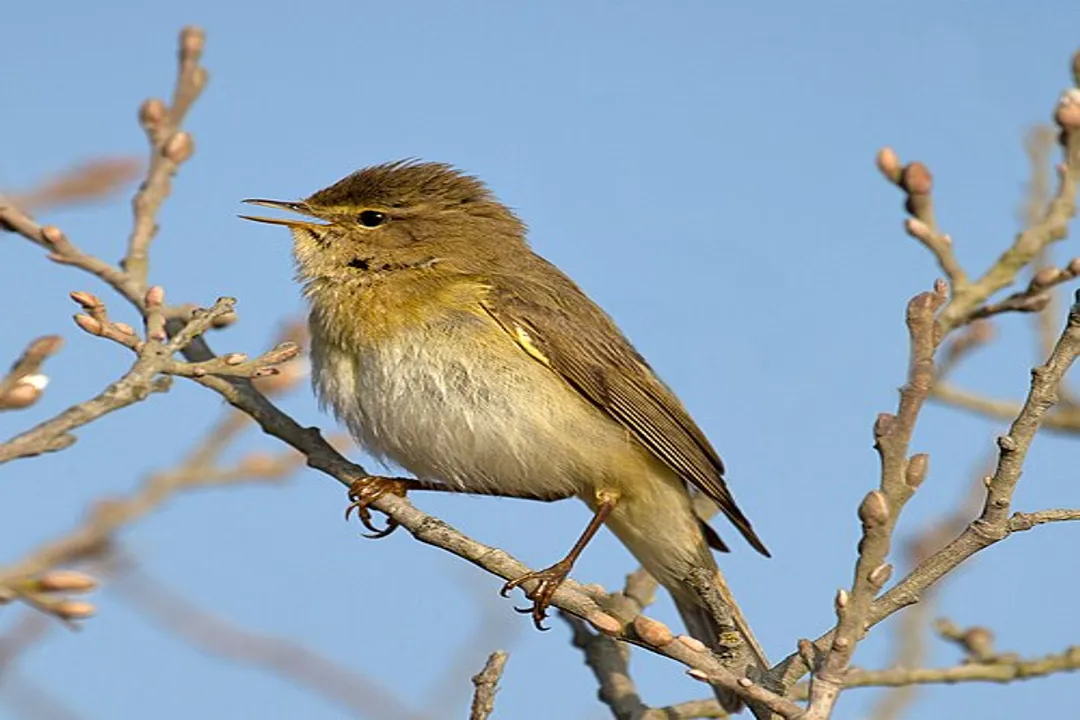
The specific location of a Willow Warbler, whether it is establishing a territory or pausing during migration, is dictated by a particular set of habitat preferences revolving around young growth and dense low cover. [4] This bird is intimately associated with open woodlands, often favoring the transition zone where forest meets open space—the woodland edge. [4]
Key vegetative components mentioned across various source locations include the presence of birch, alder, and willow trees. [4] These species seem to provide both canopy structure and foraging opportunities. Crucially, the warbler requires adequate ground cover for its nesting strategy. [4] Nests are intricate domes built low to the ground or concealed within low vegetation. [4] Patches of low bramble are highly valued as they offer excellent nest cover. [4]
Furthermore, the preference often leans toward damp environments. [4] Areas featuring streams, fields rich in mosses or bracken, and generally moist woodland sites are favored because they often support the rich insect life that forms the warbler's primary diet. [4] Even human-altered landscapes can be suitable, provided the structure is right; young tree plantations, often those only 10–20 years old (coppice), provide the necessary mix of small trees and developing scrub. [4]
Thinking about the population difference between high-density Scandinavia and declining parts of England, one can infer that the intensity and age structure of woodland management matters greatly. If local management practices in areas like Southeast England favor mature, closed canopy, or conversely, overly tidy clearance that removes low scrub entirely, the habitat niche requirements of the Willow Warbler—young trees and low nest cover—may be spatially fragmented or absent. Success in Scandinavia might be partially due to extensive management systems that naturally cycle through these successional stages, providing an ideal, renewable supply of low, scrubby woodland edges year after year.
# Migration Corridors
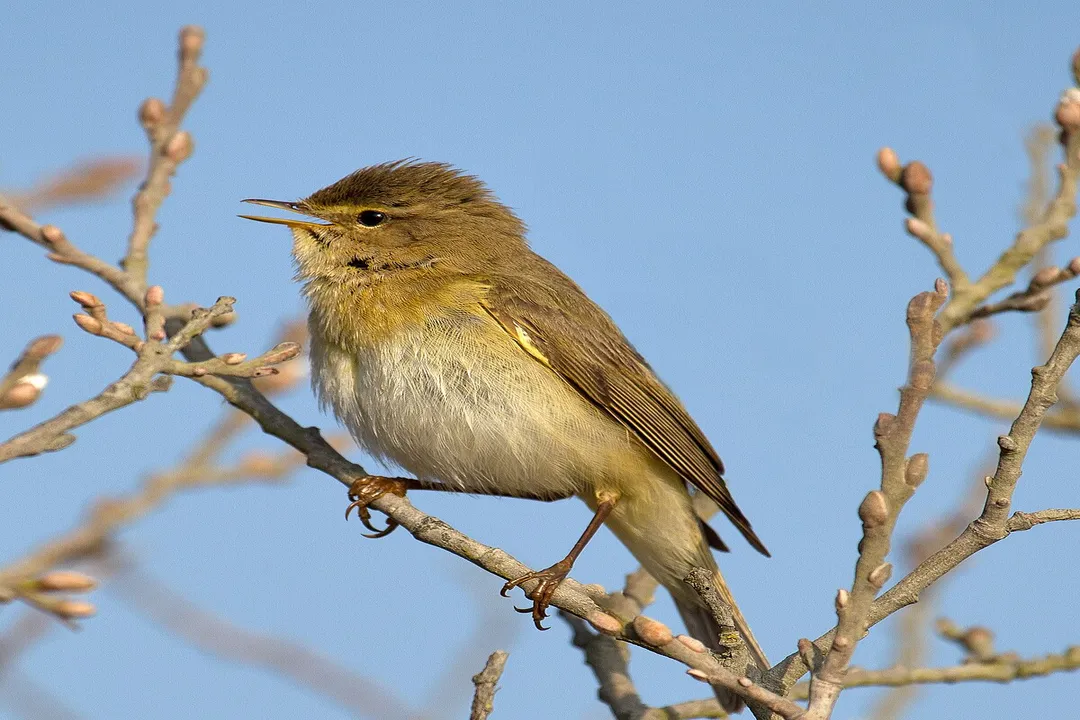
The sheer distance covered by some individuals highlights why finding them on passage is often fleeting. While the species is migratory across its range, the Siberian subspecies, P. t. yakutensis, undertakes one of the planet's most demanding avian commutes, sometimes traveling up to 12,000 km (7,500 miles) to reach its wintering grounds. [4] This route is generally defined by the Asian–East African Flyway. [4]
The timing of this movement is highly regular, dictated by the northern climate cycles: [4]
- Autumn Migration: Birds depart the breeding grounds between August and October. [4]
- Wintering Period: They occupy their non-breeding territories from roughly October through March. [4]
- Spring Return: The journey back north occurs from mid-March until mid-May, at which point they arrive in the breeding range. [4]
While specific stopover locations are not consistently detailed across all sources, the principle is clear: these small birds must rest and refuel along the way. Therefore, any area offering suitable dense scrub or woodland edge habitat along the main migratory tracks—which sweep across Europe and into Africa—could briefly host a large influx of transient Willow Warblers during peak passage times.
# African Wintering
The destination for the vast majority of the global population lies south of the Sahara Desert. [4] Almost all Willow Warblers spend their non-breeding season wintering in sub-Saharan Africa. [4]
The specific wintering location seems correlated with the subspecies' breeding origin: [4]
- P. t. trochilus (Western breeders, including most from Europe): Winters primarily in West Africa. [4]
- P. t. acredula (Northern Scandinavia/Western Siberia): Migrates to Central Africa. [4]
- P. t. yakutensis (Eastern Siberia): Heads furthest south and east, wintering in Eastern and Southern Africa. [4]
This massive winter range underscores the bird's status as a true Afro-Palearctic migrant. Upon arrival in Africa, the birds often undergo a complete feather moult, a behavior that is quite unusual among birds immediately following such an arduous flight.

# Vagrant Sightings
The Willow Warbler's main range is firmly rooted in the Old World. [3] However, its migratory drive can occasionally lead it drastically off course, resulting in rare but exciting sightings in North America. [1][3] These instances are classified as vagrancy, typically involving birds blown far off their intended routes across the Atlantic or Bering Strait.
The primary known locations for these accidental transatlantic or trans-Pacific visitors are documented near the North American perimeter, specifically on St. Lawrence Island and the Pribilofs in the Bering Sea region. [1] In the continental US, specific state records may exist—for example, South Dakota notes the species as a non-resident, implying that any appearance there is unexpected. [1] For birders interested in these rare occurrences, checking official records maintained by bodies like the American Birding Association is the usual reference point for confirmed sightings within the continent. [3]
# UK Local Hotspots
Focusing specifically on the UK, where the bird is a seasonal summer resident, locating it means targeting its preferred scrubby woodland and coppice during the breeding season (April to September). While the species is widespread, local patch surveys offer concrete locations where observers frequently connect with them.
For example, records from Leicestershire and Rutland indicate several recurring sites that are productive during the season:
- Rutland Water: Frequently reported across different lagoons and areas.
- Melton Country Park: A known site for spring visitors and breeders.
- Charnwood Lodge: Another recurring location for records submitted during the nesting period.
When seeking out a Willow Warbler in the UK, especially in areas where population declines have been noted, understanding its habitat needs becomes an actionable step for observers. Instead of looking in dense, mature forest, focus surveys on the edges of recently felled or managed woodland sections where light penetration encourages the growth of necessary low shrubs like blackthorn, which offer the critical, protective layer for ground-nesting females. [4] The health of the understory, often impacted by grazing animals like deer, can be an indirect indicator of suitability. [4]

# Song Identification
Although this article focuses on locations, the most reliable method for confirming a Willow Warbler's presence—especially in mixed scrubland where both it and the closely related Chiffchaff might be present—is by listening. The geographical range of the two species overlaps significantly across Eurasia, making visual separation difficult. [4]
The Willow Warbler's song is described as a simple, repetitive descending whistle. [1] It is often characterized as soft and lilting, seeming to "slip quietly down the scale". This contrasts sharply with the Chiffchaff’s more monosyllabic, abrupt call of ‘hweet’. [4]
To maximize success when pinpointing a location, particularly during the hectic spring arrival when males are establishing territory and singing frequently, one might employ acoustic mapping during early morning surveys in known mixed woodland areas. Since identification relies so heavily on sound, spending time actively recording or noting the quality of the song—a falling, musical scale versus a clipped call—is often more efficient than searching visually among the foliage for distinguishing marks like leg color or primary projection length, which can be impossible to confirm in poor light. [4] Listening for that specific, gentle descent is the surest way to confirm the presence of Phylloscopus trochilus in any given patch of scrub.
Related Questions
#Citations
Willow warbler - Wikipedia
Willow Warbler (Phylloscopus trochilus) - WILW
Willow Warbler - Phylloscopus trochilus - NatureSpot
Willow Warbler Facts For Kids | AstroSafe Search - DIY.ORG
Willow Warbler - Phylloscopus trochilus - Species Information and ...
Willow warbler guide: song, appearance, distribution and migration