Willow Warbler Scientific Classification
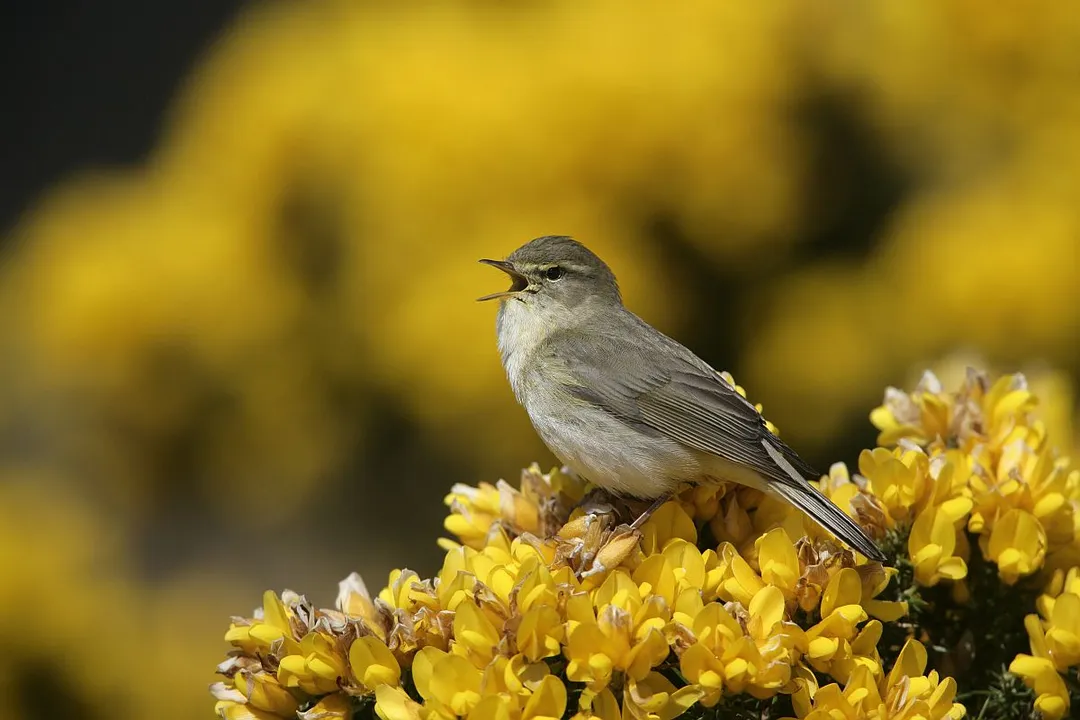
The small, busy Willow Warbler, a familiar sound across northern and temperate Eurasia during the breeding season, carries a formal name that reflects its history and place in the animal kingdom: Phylloscopus trochilus. [3][4] While birdwatchers often rely on the bird’s clear, descending whistle to differentiate it from its lookalike, the Chiffchaff, understanding its scientific classification reveals deeper details about its lineage, separate from its mere appearance or song. [4][6][8] This classification places the bird firmly within a large and intricate structure of life, tracing its ancestry back through several major biological divisions.
# Original Naming
The formal scientific naming of the Willow Warbler dates back to 1758, when the renowned Swedish naturalist Carl Linnaeus first cataloged the species in the tenth edition of his seminal work, Systema Naturae. [4][3] However, Linnaeus didn't assign it its modern genus. He initially described it under the binomial Motacilla trochilus. [4] This early placement grouped it with the wagtails and pipits, a classification common for many small, active insectivores of the time. [4] It took nearly eighty years for the scientific community to shift the bird into its current genus home. [4] The specific epithet, trochilus, itself derives from Ancient Greek, carrying the meaning associated with small songbirds, or more specifically, "wren". [4] Interestingly, before its name was standardized to Willow Warbler, it was often grouped with the Chiffchaff and Wood Warbler under the collective, though now obsolete, common name "willow wren". [4]
# Genus Grouping
The current placement of the bird is within the genus Phylloscopus. [2][3][4][8] This group, introduced by Friedrich Boie in 1826, contains roughly 80 species of similar, insect-foraging warblers. [4] The genus name itself is elegantly descriptive, a compound of the Ancient Greek words phullon ("leaf") and skopos ("seeker"), perfectly capturing the bird’s foraging behavior—searching intently among the foliage for small prey. [4] The close relationship between Phylloscopus species is often noted in the field because even subtle differences in leg color or primary projection are crucial for separating the Willow Warbler from the very similar Chiffchaff (P. collybita), highlighting how closely related taxa can challenge identification systems based primarily on morphology or vocalization. [4][8] For instance, while the Chiffchaff’s song is a sharp "chiff-chaff," the Willow Warbler offers a more melodious, falling whistle, demonstrating that even closely clustered species often develop distinct auditory signals. [6]
# Higher Ranks
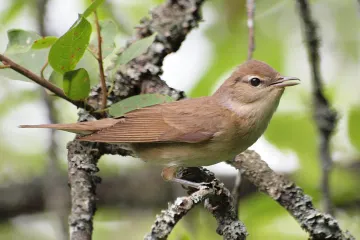
Moving up the taxonomic ladder reveals the Willow Warbler’s broader affiliations, confirming its place as a highly evolved songbird. [2] Its categorization is remarkably consistent across major reference systems, indicating a well-established position in the avian tree of life. [3][7]
The established hierarchy is as follows:
| Rank | Classification | Source Confirmation |
|---|---|---|
| Kingdom | Animalia | [2][7] |
| Phylum | Chordata | [2][7] |
| Class | Aves | [2][7] |
| Order | Passeriformes | [2][3][7][8] |
| Family | Phylloscopidae | [2][3][6][7][8] |
| Genus | Phylloscopus | [2][3][4][7][8] |
| Species | P. trochilus | [3][4][7][8] |
The family Phylloscopidae, known commonly as the Leaf Warblers, is distinct, although historically, this group was often absorbed into the broader family Sylviidae (Old World Warblers). [4][7] The Willow Warbler belongs to the vast order Passeriformes, which represents the perching birds, the largest order of birds globally. [2][3][7] The full, deeply nested lineage recorded by the NCBI confirms this placement, running from cellular organisms down through Chordata (animals with backbones) and into Aves (birds), finally landing within the Sylvioidea superfamily before reaching its family and genus.
# Subspecies Structure
While the species P. trochilus is unified, the geographic separation of breeding populations has led to the recognition of three distinct subspecies, reflecting adaptation across its massive Palearctic breeding range that stretches from Ireland to eastern Siberia. [4]
The three recognized subspecies are:
- P. t. trochilus: This subspecies breeds across much of Europe, generally south of northern Scandinavia and the Alps, and winters in West Africa. [4]
- P. t. acredula: Found breeding from northern Scandinavia eastward into western Siberia, this group tends to winter in Central Africa. [4]
- P. t. yakutensis: The easternmost breeders, originating from eastern Siberia, undertake the longest known migrations, wintering in Eastern and Southern Africa. [4]
A fascinating pattern emerges when comparing these groups: there is a clinal reduction in the intensity of plumage color moving from west to east. [4] This means the western birds (P. t. trochilus) show greener and yellower tones, while the easternmost birds (P. t. yakutensis) tend toward more grayish plumage—a subtle but consistent classification marker tied directly to geography and seasonal exposure. [4]
# Evolutionary Snapshot
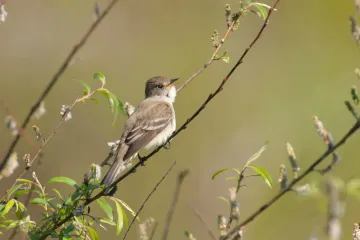
The sheer migratory distance covered by the Willow Warbler—with some individuals traveling up to 12,000 kilometers to sub-Saharan Africa and back—provides an interesting context for its taxonomic stability. [4][6] A small bird undertaking such extreme annual effort suggests a deeply ingrained, successful evolutionary pathway. The fact that systems like Avibase recognize the species across numerous checklists over decades, despite historical confusion with the Chiffchaff, speaks to the distinct genetic and morphological boundaries that separate P. trochilus from its closest relatives. [3] It appears that while the pressures of habitat change cause population declines in specific regions like Southern England, leading to its Amber List status there, the fundamental classification of the species as a whole remains secure. [6][8] This taxonomic certainty provides a fixed anchor point for monitoring conservation efforts across its vast migratory routes. [4]
Related Questions
#Citations
Willow warbler - Wikipedia
Phylloscopus trochilus (Willow Warbler) - Avibase
Willow warbler (Phylloscopus trochilus) longevity, ageing, and life ...
WILLOW WARBLER (Phylloscopus trochilus) - SongBird Survival
Willow Warbler - Phylloscopus trochilus - (Linnaeus, 1758) - EUNIS
Willow Warbler - Phylloscopus trochilus - NatureSpot
Willow Warbler Facts For Kids | AstroSafe Search - DIY.ORG
Phylloscopus trochilus - NCBI - NIH