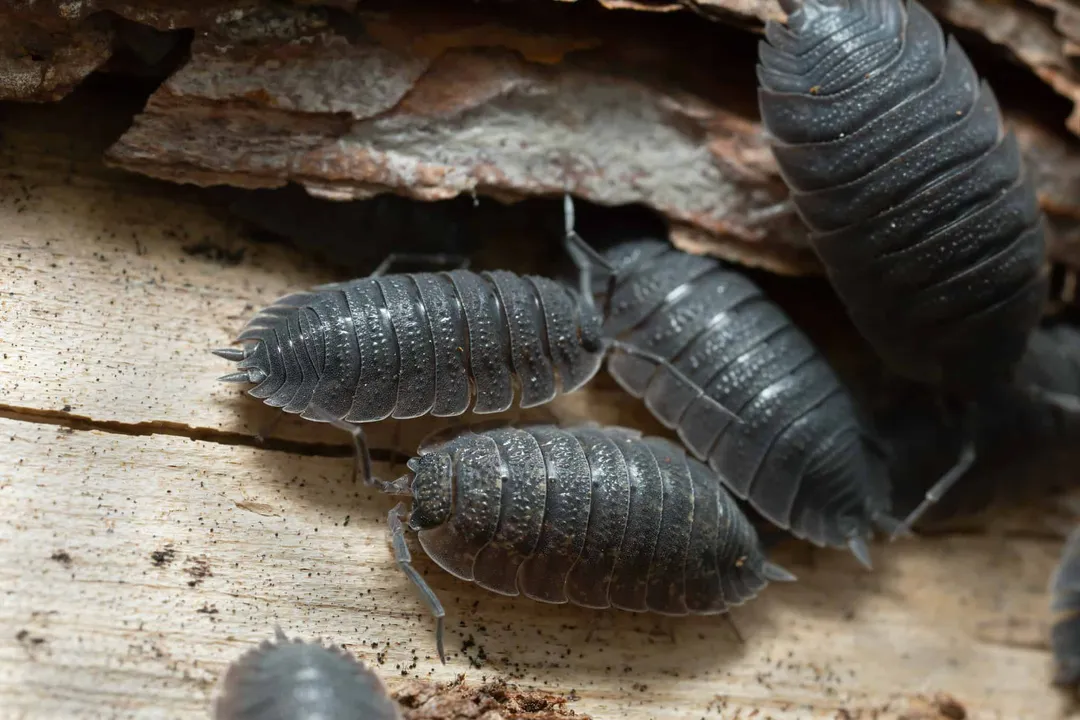
What texture characterizes the exoskeleton of the Common Rough Woodlouse (*Porcellio scaber*)?
Answer
Warty or textured surface
Different species of woodlice can often be differentiated by the surface texture of their exoskeleton, which can have ecological implications. The Common Rough Woodlouse, scientifically known as *Porcellio scaber*, possesses a distinctly warty or textured external surface. This contrasts with its cousin, the Common Shiny Woodlouse (*Oniscus asellus*), which is known for having a smooth, shiny grey shell. Although both rely on moisture, it is suggested that the slightly rougher texture of the *P. scaber* may offer a marginal advantage in slightly drier leaf litter conditions by assisting in micro-condensation or marginally slowing down the rate of surface evaporation compared to smoother-shelled relatives.
Related Questions
What major class do woodlice belong to, despite being called "roly-poly"?How many distinct segments compose the woodlouse thorax, also known as the pereon?What specialized appendages on the woodlouse abdomen house the trachea-like lungs for terrestrial respiration?What characterizes the woodlouse growth process known as molting compared to most arthropods?What is the primary theorized function of the shorter pair of antennae on the woodlouse head?What specific defensive action allows species like pillbugs (Armadillidiidae) to defend themselves?What copper-based pigment is utilized by woodlice for oxygen transport in their blood?What is the term for offspring that hatch with only six pairs of legs before their first molt?What texture characterizes the exoskeleton of the Common Rough Woodlouse (*Porcellio scaber*)?What technical term describes the region formed when the first thoracic segment fuses tightly to the head structure?