Woodlouse Physical Characteristics
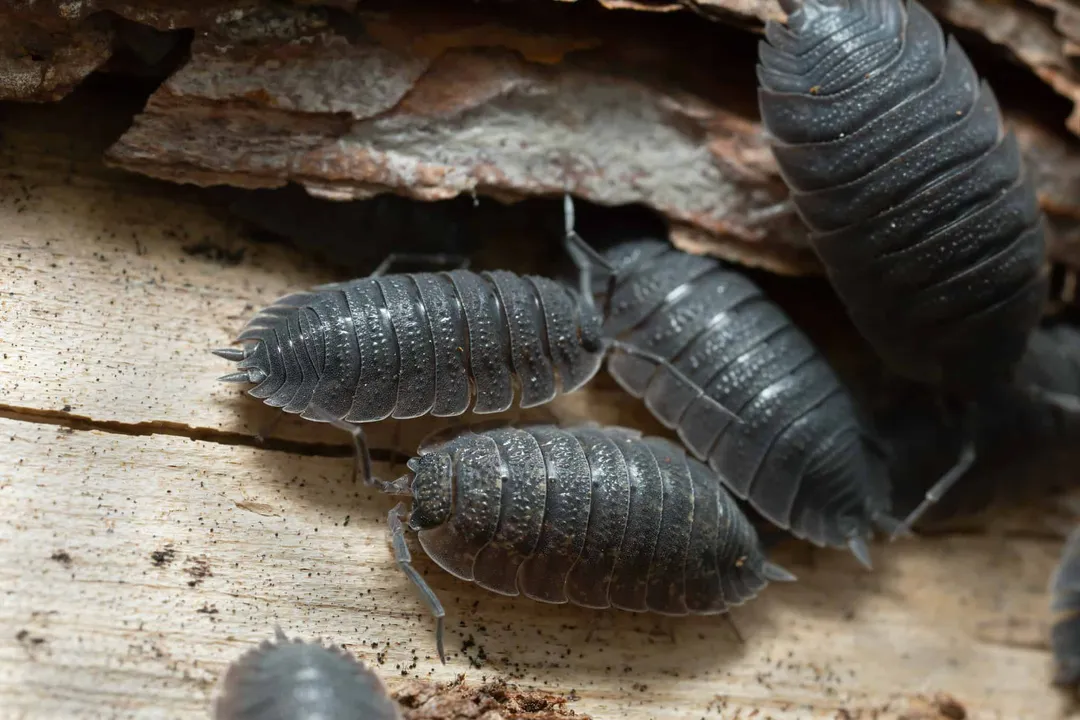
Woodlice are among the most familiar terrestrial invertebrates we encounter when turning over damp logs or peering under rocks, yet their true identity often remains obscured by common misnomers like "roly-poly" or "pill bug". [4][5] Despite their insect-like appearance to the casual observer, woodlice belong to the suborder Oniscidea within the order Isopoda. [4][9] This classification is vital, as it places them firmly in the Class Malacostraca, meaning they are, fundamentally, terrestrial crustaceans, related far more closely to animals like shrimps and crabs than they are to insects or millipedes. [1][2][5][6] This deep connection to an aquatic ancestry dictates many of their most important physical characteristics and survival strategies.
# General Form
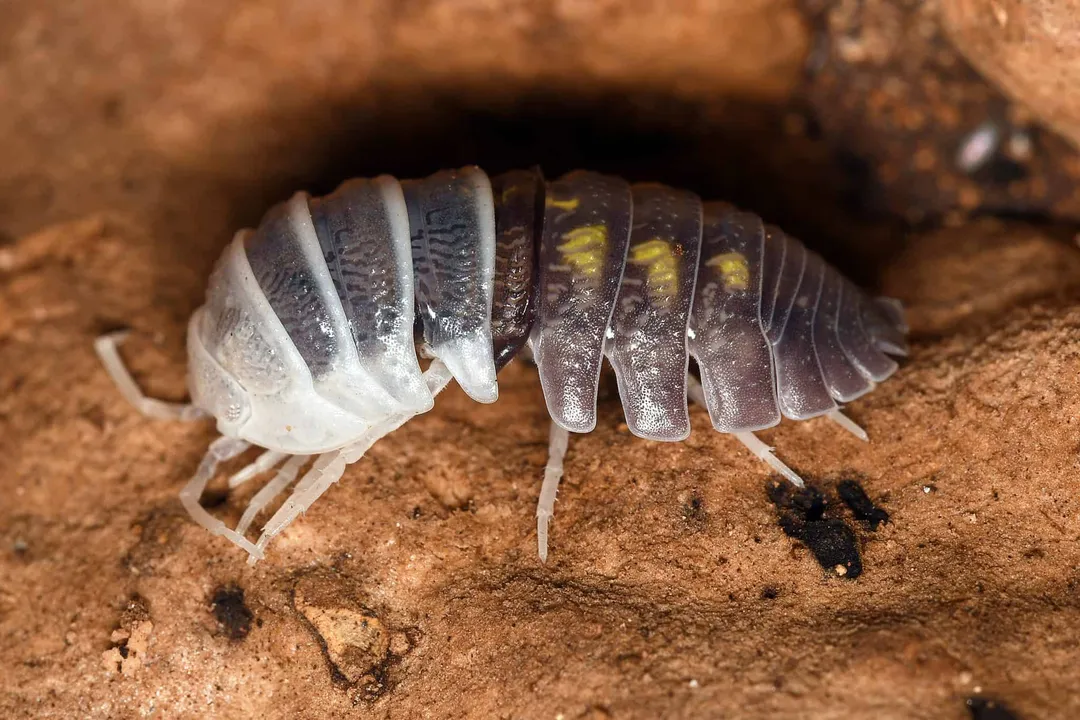
The typical woodlouse presents a body that is unmistakably segmented and, when viewed from the side, dorso-ventrally flattened. [4][6][8][9] This overall shape is heavily armored, a key feature necessary for defense and structural support in a land-dwelling crustacean. While most terrestrial isopods are small—often ranging between 0.5 to 15 millimeters in length for many common species—there is considerable size variation across the thousands of known species globally. [6][9] For instance, the Common Shiny Woodlouse (Oniscus asellus) may reach up to 16 millimeters, while the Common Pill Woodlouse (Armadillidium vulgare) can grow up to 18 millimeters, or roughly 0.7 inches. [5][6] The common rough woodlouse (Porcellio scaber) typically tops out around 17 millimeters. [8] Their coloration is generally muted, appearing in shades of dull gray, brown, or black, helping them achieve cryptic camouflage within their dark, moist habitats. [5][6][8]
# Body Architecture
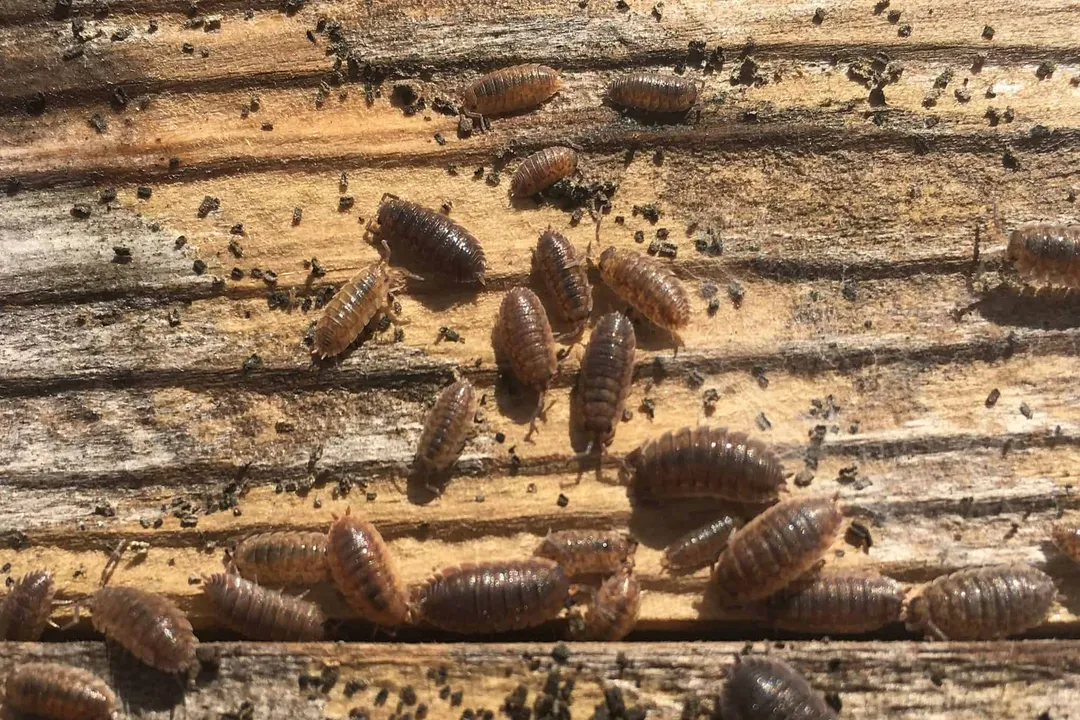
The woodlouse body is clearly divided into three primary sections, much like other arthropods, though without the distinct, fused head-and-thorax shield found in many insects: the head, the thorax (or pereon), and the abdomen (or pleon). [6][8][9]
The thorax is the largest and most imposing section, composed of seven distinct segments. [1][4][8] Each of these seven segments bears one pair of jointed legs, resulting in the characteristic total of 14 legs. [4][5][6] The first thoracic segment is unique in that it is tightly fused to the head structure, forming a region sometimes referred to as the cephalothorax in technical descriptions. [6][8]
The abdomen is significantly shorter, typically composed of five visible segments in terrestrial species. [4][6] This posterior section houses critical appendages related to respiration and locomotion. [6] At the very end of the body is the telson, a taillike segment fused to one or more abdominal segments, positioned between a pair of appendages called uropods. [6] These uropods are relatively small in many species, and in the case of pillbugs, they are short appendages that prevent the creature from rolling into a perfect sphere. [4]
# Appendages and Senses
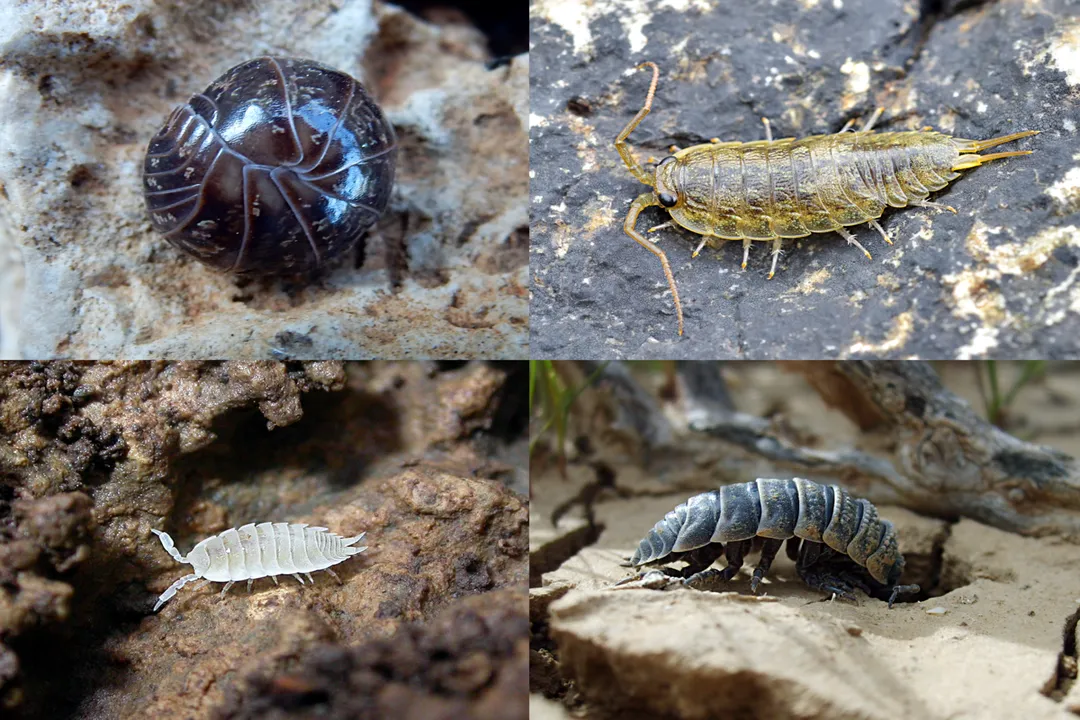
To navigate their dark, micro-environments, woodlice rely on a combination of sensory organs located primarily on the head region. They possess two pairs of antennae. [6][8] One pair is noticeably shorter, theorized to function primarily as chemoreceptors for sensing smells. [8] The second, longer pair features fine, hair-like structures known as setae, which help them sense movement and environmental cues through touch. [8][9]
Crucially for vision, woodlice possess compound eyes located on the sides of the cephalothorax. [6][8] Unlike many marine crustaceans, these eyes are not mounted on stalks. [6] While they can perceive light and dark, which guides their strong negative phototaxis (movement away from light), their vision is generally considered rudimentary compared to many other arthropods. [8][9]
# Respiration Needs
A primary physical limitation stemming from their evolutionary history is their method of breathing. As crustaceans that have successfully colonized land, woodlice have evolved specialized structures to capture oxygen from the air, yet they remain highly susceptible to desiccation. [1][4]
Their breathing apparatus is housed within paddle-shaped appendages on the underside of the abdomen called pleopods. [4][6] These pleopods contain trachea-like lungs, often described as white, egg-shaped patches on the underside, allowing them to respire terrestrially. [6][8][9] However, this system, combined with a cuticle that lacks a waxy covering, means they lose water easily and must constantly seek damp conditions to survive. [1][4][8] In arid conditions, individuals may exhibit thigmokinesis—reducing movement when in contact with others—to aggregate and collectively reduce surface area exposure to prevent precious moisture loss. [8] An interesting structural note: some desert-dwelling species, like Hemilepistus reaumuri, have adapted to survive in remarkably dry habitats, representing an extreme adaptation within the group. [4] If you observe a woodlouse scurrying quickly, it is often an indication that environmental conditions (heat or dryness) are outside its optimal, moist range. [8]

# Armor and Defense
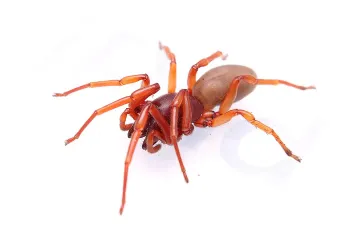
The entire body is encased in a shell-like exoskeleton, which is periodically shed in a process called molting to allow for growth. [4][5] This armor is key to their survival against predators like certain spiders and shrews. [5][8]
One of the most distinctive physical variations among woodlice relates to their defensive posture. Species in the families Armadillidiidae and Armadillidae, commonly known as pillbugs, have segmented plates that allow them to conglobate, or roll into a nearly perfect sphere when threatened, presenting only their hard exterior. [4][6][7] This defensive rolling ability is what gives them the nickname "pill bug". [5][7] In contrast, many other species, such as the common rough woodlouse (Porcellio scaber) and the common shiny woodlouse (Oniscus asellus), are more flattened and cannot fully roll into a ball. [7][8] Sowbugs are often cited as those that retain the flatter shape and possess appendages on the final abdominal segment that physically hinder a full roll. [5][7]
The exterior texture itself can vary significantly, which is an excellent, subtle way to begin differentiating species in the field. For example, the Common Shiny Woodlouse is characterized by a smooth, shiny grey exoskeleton, sometimes with yellow patches. [1][2] Conversely, the Rough Woodlouse has a distinctly warty or textured surface. [3][8] If you've ever wondered if this textural difference matters beyond looks, consider that in variable humidity, a slightly rougher surface might assist in micro-condensation or slow down surface evaporation marginally compared to an entirely smooth shield, allowing the rougher type to tolerate slightly drier leaf litter situations than its smooth-shelled cousins. [3][8]
# Growth and Repair
Growth in woodlice is punctuated by molting, a process that differs from that of most other arthropods. [4] Instead of shedding their entire cuticle at once, woodlice undergo a two-stage process. [4][6] First, the posterior half of the body sheds its old exoskeleton. About two or three days later, the anterior half—including the head and front segments—is shed. [4][6][7] This staggered approach is quite revealing about their need for constant, albeit partial, protection; they maintain mobility with their front half while the rear is recovering, and vice-versa, preventing the total vulnerability associated with a single-stage molt. [4]
This growth sequence is evident early in life. Offspring hatch as mancae with only six pairs of legs. [4][7][9] After leaving the protective brood pouch and undergoing their first molt (the posterior shed), they gain the crucial seventh pair of legs, transforming into juveniles. [4][7][8] Juveniles continue to molt regularly—sometimes every one to two weeks initially—before reaching the full adult morphology and maturity over many months. [7][8]

# Internal Features
While not immediately visible, the internal physical systems are adapted to their unique terrestrial existence. Like other crustaceans, their blood is copper-based, utilizing the pigment haemocyanin to transport oxygen, giving their internal fluids a pale blue tint. [8][9] This reliance on copper means that a fascinating physical adaptation occurs during their detritivorous diet: they practice coprophagy, eating their own feces to efficiently recycle this vital metal, as well as necessary bacteria for digestion. [1][8]
Furthermore, female woodlice possess a specialized structure for reproduction: a brood pouch, or marsupium, formed by overlapping plates on the underside of the thorax. [1][4][6] This acts as an internal nursery where eggs are kept, supplied with water, oxygen, and nutrients until they hatch into those initial, six-legged mancae. [4][6] This maternal care feature is a significant physical adaptation distinguishing them from groups that simply lay unprotected eggs in the soil.
Ultimately, the physical characteristics of the woodlouse—its segmented, plated body, its specialized, moisture-dependent lungs, its two-part molting strategy, and its ability to roll up—all point back to its fundamental identity: a highly successful, air-breathing crustacean that must constantly balance the need for hard external protection with the constant threat of drying out. [1][4][8]
Related Questions
#Citations
Woodlouse - Wikipedia
Woodlouse - Armadillidium vulgare - A-Z Animals
Fascinating Facts About the Common Woodlouse - PostPods
Porcellio scaber | INFORMATION - Animal Diversity Web
Common woodlouse | The Wildlife Trusts
Pillbugs, Slaters, and Woodlice: Isopoda - Encyclopedia.com
Pillbug, Roly-Poly, Woodlouse Armadillidium vulgare (Latreille ...
6 common rough woodlouse facts you need to know - Discover Wildlife
Woodlouse - Types, Habitat, Diet, Lifespan, Life Cycle, & Pictures