What term describes the Yellow Tang's daily activity pattern of being active during the day while grazing on algae?
Answer
Diurnal
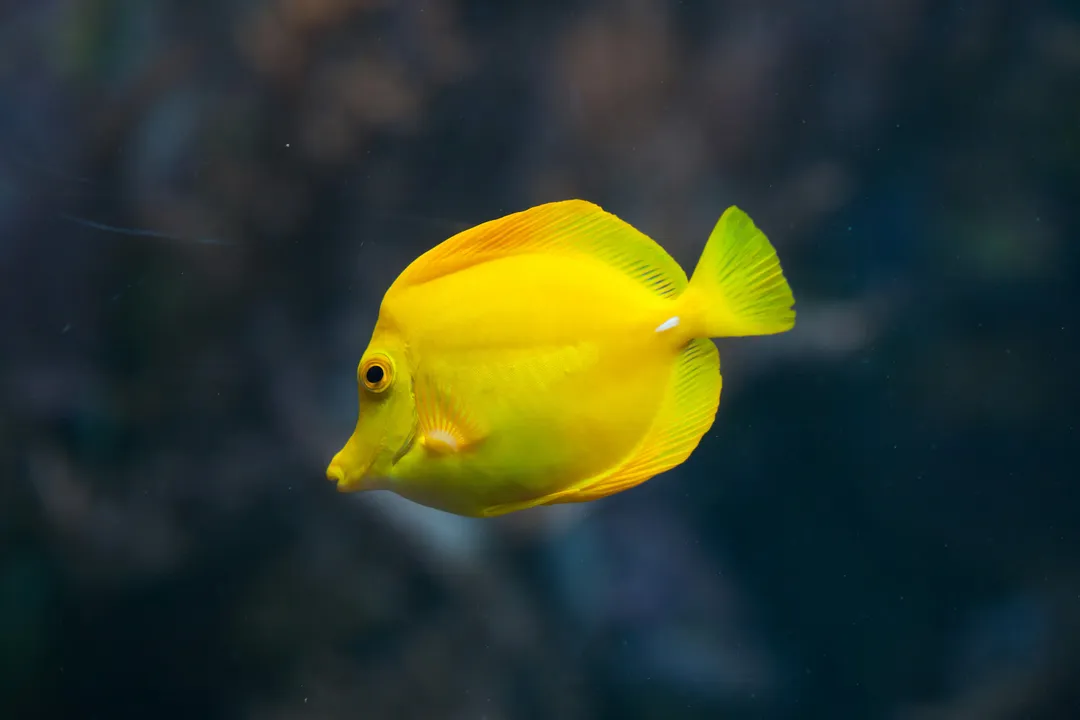
The Yellow Tang exhibits diurnal behavior, meaning the fish is active primarily during daylight hours. This schedule aligns perfectly with its feeding requirements. During the day, these fish are observed hovering over or swimming near coral reefs, actively grazing on the benthic algae that grows on the substrate. This continuous grazing is essential for their survival, driven by the need to constantly replenish their food source. When the day ends, this activity pattern shifts, and they seek sheltered locations until their active hours resume the following morning.
Related Questions
Which major ocean basin is excluded from the native distribution of the Yellow Tang, *Zebrasoma flavescens*?What physical characteristic is noted alongside the buttery yellow coloration of the *Zebrasoma flavescens*?What is the typical maximum depth range where Yellow Tangs are commonly observed utilizing tropical reef environments?What term describes the Yellow Tang's daily activity pattern of being active during the day while grazing on algae?What specific geological features, other than exposed rock, do Yellow Tangs frequently use as foraging areas supporting algal growth?How does the primary food source for *Zebrasoma flavescens* directly link the species to areas with specific water conditions?Which location is historically cited as a major source for Yellow Tangs entering the ornamental aquarium trade?What contrasting behavior do Yellow Tangs exhibit when night approaches regarding their location on the reef structure?What is a significant ecological consequence that could cause a localized population of *Zebrasoma flavescens* to decline within their known boundaries?What distinction is highlighted when comparing the vast natural distribution of Yellow Tangs versus the origin points for the pet trade pipeline?