What term describes the White Sturgeon's ability to migrate between salt and fresh water?
Answer
Anadromous
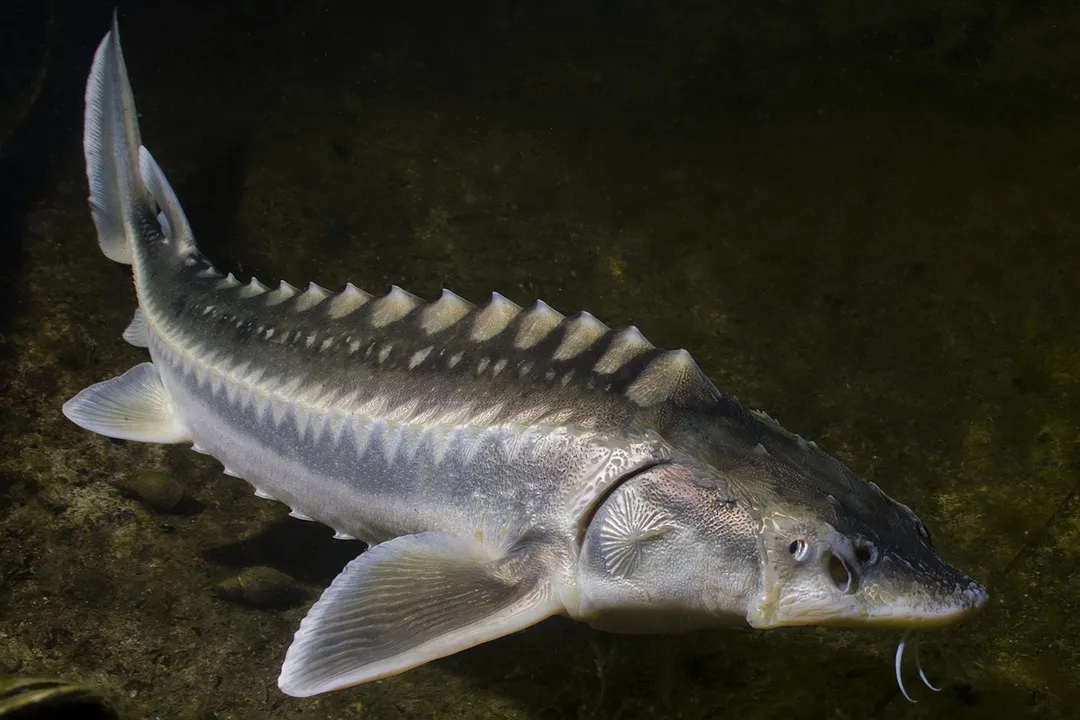
The White Sturgeon exhibits anadromy, which is the specific migratory pattern where fish spend much of their lives in rich marine (saltwater) feeding grounds but return to freshwater systems, often their natal rivers, to reproduce. This physiological ability to regulate osmotic balance across vastly different salinity levels is a significant evolutionary adaptation built upon their ancient biological framework. This movement pattern is crucial for their life cycle, enabling access to diverse feeding resources while ensuring spawning occurs in the specific, necessary freshwater environments required by the species.
Related Questions
To which geological period does the White Sturgeon fossil record extend?What is the dermal armor structure replacing true scales on the White Sturgeon?What primitive internal feature remains unossified in the White Sturgeon's backbone?What aids the White Sturgeon's bottom-feeding by locating food on dark bottoms?Which geographic extremes define the native range of the White Sturgeon in the Pacific basin?What life history strategy characterizes the White Sturgeon's approach to reproduction?What term describes the White Sturgeon's ability to migrate between salt and fresh water?What anthropogenic pressure negates the White Sturgeon's ancient defensive adaptations?Approximately how old must female White Sturgeon be to reach sexual maturity?To which biological family do White Sturgeons belong, according to the text?