What suggests wolf eels are opportunistic feeders despite their specialized crushing ability?
Answer
The inclusion of soft-bodied prey like squid and octopus in their diet.
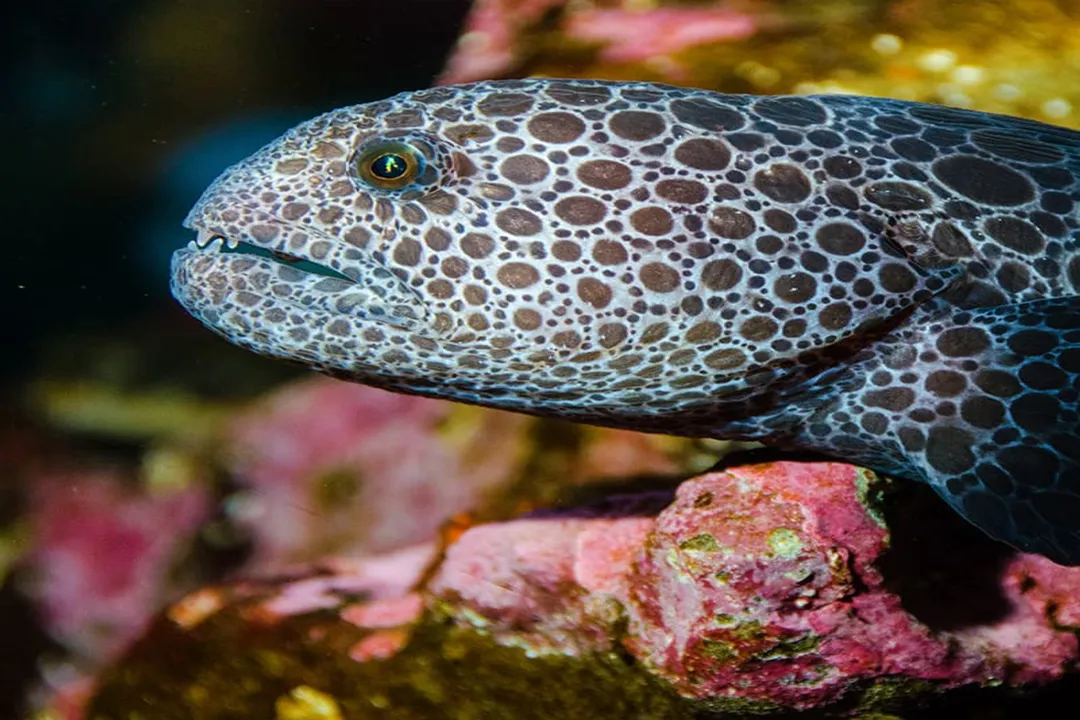
While the wolf eel’s physical tools, specifically its robust jaws and crushing teeth, heavily bias it toward consuming hard-shelled prey like clams and urchins, the animal is characterized as an opportunistic feeder. This is evidenced by the fact that their diet is not exclusively limited to armored items. They also consume softer prey options when they are accessible, such as squid and octopus. This inclusion indicates flexibility, meaning they will exploit easier meals when encountered, even though their primary evolutionary specialization is geared toward overcoming resistance.
#Videos
Virtual Visit: Wolf Eel Feeding! - YouTube
Related Questions
To which taxonomic group does the wolf eel (Anarrhichthys ocellatus) belong?Which prey category requires the 'Extreme Crushing Force' adaptation from the wolf eel?How does the wolf eel's specialized dentition differ from a shark’s teeth?Why must aquarists present whole crabs or clams to captive wolf eels?What limits the wolf eel's hunting strategy regarding fast-moving pelagic fish?What is the documented southern extent of the wolf eel's geographic distribution?What is the primary characteristic of the wolf eel's favored food sources?What suggests wolf eels are opportunistic feeders despite their specialized crushing ability?What behavior influences the wolf eel’s reliance on powerful, quick bites during feeding?What energy expenditure contrast exists between cracking a crab and pursuing a squid?