What structural feature of the Willow Warbler's bill is characteristic of an insectivore specializing in catching small, aerial insects?
Answer
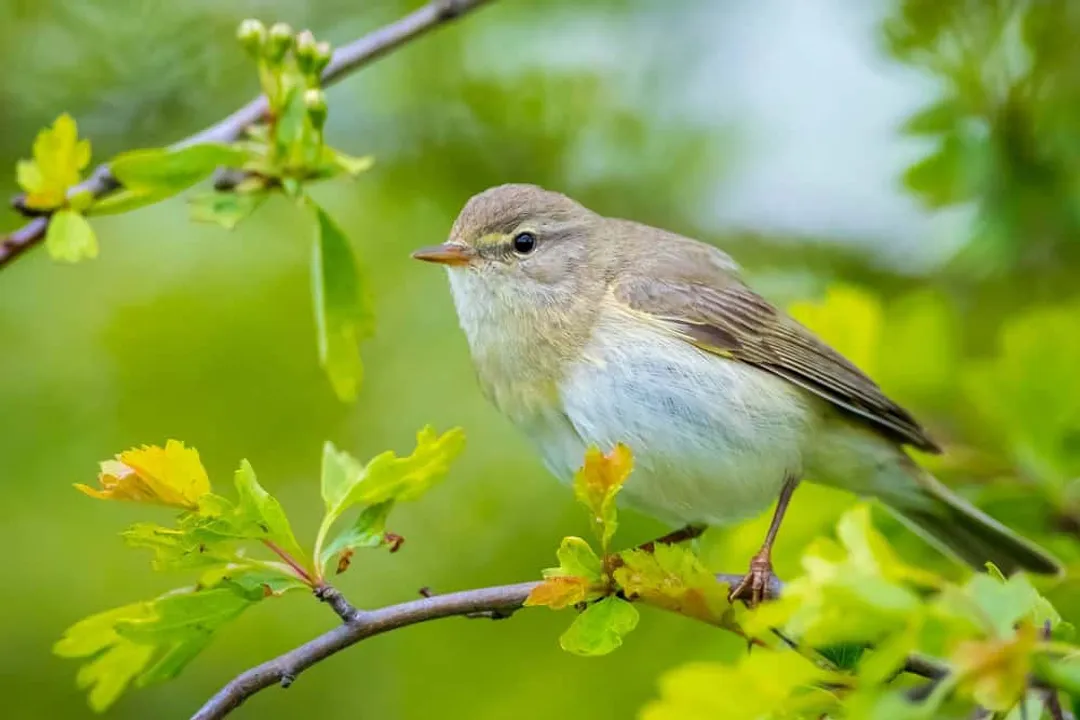
The bill is relatively fine and pointed, with the lower mandible usually paler at the base.
The bill structure of the Willow Warbler is highly specialized for its diet of small, aerial insects. It is described as being relatively fine and pointed, suited for picking tiny invertebrates from foliage or snatching them from the air during short sallies. Furthermore, there is a distinct colouration pattern on the bill: the upper mandible is dark, whereas the lower mandible typically exhibits a paler coloration, often being yellowish or horn-coloured specifically at its base. This fine structure contrasts slightly with the bill of some other warblers in the *Phylloscopus* genus.
Related Questions
What is the typical leg colour difference separating Willow Warbler and Chiffchaff?How is the Willow Warbler's pale supercilium generally characterized when contrasted with the Chiffchaff?What is the typical weight range specified for an adult Willow Warbler?When feather wear dulls the olive tone late in the season, what features become more important for identifying *P. trochilus*?How do the upperparts of the Willow Warbler generally compare in colour richness to those of the Chiffchaff?What structural feature of the Willow Warbler's bill is characteristic of an insectivore specializing in catching small, aerial insects?What physical measurement defines the Willow Warbler's length as a small passerine?How do the underparts of the Willow Warbler generally compare regarding paleness and yellow wash against the Chiffchaff?What structural difference contributes to the Willow Warbler's typically 'bright-eyed' facial expression?How do the first-winter Willow Warbler plumage characteristics potentially cause confusion with other leaf warblers?