How do the upperparts of the Willow Warbler generally compare in colour richness to those of the Chiffchaff?
Answer
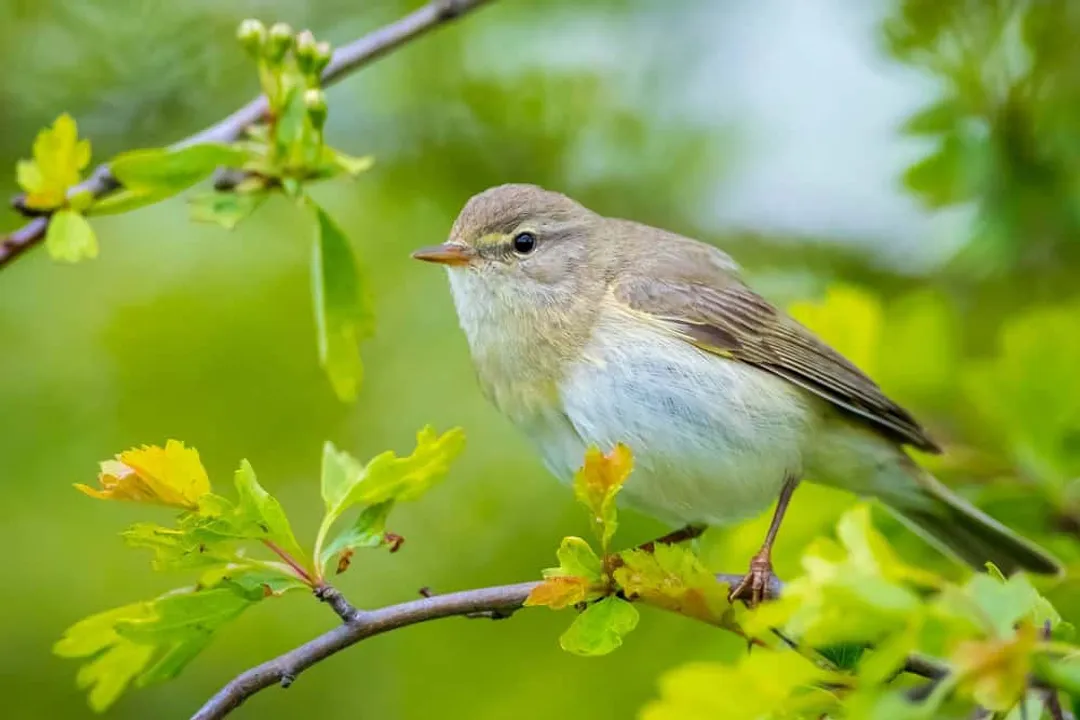
The olive tone on the upperparts is often richer or warmer than that found on the Chiffchaff.
The general coloration of the Willow Warbler is dominated by greens and pale washes, giving it a plain appearance. The upperparts, including the back, crown, and wings, are typically a dull olive-green or brownish-green. While lighting conditions and feather wear can influence perception, the typical olive tone associated with *P. trochilus* is often described as being richer or warmer when contrasted side-by-side with the Chiffchaff. This distinction, however, can be easily obscured by poor lighting or heavy feather wear later in the season.
Related Questions
What is the typical leg colour difference separating Willow Warbler and Chiffchaff?How is the Willow Warbler's pale supercilium generally characterized when contrasted with the Chiffchaff?What is the typical weight range specified for an adult Willow Warbler?When feather wear dulls the olive tone late in the season, what features become more important for identifying *P. trochilus*?How do the upperparts of the Willow Warbler generally compare in colour richness to those of the Chiffchaff?What structural feature of the Willow Warbler's bill is characteristic of an insectivore specializing in catching small, aerial insects?What physical measurement defines the Willow Warbler's length as a small passerine?How do the underparts of the Willow Warbler generally compare regarding paleness and yellow wash against the Chiffchaff?What structural difference contributes to the Willow Warbler's typically 'bright-eyed' facial expression?How do the first-winter Willow Warbler plumage characteristics potentially cause confusion with other leaf warblers?