What structural element supports the wild boar's elongated snout for rooting in the soil?
Answer
A tough disk of cartilage at the tip
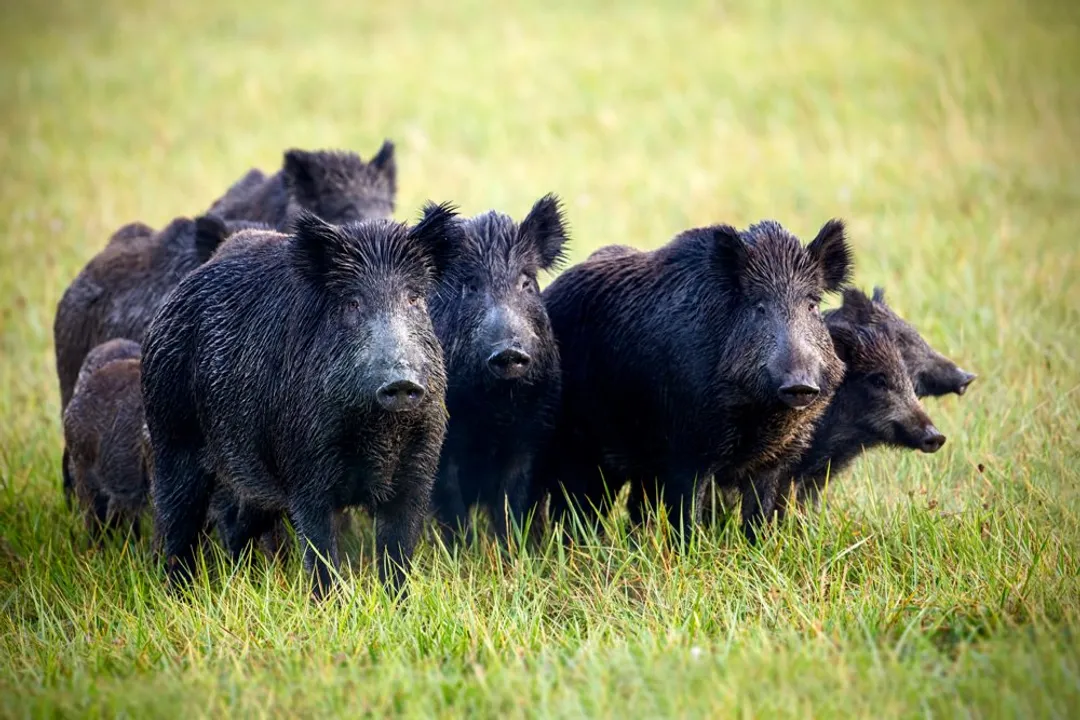
The snout of the wild boar is specialized for effective underground foraging, known as rooting. This action is facilitated by a robust structural component located at the very end of the snout, which is explicitly described as a tough disk composed of cartilage. This cartilaginous support provides the necessary rigidity and resilience for the animal to dig and push through dense soil and leaf litter to locate food sources efficiently. The overall head structure, being large and tapering into this elongated snout, works in conjunction with this specialized tip to maximize digging efficiency, giving them an advantage in obtaining subterranean nutrients.
Related Questions
What structural element supports the wild boar's elongated snout for rooting in the soil?What coat coloration is most characteristic of pure wild boar populations?What specialized hair feature runs along the spine of mature male wild boars?How does the wild boar's eyesight compare to its senses of smell and hearing?What are the tusks of the wild boar, and what is their primary role?How does the wild boar's stocky build and short legs aid its movement?Generally, how does the typical weight range of a mature male boar compare to a sow?What tail characteristic often suggests a strong feral hog influence?How does the hair density typically compare between pure wild boar and feral individuals regarding their coats?In terms of facial profile, how does the head shape of a pure wild boar differ from feral hogs?What typical weight range is associated with a mature female wild boar (sow) in standard conditions?